What is Orthopedic Trauma Implant - Global Market?
Orthopedic trauma implants are specialized medical devices used to support the healing of fractured bones and injuries related to the musculoskeletal system. These implants are crucial in the field of orthopedic surgery, where they help stabilize and fix broken bones, allowing for proper alignment and healing. The global market for orthopedic trauma implants is vast and continuously evolving, driven by factors such as the increasing incidence of road accidents, sports injuries, and the growing aging population who are more prone to fractures. These implants come in various forms, including plates, screws, and nails, each designed to address specific types of fractures and injuries. The market is characterized by ongoing advancements in technology, leading to the development of more durable, biocompatible, and efficient implants. Additionally, the demand for minimally invasive surgical procedures has spurred innovation in implant design, making them easier to insert and less traumatic for patients. As healthcare systems worldwide strive to improve patient outcomes and reduce recovery times, the orthopedic trauma implant market is poised for significant growth, offering new opportunities for manufacturers and healthcare providers alike.
Plates, Screws, Interlocking Nail, Other in the Orthopedic Trauma Implant - Global Market:
Orthopedic trauma implants encompass a variety of devices, each serving a unique purpose in the treatment of bone fractures and injuries. Plates are flat, thin pieces of metal that are attached to the bone using screws. They are used to hold fractured bone fragments together, ensuring proper alignment and stability during the healing process. Plates come in different shapes and sizes, tailored to fit various bones and fracture types. For instance, locking plates have threaded screw holes that allow screws to lock into the plate, providing additional stability. Screws, on the other hand, are used to fixate bones or secure plates to the bone. They come in various designs, such as cortical screws for dense bone and cancellous screws for spongy bone. Interlocking nails are long, rod-like devices inserted into the marrow canal of long bones, such as the femur or tibia. They are used to treat fractures in these bones by providing internal support and alignment. Interlocking nails are often preferred for their minimally invasive insertion technique, which reduces soft tissue damage and promotes faster recovery. Other types of orthopedic trauma implants include wires, pins, and external fixators. Wires and pins are often used in conjunction with other implants to provide additional support, especially in complex fractures. External fixators are devices that stabilize fractures from outside the body, using pins or screws inserted into the bone and connected to a rigid frame. They are typically used in severe fractures or when internal fixation is not feasible. The choice of implant depends on various factors, including the type and location of the fracture, the patient's age and health, and the surgeon's expertise. Each implant type has its advantages and limitations, and the selection process is critical to ensuring optimal patient outcomes. As the global market for orthopedic trauma implants continues to grow, manufacturers are focusing on developing innovative solutions that enhance the performance and safety of these devices. This includes the use of advanced materials, such as titanium and bioresorbable polymers, which offer improved biocompatibility and strength. Additionally, the integration of digital technologies, such as 3D printing and computer-aided design, is enabling the production of customized implants that cater to individual patient needs. These advancements are expected to drive the future growth of the orthopedic trauma implant market, providing new opportunities for healthcare providers and improving the quality of care for patients worldwide.
Hospitals, Orthopedic Clinics, Ambulatory Surgical Centers, Other in the Orthopedic Trauma Implant - Global Market:
Orthopedic trauma implants are widely used in various healthcare settings, including hospitals, orthopedic clinics, ambulatory surgical centers, and other specialized facilities. In hospitals, these implants play a crucial role in the treatment of patients with severe fractures and injuries. Hospitals are equipped with advanced surgical facilities and a team of skilled orthopedic surgeons who can perform complex procedures using these implants. The availability of comprehensive post-operative care and rehabilitation services in hospitals further enhances patient recovery and outcomes. Orthopedic clinics, on the other hand, focus on providing specialized care for musculoskeletal conditions, including fractures and trauma. These clinics often have experienced orthopedic specialists who can diagnose and treat a wide range of injuries using trauma implants. The personalized care and attention offered in orthopedic clinics make them a preferred choice for many patients seeking treatment for bone fractures. Ambulatory surgical centers are another important setting for the use of orthopedic trauma implants. These centers offer outpatient surgical services, allowing patients to undergo procedures and return home on the same day. The use of minimally invasive techniques and advanced implants in ambulatory surgical centers has made them an attractive option for patients seeking convenient and efficient treatment for fractures. Other healthcare facilities, such as rehabilitation centers and specialized trauma units, also utilize orthopedic trauma implants to support patient recovery and rehabilitation. These facilities focus on providing comprehensive care and support to patients recovering from fractures and injuries, ensuring a smooth transition from surgery to full recovery. The widespread use of orthopedic trauma implants across these healthcare settings highlights their importance in modern medical practice. As the demand for effective and efficient fracture treatment continues to rise, the role of these implants in improving patient outcomes and quality of life becomes increasingly significant.
Orthopedic Trauma Implant - Global Market Outlook:
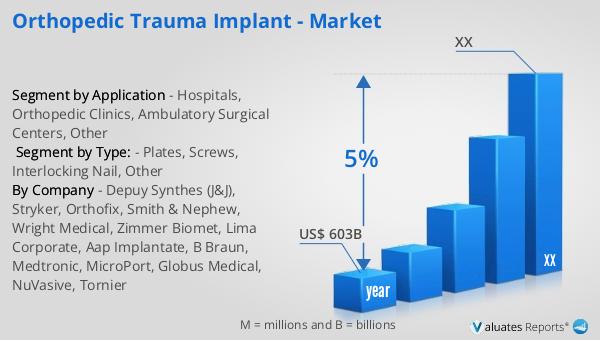
Our research indicates that the global market for medical devices, including orthopedic trauma implants, is projected to reach approximately $603 billion in 2023. This market is expected to experience a steady growth rate, with a compound annual growth rate (CAGR) of 5% over the next six years. This growth is driven by several factors, including the increasing prevalence of chronic diseases, advancements in medical technology, and the rising demand for minimally invasive surgical procedures. The orthopedic trauma implant segment, in particular, is benefiting from these trends, as healthcare providers seek innovative solutions to improve patient outcomes and reduce recovery times. The aging global population is also contributing to the growth of the medical device market, as older individuals are more susceptible to fractures and require specialized care. Additionally, the increasing incidence of road accidents and sports injuries is driving the demand for orthopedic trauma implants, as these devices play a crucial role in the treatment and recovery of patients with bone fractures. As the market continues to expand, manufacturers are focusing on developing advanced implants that offer improved biocompatibility, durability, and ease of use. This includes the use of cutting-edge materials and technologies, such as 3D printing and bioresorbable polymers, to create customized implants that cater to individual patient needs. The ongoing growth of the global medical device market presents significant opportunities for manufacturers, healthcare providers, and patients alike, as it paves the way for new innovations and improved healthcare outcomes.
| Report Metric | Details |
| Report Name | Orthopedic Trauma Implant - Market |
| Accounted market size in year | US$ 603 billion |
| CAGR | 5% |
| Base Year | year |
| Segment by Type: |
|
| Segment by Application |
|
| By Region |
|
| By Company | Depuy Synthes (J&J), Stryker, Orthofix, Smith & Nephew, Wright Medical, Zimmer Biomet, Lima Corporate, Aap Implantate, B Braun, Medtronic, MicroPort, Globus Medical, NuVasive, Tornier |
| Forecast units | USD million in value |
| Report coverage | Revenue and volume forecast, company share, competitive landscape, growth factors and trends |




