Friday, September 20, 2024

Global Long-Read Sequencing Technology Market Research Report 2024

What is Global Long-Read Sequencing Technology Market?

The Global Long-Read Sequencing Technology Market refers to the industry focused on the development, production, and application of advanced sequencing technologies that enable the reading of long sequences of DNA or RNA. Unlike traditional short-read sequencing methods, long-read sequencing provides more comprehensive and accurate genetic information by reading longer stretches of nucleotides in a single run. This technology is crucial for understanding complex genetic structures, identifying structural variations, and improving the accuracy of genome assemblies. It has significant applications in various fields, including genomics, personalized medicine, agriculture, and evolutionary biology. The market encompasses various technologies, products, and services offered by companies and research institutions dedicated to advancing long-read sequencing capabilities. As the demand for precise genetic information grows, the Global Long-Read Sequencing Technology Market is expected to expand, driven by continuous innovations and increasing adoption across different sectors.
Long-Read Sequencing Technology Market

Nanopore Sequencing, Single-molecule Real-time Sequencing, Synthetic Long-read Sequencing in the Global Long-Read Sequencing Technology Market:

Nanopore Sequencing, Single-molecule Real-time Sequencing (SMRT), and Synthetic Long-read Sequencing are three prominent technologies within the Global Long-Read Sequencing Technology Market. Nanopore Sequencing involves passing a DNA or RNA molecule through a nanopore, a tiny hole, and measuring changes in electrical current to determine the sequence of nucleotides. This method offers real-time sequencing and the ability to read very long sequences, making it highly versatile and suitable for various applications, including real-time pathogen detection and environmental monitoring. Single-molecule Real-time Sequencing (SMRT), developed by Pacific Biosciences, uses zero-mode waveguides to observe the synthesis of DNA in real-time. This technology captures the activity of DNA polymerase as it incorporates nucleotides, providing highly accurate and long reads. SMRT sequencing is particularly useful for identifying complex genetic variations, such as structural variants and epigenetic modifications. Synthetic Long-read Sequencing, also known as linked-read sequencing, involves partitioning high-molecular-weight DNA into smaller fragments, sequencing them, and then computationally reconstructing the original long sequence. This approach combines the accuracy of short-read sequencing with the benefits of long-read information, making it ideal for applications requiring high accuracy and resolution, such as de novo genome assembly and haplotype phasing. Each of these technologies has its unique strengths and applications, contributing to the overall growth and diversification of the Global Long-Read Sequencing Technology Market.

Research Institutes, Hospitals, Pharmaceutical, Others in the Global Long-Read Sequencing Technology Market:

The usage of Global Long-Read Sequencing Technology Market spans across various sectors, including Research Institutes, Hospitals, Pharmaceutical companies, and other industries. In Research Institutes, long-read sequencing is pivotal for advancing our understanding of genetics and genomics. Researchers utilize this technology to study complex genomes, identify structural variations, and explore epigenetic modifications. It enables the discovery of novel genes, understanding of evolutionary processes, and development of new genetic models. In Hospitals, long-read sequencing is increasingly being used for clinical diagnostics and personalized medicine. It allows for more accurate detection of genetic disorders, identification of rare mutations, and comprehensive analysis of cancer genomes. This technology aids in tailoring treatments to individual patients based on their genetic makeup, improving outcomes and reducing adverse effects. Pharmaceutical companies leverage long-read sequencing for drug discovery and development. It helps in identifying genetic targets, understanding disease mechanisms, and developing precision medicines. By providing detailed genetic information, long-read sequencing accelerates the development of new therapies and enhances the efficacy of existing drugs. Other industries, such as agriculture and environmental science, also benefit from long-read sequencing. In agriculture, it is used for crop improvement, studying plant genomes, and developing genetically modified organisms. In environmental science, long-read sequencing aids in biodiversity studies, monitoring of microbial communities, and understanding ecological interactions. The versatility and accuracy of long-read sequencing make it an invaluable tool across these diverse fields, driving innovation and improving outcomes.

Global Long-Read Sequencing Technology Market Outlook:

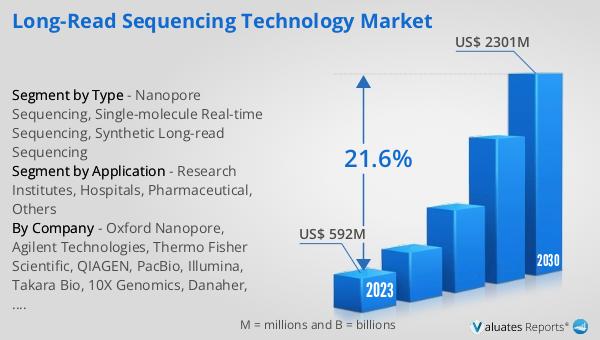
The global Long-Read Sequencing Technology market, valued at US$ 592 million in 2023, is projected to grow significantly, reaching an estimated US$ 2301 million by 2030. This growth is expected to occur at a compound annual growth rate (CAGR) of 21.6% during the forecast period from 2024 to 2030. This substantial increase reflects the rising demand for advanced sequencing technologies that provide comprehensive and accurate genetic information. The market's expansion is driven by continuous innovations, increasing adoption across various sectors, and the growing need for precise genetic analysis. As more industries recognize the value of long-read sequencing, the market is poised for significant growth, offering numerous opportunities for companies and researchers to advance their capabilities and applications.


Report Metric Details
Report Name Long-Read Sequencing Technology Market
Accounted market size in 2023 US$ 592 million
Forecasted market size in 2030 US$ 2301 million
CAGR 21.6%
Base Year 2023
Forecasted years 2024 - 2030
Segment by Type
  • Nanopore Sequencing
  • Single-molecule Real-time Sequencing
  • Synthetic Long-read Sequencing
Segment by Application
  • Research Institutes
  • Hospitals
  • Pharmaceutical
  • Others
By Region
  • North America (United States, Canada)
  • Europe (Germany, France, UK, Italy, Russia) Rest of Europe
  • Nordic Countries
  • Asia-Pacific (China, Japan, South Korea)
  • Southeast Asia (India, Australia)
  • Rest of Asia
  • Latin America (Mexico, Brazil)
  • Rest of Latin America
  • Middle East & Africa (Turkey, Saudi Arabia, UAE, Rest of MEA)
By Company Oxford Nanopore, Agilent Technologies, Thermo Fisher Scientific, QIAGEN, PacBio, Illumina, Takara Bio, 10X Genomics, Danaher, Azenta US, Revvity, New England Biolabs, BaseClear, Element Biosciences, CD Genomics, Sage Sciences, EdenRoc Sciences, BGI Group, Novogene, Grandomics, Wuhan Beina Technology
Forecast units USD million in value
Report coverage Revenue and volume forecast, company share, competitive landscape, growth factors and trends

Global Ultra-fine Grain Isotropic Graphite Market Research Report 2024

What is Global Ultra-fine Grain Isotropic Graphite Market?

The Global Ultra-fine Grain Isotropic Graphite Market refers to the worldwide industry focused on the production, distribution, and utilization of ultra-fine grain isotropic graphite. This type of graphite is characterized by its uniform grain structure and extremely fine particle size, which provides superior mechanical, thermal, and electrical properties compared to conventional graphite. Ultra-fine grain isotropic graphite is highly valued in various high-tech applications due to its excellent strength, high purity, and resistance to thermal shock and oxidation. Industries such as semiconductor manufacturing, photovoltaic cell production, electrical discharge machining (EDM), and metallurgy rely heavily on this material for its performance and reliability. The market encompasses a range of activities including research and development, manufacturing, quality control, and sales, with key players operating globally to meet the increasing demand for advanced materials in cutting-edge technologies. The market dynamics are influenced by factors such as technological advancements, industrial growth, and the need for high-performance materials in various applications.

Ultra-fine Grain Isotropic Graphite Market

Particle Size ≤ 5 µm, 5 µm < Particle Size ≤10, 10 µm < Particle Size ≤15, 15 µm < Particle Size ≤20 in the Global Ultra-fine Grain Isotropic Graphite Market:

In the Global Ultra-fine Grain Isotropic Graphite Market, particle size plays a crucial role in determining the material's properties and suitability for different applications. Particle sizes are typically categorized into four main ranges: ≤ 5 µm, 5 µm < Particle Size ≤ 10 µm, 10 µm < Particle Size ≤ 15 µm, and 15 µm < Particle Size ≤ 20 µm. Each range offers distinct characteristics that make the graphite suitable for specific uses. For instance, ultra-fine particles (≤ 5 µm) provide exceptional surface finish and precision, making them ideal for high-precision applications such as semiconductor manufacturing and microelectronics. These particles ensure minimal defects and high-quality outputs, which are critical in these industries. The next range, 5 µm < Particle Size ≤ 10 µm, balances fine surface finish with mechanical strength, making it suitable for applications like electrical discharge machining (EDM) where both precision and durability are required. Graphite in this range is also used in the production of photovoltaic cells, where it contributes to the efficiency and longevity of solar panels. Moving to the 10 µm < Particle Size ≤ 15 µm range, the graphite offers a good compromise between fine grain structure and cost-effectiveness. This makes it a popular choice in foundry and metallurgy applications, where it is used for casting and molding processes that require high thermal conductivity and resistance to thermal shock. Finally, the 15 µm < Particle Size ≤ 20 µm range provides robust mechanical properties and is often used in defense and heavy industrial applications. This range of particle size ensures the material can withstand harsh conditions and high-stress environments, making it suitable for military equipment and large-scale industrial machinery. Each particle size range in the Global Ultra-fine Grain Isotropic Graphite Market is tailored to meet the specific needs of various industries, ensuring optimal performance and reliability in their respective applications.

Photovoltaic, Semiconductor, Electrical Discharge Machining, Foundry, Metallurgy, Defense, Others in the Global Ultra-fine Grain Isotropic Graphite Market:

The Global Ultra-fine Grain Isotropic Graphite Market finds extensive usage across several high-tech and industrial sectors due to its superior properties. In the photovoltaic industry, ultra-fine grain isotropic graphite is used in the production of solar cells. Its high purity and thermal stability make it an ideal material for the manufacturing processes, ensuring efficient energy conversion and long-lasting solar panels. In the semiconductor industry, this type of graphite is crucial for the production of semiconductor wafers and components. Its excellent electrical conductivity and resistance to thermal shock make it indispensable for creating high-performance electronic devices. Electrical Discharge Machining (EDM) is another area where ultra-fine grain isotropic graphite is extensively used. The material's ability to withstand high temperatures and its fine grain structure allow for precise and efficient machining of complex shapes and hard materials. In the foundry and metallurgy sectors, ultra-fine grain isotropic graphite is used for casting and molding processes. Its high thermal conductivity and resistance to thermal shock ensure high-quality castings and molds, which are essential for producing durable metal components. The defense industry also benefits from the use of this advanced material. Its robust mechanical properties and resistance to harsh conditions make it suitable for military applications, including the production of high-strength components and equipment. Other industries, such as aerospace and automotive, also utilize ultra-fine grain isotropic graphite for its superior performance characteristics. The material's versatility and reliability make it a valuable asset in various high-tech and industrial applications, driving its demand in the global market.

Global Ultra-fine Grain Isotropic Graphite Market Outlook:

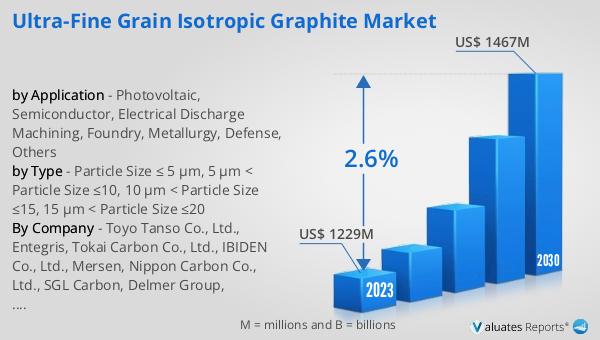
The global Ultrafine Grain Isotropic Graphite market was valued at US$ 1229 million in 2023 and is anticipated to reach US$ 1467 million by 2030, witnessing a CAGR of 2.6% during the forecast period 2024-2030. This market outlook highlights the steady growth and increasing demand for ultra-fine grain isotropic graphite across various industries. The projected growth reflects the material's critical role in high-tech applications and its superior properties that meet the stringent requirements of advanced manufacturing processes. The market's expansion is driven by the continuous advancements in technology and the growing need for high-performance materials in sectors such as semiconductor manufacturing, photovoltaic cell production, and electrical discharge machining. The increasing adoption of ultra-fine grain isotropic graphite in these industries underscores its importance in achieving high precision, efficiency, and reliability in production processes. As the market continues to grow, key players are expected to focus on innovation and quality improvement to meet the evolving demands of their customers. The steady CAGR of 2.6% indicates a positive outlook for the global Ultrafine Grain Isotropic Graphite market, with significant opportunities for growth and development in the coming years.


Report Metric Details
Report Name Ultra-fine Grain Isotropic Graphite Market
Accounted market size in 2023 US$ 1229 million
Forecasted market size in 2030 US$ 1467 million
CAGR 2.6%
Base Year 2023
Forecasted years 2024 - 2030
by Type
  • Particle Size ≤ 5 µm
  • 5 µm < Particle Size ≤10
  • 10 µm < Particle Size ≤15
  • 15 µm < Particle Size ≤20
by Application
  • Photovoltaic
  • Semiconductor
  • Electrical Discharge Machining
  • Foundry
  • Metallurgy
  • Defense
  • Others
Production by Region
  • North America
  • Europe
  • China
  • Japan
Consumption by Region
  • North America (United States, Canada)
  • Europe (Germany, France, UK, Italy, Russia)
  • Asia-Pacific (China, Japan, South Korea, Taiwan)
  • Southeast Asia (India)
  • Latin America (Mexico, Brazil)
By Company Toyo Tanso Co., Ltd., Entegris, Tokai Carbon Co., Ltd., IBIDEN Co., Ltd., Mersen, Nippon Carbon Co., Ltd., SGL Carbon, Delmer Group, GrafTech International Ltd., LiaoNing DaHua Glory Speclal Graphite Co., Ltd., WuXing New Material Technology Co., Ltd., Chengdu Carbon Co.,Ltd., Sichuan Guanghan Shida Carbon Co., Ltd., Graphite India Limited
Forecast units USD million in value
Report coverage Revenue and volume forecast, company share, competitive landscape, growth factors and trends

Global UV Coatings for Specialty Optical Fiber Market Research Report 2024

What is Global UV Coatings for Specialty Optical Fiber Market?

The Global UV Coatings for Specialty Optical Fiber Market is a niche segment within the broader optical fiber industry. UV coatings are specialized materials applied to optical fibers to enhance their performance, durability, and resistance to environmental factors. These coatings are crucial for specialty optical fibers used in various high-tech applications, including telecommunications, medical devices, and industrial automation. The market for these coatings is driven by the increasing demand for high-performance optical fibers that can withstand harsh conditions and deliver reliable performance. UV coatings help protect the fibers from UV radiation, moisture, and mechanical damage, thereby extending their lifespan and improving their efficiency. The market is characterized by continuous innovation and development of new coating materials to meet the evolving needs of different industries. Companies in this market invest heavily in research and development to create advanced coatings that offer superior protection and performance. The growing adoption of optical fibers in various applications is expected to drive the demand for UV coatings, making this market an essential component of the optical fiber industry.

UV Coatings for Specialty Optical Fiber Market

Index = 1.36, Index = 1.37, Index = 1.40, Others in the Global UV Coatings for Specialty Optical Fiber Market:

In the Global UV Coatings for Specialty Optical Fiber Market, different indices such as Index = 1.36, Index = 1.37, Index = 1.40, and others play a significant role in determining the optical properties of the fibers. The refractive index is a measure of how much light is bent, or refracted, when it enters a material. For optical fibers, the refractive index of the coating material is crucial as it affects the fiber's ability to transmit light efficiently. An Index of 1.36 indicates a lower refractive index, which means the coating material bends light less compared to materials with higher indices. This type of coating is often used in applications where minimal light distortion is required. On the other hand, an Index of 1.37 offers a slightly higher refractive index, providing a balance between light transmission and protection. This index is suitable for general-purpose optical fibers used in telecommunications and data transmission. An Index of 1.40 represents a higher refractive index, which means the coating material bends light more. This type of coating is ideal for specialty optical fibers used in high-precision applications such as medical devices and scientific instruments. The choice of refractive index depends on the specific requirements of the application, including the need for light transmission efficiency, durability, and resistance to environmental factors. Other indices may also be used depending on the unique needs of the application, offering a range of options for manufacturers to choose from. The development of new coating materials with different refractive indices is an ongoing process, driven by the need for improved performance and reliability in various applications. Companies in this market continuously explore new materials and technologies to create coatings that meet the specific demands of their customers. The ability to customize the refractive index of the coating material allows manufacturers to tailor their products to the unique needs of different industries, enhancing the overall performance and efficiency of the optical fibers.

Polyimide Fiber, Polyacrylate Fiber, Silicone Fiber, Others in the Global UV Coatings for Specialty Optical Fiber Market:

The usage of Global UV Coatings for Specialty Optical Fiber Market in areas such as Polyimide Fiber, Polyacrylate Fiber, Silicone Fiber, and others is diverse and essential for various high-tech applications. Polyimide fibers are known for their excellent thermal stability and resistance to harsh chemicals, making them ideal for use in extreme environments. UV coatings applied to polyimide fibers enhance their durability and performance, ensuring they can withstand high temperatures and corrosive conditions. These fibers are commonly used in aerospace, automotive, and industrial applications where reliability and longevity are critical. Polyacrylate fibers, on the other hand, are valued for their flexibility and ease of handling. UV coatings on polyacrylate fibers improve their resistance to UV radiation and mechanical damage, making them suitable for telecommunications and data transmission applications. These fibers are often used in fiber optic cables and other communication devices where high performance and reliability are essential. Silicone fibers are known for their excellent flexibility and resistance to extreme temperatures. UV coatings on silicone fibers enhance their durability and performance, making them suitable for medical devices, sensors, and other high-precision applications. These fibers are often used in environments where flexibility and resistance to harsh conditions are required. Other types of specialty optical fibers also benefit from UV coatings, depending on their specific applications and requirements. The coatings help protect the fibers from environmental factors, mechanical damage, and UV radiation, ensuring they deliver reliable performance and longevity. The development of new UV coatings tailored to the unique needs of different fiber types is an ongoing process, driven by the demand for high-performance optical fibers in various industries. Companies in this market invest heavily in research and development to create advanced coatings that offer superior protection and performance. The ability to customize the coatings to the specific needs of different fiber types allows manufacturers to meet the diverse requirements of their customers, enhancing the overall performance and efficiency of the optical fibers.

Global UV Coatings for Specialty Optical Fiber Market Outlook:

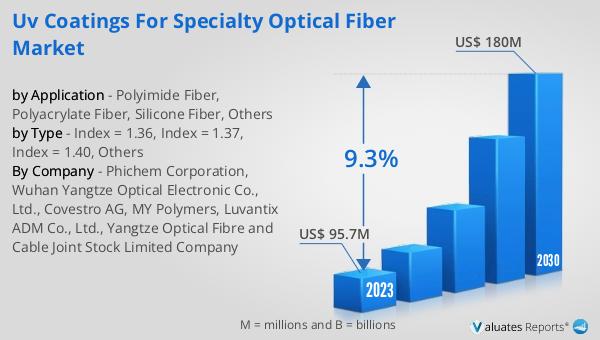
The global UV Coatings for Specialty Optical Fiber market was valued at US$ 95.7 million in 2023 and is anticipated to reach US$ 180 million by 2030, witnessing a CAGR of 9.3% during the forecast period 2024-2030. This significant growth reflects the increasing demand for high-performance optical fibers in various industries, including telecommunications, medical devices, and industrial automation. The market's expansion is driven by the continuous innovation and development of new coating materials that offer superior protection and performance. Companies in this market are investing heavily in research and development to create advanced UV coatings that meet the evolving needs of different applications. The growing adoption of optical fibers in various high-tech applications is expected to drive the demand for UV coatings, making this market an essential component of the optical fiber industry. The ability to customize the coatings to the specific needs of different fiber types allows manufacturers to meet the diverse requirements of their customers, enhancing the overall performance and efficiency of the optical fibers. The market's growth is also supported by the increasing awareness of the benefits of UV coatings, including improved durability, resistance to environmental factors, and enhanced light transmission efficiency. As industries continue to adopt advanced optical fiber technologies, the demand for high-quality UV coatings is expected to rise, driving the market's growth in the coming years.


Report Metric Details
Report Name UV Coatings for Specialty Optical Fiber Market
Accounted market size in 2023 US$ 95.7 million
Forecasted market size in 2030 US$ 180 million
CAGR 9.3%
Base Year 2023
Forecasted years 2024 - 2030
by Type
  • Index = 1.36
  • Index = 1.37
  • Index = 1.40
  • Others
by Application
  • Polyimide Fiber
  • Polyacrylate Fiber
  • Silicone Fiber
  • Others
Production by Region
  • North America
  • Europe
  • China
  • Japan
Consumption by Region
  • North America (United States, Canada)
  • Europe (Germany, France, UK, Italy, Russia)
  • Asia-Pacific (China, Japan, South Korea, Taiwan)
  • Southeast Asia (India)
  • Latin America (Mexico, Brazil)
By Company Phichem Corporation, Wuhan Yangtze Optical Electronic Co., Ltd., Covestro AG, MY Polymers, Luvantix ADM Co., Ltd., Yangtze Optical Fibre and Cable Joint Stock Limited Company
Forecast units USD million in value
Report coverage Revenue and volume forecast, company share, competitive landscape, growth factors and trends

Global Fluorine-containing Reactive Dyes Market Research Report 2024

What is Global Fluorine-containing Reactive Dyes Market?

The Global Fluorine-containing Reactive Dyes Market refers to the industry that produces and sells dyes containing fluorine atoms, which are used primarily in textile applications. These dyes are known for their excellent color fastness, which means the colors remain vibrant and do not fade easily even after multiple washes. Fluorine-containing reactive dyes form a strong covalent bond with the fibers, making them highly durable. They are particularly useful for dyeing cotton and other cellulosic fibers. The market for these dyes is driven by the growing demand for high-quality, long-lasting textiles in various industries, including fashion, home textiles, and industrial applications. Additionally, the increasing awareness about sustainable and eco-friendly dyeing processes is also contributing to the growth of this market. The global market for fluorine-containing reactive dyes is expected to continue expanding as more industries recognize the benefits of using these advanced dyes.

Fluorine-containing Reactive Dyes Market

Difluoro-s-triazine, Monofluoro-s-triazine in the Global Fluorine-containing Reactive Dyes Market:

Difluoro-s-triazine and Monofluoro-s-triazine are two types of fluorine-containing reactive dyes that play a significant role in the Global Fluorine-containing Reactive Dyes Market. Difluoro-s-triazine dyes contain two fluorine atoms in their molecular structure, which enhances their reactivity and bonding strength with textile fibers. This makes them particularly effective for dyeing cotton and other cellulosic fibers, resulting in vibrant and long-lasting colors. These dyes are also known for their excellent resistance to fading and washing, making them ideal for use in high-quality textiles that require durability. On the other hand, Monofluoro-s-triazine dyes contain a single fluorine atom in their structure. While they may not be as reactive as Difluoro-s-triazine dyes, they still offer significant advantages in terms of color fastness and durability. Monofluoro-s-triazine dyes are often used in applications where moderate reactivity is sufficient, and they provide a cost-effective solution for achieving high-quality dyeing results. Both types of dyes are widely used in the textile industry, and their unique properties make them valuable for various applications. The choice between Difluoro-s-triazine and Monofluoro-s-triazine dyes depends on the specific requirements of the dyeing process, including the type of fiber, desired color intensity, and durability. As the demand for high-performance textiles continues to grow, the use of these advanced dyes is expected to increase, further driving the growth of the Global Fluorine-containing Reactive Dyes Market.

Industrial Dyeing, Other in the Global Fluorine-containing Reactive Dyes Market:

The Global Fluorine-containing Reactive Dyes Market finds extensive usage in various areas, including industrial dyeing and other applications. In industrial dyeing, these dyes are used to color a wide range of textiles, including cotton, wool, silk, and synthetic fibers. The superior bonding strength of fluorine-containing reactive dyes ensures that the colors remain vibrant and do not fade easily, even after multiple washes. This makes them ideal for use in high-quality textiles that require long-lasting color fastness. Additionally, the excellent resistance to fading and washing makes these dyes suitable for use in textiles that are exposed to harsh conditions, such as outdoor fabrics and workwear. In other applications, fluorine-containing reactive dyes are used in the production of home textiles, such as bed linens, curtains, and upholstery. The vibrant and long-lasting colors provided by these dyes enhance the aesthetic appeal of home textiles, making them more attractive to consumers. Furthermore, the use of fluorine-containing reactive dyes in home textiles ensures that the colors remain vibrant even after repeated washing, maintaining the quality and appearance of the products. These dyes are also used in the fashion industry, where the demand for high-quality, durable textiles is high. The ability of fluorine-containing reactive dyes to provide vibrant and long-lasting colors makes them ideal for use in fashion garments, ensuring that the colors remain true and do not fade over time. Additionally, the increasing awareness about sustainable and eco-friendly dyeing processes is driving the demand for fluorine-containing reactive dyes, as they offer a more environmentally friendly alternative to traditional dyes. Overall, the Global Fluorine-containing Reactive Dyes Market is expected to continue growing as more industries recognize the benefits of using these advanced dyes in their products.

Global Fluorine-containing Reactive Dyes Market Outlook:

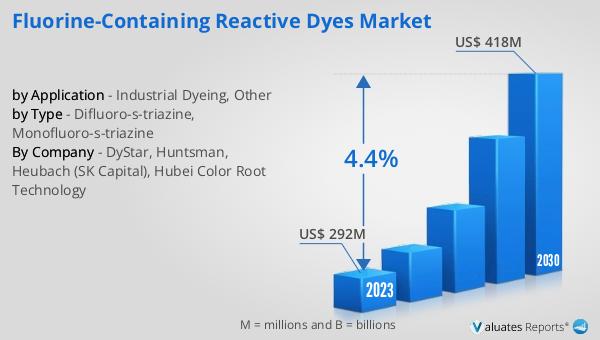
The global market for fluorine-containing reactive dyes was valued at $292 million in 2023 and is projected to reach $418 million by 2030, reflecting a compound annual growth rate (CAGR) of 4.4% during the forecast period from 2024 to 2030. This growth is driven by the increasing demand for high-quality, durable textiles in various industries, including fashion, home textiles, and industrial applications. The superior color fastness and durability of fluorine-containing reactive dyes make them an attractive choice for manufacturers looking to produce long-lasting and vibrant textiles. Additionally, the growing awareness about sustainable and eco-friendly dyeing processes is contributing to the market's expansion, as these dyes offer a more environmentally friendly alternative to traditional dyes. As more industries recognize the benefits of using fluorine-containing reactive dyes, the market is expected to continue its upward trajectory, providing significant opportunities for growth and innovation.


Report Metric Details
Report Name Fluorine-containing Reactive Dyes Market
Accounted market size in 2023 US$ 292 million
Forecasted market size in 2030 US$ 418 million
CAGR 4.4%
Base Year 2023
Forecasted years 2024 - 2030
by Type
  • Difluoro-s-triazine
  • Monofluoro-s-triazine
by Application
  • Industrial Dyeing
  • Other
Production by Region
  • North America
  • Europe
  • China
  • Japan
Consumption by Region
  • North America (United States, Canada)
  • Europe (Germany, France, UK, Italy, Russia)
  • Asia-Pacific (China, Japan, South Korea, Taiwan)
  • Southeast Asia (India)
  • Latin America (Mexico, Brazil)
By Company DyStar, Huntsman, Heubach (SK Capital), Hubei Color Root Technology
Forecast units USD million in value
Report coverage Revenue and volume forecast, company share, competitive landscape, growth factors and trends

Global Ultra-fine Grain Graphite Market Research Report 2024

What is Global Ultra-fine Grain Graphite Market?

The Global Ultra-fine Grain Graphite Market refers to the industry focused on the production, distribution, and utilization of ultra-fine grain graphite. This type of graphite is characterized by its extremely small particle size, which typically measures less than 10 micrometers. Ultra-fine grain graphite is known for its superior properties, such as high thermal and electrical conductivity, excellent chemical resistance, and outstanding mechanical strength. These attributes make it a highly sought-after material in various high-tech applications, including electronics, aerospace, and energy storage. The market for ultra-fine grain graphite is driven by the increasing demand for advanced materials that can meet the stringent requirements of modern technologies. As industries continue to innovate and develop new products, the need for high-performance materials like ultra-fine grain graphite is expected to grow, making this market a critical component of the global materials industry.

Ultra-fine Grain Graphite Market

Isotropic Graphite, Pressed Graphite, Mock Pressed Graphite in the Global Ultra-fine Grain Graphite Market:

Isotropic graphite, pressed graphite, and mock pressed graphite are three significant types of graphite materials used in the Global Ultra-fine Grain Graphite Market. Isotropic graphite is a type of synthetic graphite that has uniform properties in all directions, making it highly reliable and consistent for various applications. It is produced through a process that involves mixing fine graphite powder with a binder, followed by molding, baking, and graphitization. This type of graphite is particularly valued in industries where precision and uniformity are crucial, such as in the manufacturing of semiconductor components and photovoltaic cells. Pressed graphite, on the other hand, is created by compressing graphite powder into a solid form using high pressure. This method enhances the density and mechanical strength of the graphite, making it suitable for applications that require robust and durable materials. Pressed graphite is commonly used in electrical discharge machining (EDM), where it serves as an electrode material due to its excellent electrical conductivity and wear resistance. Mock pressed graphite is similar to pressed graphite but involves a slightly different manufacturing process. It is produced by pressing graphite powder into a mold, followed by a heat treatment process that enhances its properties. Mock pressed graphite is known for its high purity and fine grain structure, making it ideal for applications in the foundry and metallurgy industries. In these sectors, it is used to create molds and crucibles that can withstand high temperatures and corrosive environments. The unique properties of isotropic, pressed, and mock pressed graphite make them indispensable in various high-tech and industrial applications, driving the growth and development of the Global Ultra-fine Grain Graphite Market.

Photovoltaic, Semiconductor, Electrical Discharge Machining, Foundry, Metallurgy, Defense, Others in the Global Ultra-fine Grain Graphite Market:

The Global Ultra-fine Grain Graphite Market finds extensive usage across several key industries, including photovoltaic, semiconductor, electrical discharge machining (EDM), foundry, metallurgy, defense, and others. In the photovoltaic industry, ultra-fine grain graphite is used in the production of solar cells. Its high thermal conductivity and stability at elevated temperatures make it an ideal material for the manufacturing processes involved in creating efficient and durable solar panels. In the semiconductor industry, ultra-fine grain graphite is utilized in the production of semiconductor wafers and components. Its uniform properties and high purity ensure that it meets the stringent requirements for precision and reliability in semiconductor manufacturing. Electrical discharge machining (EDM) is another area where ultra-fine grain graphite plays a crucial role. In EDM, graphite electrodes are used to shape and form metal parts with high precision. The fine grain structure of ultra-fine grain graphite provides excellent electrical conductivity and wear resistance, making it a preferred material for EDM applications. In the foundry industry, ultra-fine grain graphite is used to create molds and crucibles that can withstand high temperatures and corrosive environments. Its high thermal conductivity and resistance to thermal shock make it an ideal material for casting and molding processes. In the metallurgy industry, ultra-fine grain graphite is used as a lubricant and additive in various metallurgical processes. Its ability to withstand high temperatures and reduce friction makes it valuable in the production of metals and alloys. The defense industry also benefits from the unique properties of ultra-fine grain graphite. It is used in the production of components for military equipment and systems, where its high strength, thermal stability, and resistance to corrosion are critical. Other industries that utilize ultra-fine grain graphite include aerospace, automotive, and energy storage, where its superior properties contribute to the development of advanced materials and technologies. The diverse applications of ultra-fine grain graphite across these industries highlight its importance and drive the growth of the Global Ultra-fine Grain Graphite Market.

Global Ultra-fine Grain Graphite Market Outlook:

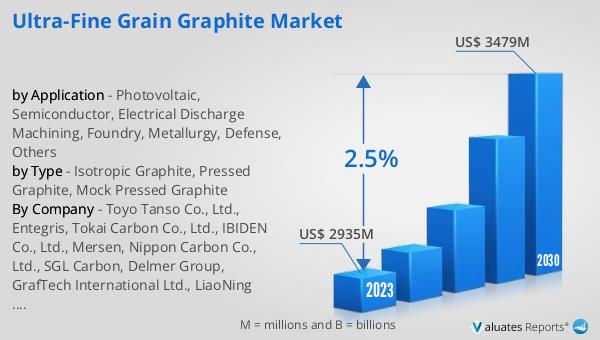
The global Ultra-fine Grain Graphite market was valued at US$ 2935 million in 2023 and is anticipated to reach US$ 3479 million by 2030, witnessing a CAGR of 2.5% during the forecast period 2024-2030. This market outlook indicates a steady growth trajectory for the ultra-fine grain graphite industry, driven by increasing demand across various high-tech and industrial applications. The market's valuation in 2023 reflects the significant role that ultra-fine grain graphite plays in modern technologies, from electronics to energy storage. As industries continue to innovate and develop new products, the need for high-performance materials like ultra-fine grain graphite is expected to grow. The projected market value of US$ 3479 million by 2030 underscores the expanding opportunities and applications for this advanced material. The compound annual growth rate (CAGR) of 2.5% during the forecast period highlights the consistent demand and adoption of ultra-fine grain graphite in various sectors. This growth is likely to be fueled by ongoing advancements in technology and the increasing emphasis on sustainability and efficiency in industrial processes. The market outlook for ultra-fine grain graphite suggests a promising future for this versatile material, as it continues to meet the evolving needs of diverse industries worldwide.


Report Metric Details
Report Name Ultra-fine Grain Graphite Market
Accounted market size in 2023 US$ 2935 million
Forecasted market size in 2030 US$ 3479 million
CAGR 2.5%
Base Year 2023
Forecasted years 2024 - 2030
by Type
  • Isotropic Graphite
  • Pressed Graphite
  • Mock Pressed Graphite
by Application
  • Photovoltaic
  • Semiconductor
  • Electrical Discharge Machining
  • Foundry
  • Metallurgy
  • Defense
  • Others
Production by Region
  • North America
  • Europe
  • China
  • Japan
Consumption by Region
  • North America (United States, Canada)
  • Europe (Germany, France, UK, Italy, Russia)
  • Asia-Pacific (China, Japan, South Korea, Taiwan)
  • Southeast Asia (India)
  • Latin America (Mexico, Brazil)
By Company Toyo Tanso Co., Ltd., Entegris, Tokai Carbon Co., Ltd., IBIDEN Co., Ltd., Mersen, Nippon Carbon Co., Ltd., SGL Carbon, Delmer Group, GrafTech International Ltd., LiaoNing DaHua Glory Speclal Graphite Co., Ltd., WuXing New Material Technology Co., Ltd., Chengdu Carbon Co.,Ltd., Sichuan Guanghan Shida Carbon Co., Ltd., Graphite India Limited, Morgan Advanced Materials, Jiangxi Ningxin New Materials Co., Ltd., Pingdingshan Oriental Carbon, Pingdingshan Boxiang Carbon Co., Ltd., Sinosteel
Forecast units USD million in value
Report coverage Revenue and volume forecast, company share, competitive landscape, growth factors and trends

Global Semiconductor Isotropic Graphite Market Research Report 2024

What is Global Semiconductor Isotropic Graphite Market?

The Global Semiconductor Isotropic Graphite Market is a specialized segment within the broader graphite market, focusing on isotropic graphite used in semiconductor manufacturing. Isotropic graphite is a type of synthetic graphite known for its uniform properties in all directions, making it ideal for high-precision applications. This material is crucial in the semiconductor industry due to its excellent thermal and electrical conductivity, high purity, and resistance to thermal shock. These properties make isotropic graphite indispensable in processes like semiconductor crystal growth, epitaxy, ion implantation, and plasma etching. The market for this material is driven by the increasing demand for semiconductors in various applications, including consumer electronics, automotive, and industrial sectors. As technology advances and the need for more efficient and reliable semiconductors grows, the demand for high-quality isotropic graphite is expected to rise. This market is characterized by a few key players who dominate the production and supply of isotropic graphite, ensuring that the material meets the stringent quality standards required by the semiconductor industry.

Semiconductor Isotropic Graphite Market

Purity ≥ 99.9%, Purity ≥ 99.99%, Purity ≥ 99.999%, Others in the Global Semiconductor Isotropic Graphite Market:

In the Global Semiconductor Isotropic Graphite Market, purity levels are a critical factor that determines the material's suitability for various applications. Purity levels are typically categorized as Purity ≥ 99.9%, Purity ≥ 99.99%, Purity ≥ 99.999%, and Others. Each level of purity has its specific applications and advantages. Purity ≥ 99.9% isotropic graphite is commonly used in applications where high thermal and electrical conductivity are required, but the presence of minor impurities is acceptable. This level of purity is often sufficient for general semiconductor manufacturing processes. Purity ≥ 99.99% isotropic graphite is used in more demanding applications where even minor impurities can affect the performance of the semiconductor devices. This level of purity ensures that the material has fewer contaminants, making it suitable for high-precision applications like semiconductor crystal growth and epitaxy. Purity ≥ 99.999% isotropic graphite is the highest purity level available and is used in the most critical applications where any impurities can lead to significant performance issues. This ultra-high purity graphite is essential for processes like ion implantation and plasma etching, where the presence of contaminants can severely impact the quality and reliability of the semiconductor devices. The "Others" category includes isotropic graphite with varying purity levels that do not fall into the standard categories. These materials are used in specialized applications where specific properties are required, and the standard purity levels may not be sufficient. The choice of purity level depends on the specific requirements of the semiconductor manufacturing process, with higher purity levels generally offering better performance and reliability. The production of high-purity isotropic graphite involves advanced manufacturing techniques and stringent quality control measures to ensure that the material meets the required standards. This includes processes like high-temperature purification, chemical vapor deposition, and meticulous inspection and testing. The demand for high-purity isotropic graphite is driven by the increasing complexity and miniaturization of semiconductor devices, which require materials with exceptional properties to ensure their performance and reliability. As the semiconductor industry continues to evolve, the need for high-purity isotropic graphite is expected to grow, making it a critical component in the production of advanced semiconductor devices.

Semiconductor Crystal Growth, Semiconductor Epitaxy, Ion Implantation, Plasma Etching, Others in the Global Semiconductor Isotropic Graphite Market:

The Global Semiconductor Isotropic Graphite Market finds extensive usage in various critical areas of semiconductor manufacturing, including Semiconductor Crystal Growth, Semiconductor Epitaxy, Ion Implantation, Plasma Etching, and Others. In Semiconductor Crystal Growth, isotropic graphite is used to create the crucibles and molds that hold the raw materials during the crystal growth process. Its high thermal conductivity and resistance to thermal shock ensure that the crystals grow uniformly, which is essential for producing high-quality semiconductor wafers. In Semiconductor Epitaxy, isotropic graphite is used as a substrate material due to its excellent thermal and electrical properties. It provides a stable and uniform surface for the deposition of thin semiconductor layers, which is crucial for creating high-performance semiconductor devices. In Ion Implantation, isotropic graphite is used in the construction of ion sources and beamline components. Its high purity and resistance to ion bombardment make it ideal for this application, ensuring that the implanted ions are accurately delivered to the semiconductor wafers without contamination. In Plasma Etching, isotropic graphite is used to create the electrodes and other components that generate and control the plasma. Its high thermal and electrical conductivity, combined with its resistance to chemical attack, make it an ideal material for this application. The "Others" category includes various specialized applications where isotropic graphite's unique properties are required. This can include uses in chemical vapor deposition, physical vapor deposition, and other advanced semiconductor manufacturing processes. The versatility and reliability of isotropic graphite make it an indispensable material in the semiconductor industry, ensuring that the complex and precise processes involved in semiconductor manufacturing can be carried out effectively and efficiently. As the demand for advanced semiconductor devices continues to grow, the usage of isotropic graphite in these critical areas is expected to increase, further highlighting its importance in the semiconductor manufacturing process.

Global Semiconductor Isotropic Graphite Market Outlook:

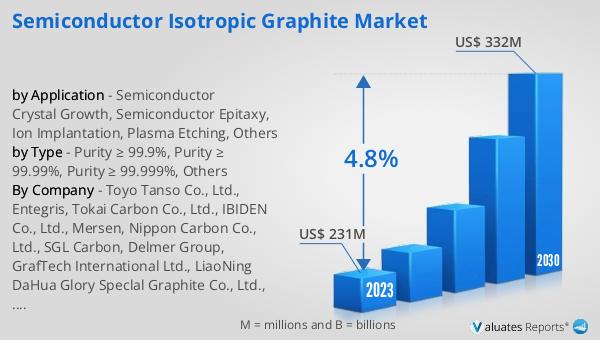
The global Semiconductor Isotropic Graphite market was valued at US$ 231 million in 2023 and is anticipated to reach US$ 332 million by 2030, witnessing a CAGR of 4.8% during the forecast period 2024-2030. This market outlook indicates a steady growth trajectory driven by the increasing demand for high-quality isotropic graphite in the semiconductor industry. The growth is attributed to the rising need for advanced semiconductor devices in various applications, including consumer electronics, automotive, and industrial sectors. The market's expansion is also supported by technological advancements and the continuous miniaturization of semiconductor components, which require materials with exceptional properties to ensure their performance and reliability. The projected growth rate of 4.8% CAGR reflects the market's resilience and the ongoing investments in semiconductor manufacturing infrastructure. As the industry evolves, the demand for high-purity isotropic graphite is expected to rise, making it a critical component in the production of advanced semiconductor devices. The market outlook underscores the importance of isotropic graphite in meeting the stringent quality standards required by the semiconductor industry, ensuring the production of reliable and efficient semiconductor devices.


Report Metric Details
Report Name Semiconductor Isotropic Graphite Market
Accounted market size in 2023 US$ 231 million
Forecasted market size in 2030 US$ 332 million
CAGR 4.8%
Base Year 2023
Forecasted years 2024 - 2030
by Type
  • Purity ≥ 99.9%
  • Purity ≥ 99.99%
  • Purity ≥ 99.999%
  • Others
by Application
  • Semiconductor Crystal Growth
  • Semiconductor Epitaxy
  • Ion Implantation
  • Plasma Etching
  • Others
Production by Region
  • North America
  • Europe
  • China
  • Japan
Consumption by Region
  • North America (United States, Canada)
  • Europe (Germany, France, UK, Italy, Russia)
  • Asia-Pacific (China, Japan, South Korea, Taiwan)
  • Southeast Asia (India)
  • Latin America (Mexico, Brazil)
By Company Toyo Tanso Co., Ltd., Entegris, Tokai Carbon Co., Ltd., IBIDEN Co., Ltd., Mersen, Nippon Carbon Co., Ltd., SGL Carbon, Delmer Group, GrafTech International Ltd., LiaoNing DaHua Glory Speclal Graphite Co., Ltd., WuXing New Material Technology Co., Ltd., Chengdu Carbon Co.,Ltd., Sichuan Guanghan Shida Carbon Co., Ltd., Graphite India Limited
Forecast units USD million in value
Report coverage Revenue and volume forecast, company share, competitive landscape, growth factors and trends

Global Low Refractive Index Optical Fiber Primary Coating Market Research Report 2024

What is Global Low Refractive Index Optical Fiber Primary Coating Market?

The Global Low Refractive Index Optical Fiber Primary Coating Market is a specialized segment within the broader optical fiber industry. This market focuses on coatings applied to optical fibers that have a low refractive index. The primary purpose of these coatings is to protect the optical fibers while maintaining their performance characteristics. Optical fibers are essential components in telecommunications, medical devices, and various other high-tech applications. The low refractive index coatings help in minimizing signal loss and enhancing the overall efficiency of the optical fibers. These coatings are typically made from materials like polyimide, polyacrylate, and silicone, each offering unique properties that make them suitable for different applications. The market for these coatings is driven by the increasing demand for high-speed internet, advancements in medical technology, and the growing need for efficient data transmission systems. As technology continues to evolve, the importance of high-quality optical fiber coatings is expected to grow, making this a dynamic and rapidly developing market.

Low Refractive Index Optical Fiber Primary Coating Market

Refractive Index ≤ 1.36, 1.36 < Refractive Index ≤ 1.40, Others in the Global Low Refractive Index Optical Fiber Primary Coating Market:

Refractive Index ≤ 1.36, 1.36 < Refractive Index ≤ 1.40, and Others are categories within the Global Low Refractive Index Optical Fiber Primary Coating Market that denote different levels of refractive indices for the coatings used on optical fibers. Coatings with a refractive index of ≤ 1.36 are designed to offer minimal signal loss and high efficiency, making them ideal for applications requiring extremely high data transmission rates. These coatings are often used in advanced telecommunications systems and high-speed internet infrastructure. On the other hand, coatings with a refractive index between 1.36 and 1.40 provide a balance between performance and cost. They are suitable for a wide range of applications, including standard telecommunications, medical devices, and industrial uses. These coatings offer good performance characteristics while being more cost-effective than their lower refractive index counterparts. The "Others" category includes coatings with refractive indices higher than 1.40 or those that do not fit neatly into the other two categories. These coatings are typically used in specialized applications where specific performance characteristics are required. For example, they may be used in certain types of sensors, specialized medical equipment, or unique industrial applications. Each category of refractive index coatings offers distinct advantages and is chosen based on the specific needs of the application. The choice of coating can significantly impact the performance, efficiency, and cost of the optical fiber system. As the demand for high-speed data transmission and advanced medical technologies continues to grow, the need for specialized optical fiber coatings with varying refractive indices is also expected to increase. This makes the Global Low Refractive Index Optical Fiber Primary Coating Market a diverse and evolving field, with ongoing research and development aimed at improving the performance and efficiency of these essential components.

Polyimide Fiber, Polyacrylate Fiber, Silicone Fiber, Others in the Global Low Refractive Index Optical Fiber Primary Coating Market:

The Global Low Refractive Index Optical Fiber Primary Coating Market finds its usage in various types of fibers, including Polyimide Fiber, Polyacrylate Fiber, Silicone Fiber, and others. Polyimide fibers are known for their excellent thermal stability and mechanical strength, making them suitable for high-temperature applications and harsh environments. The low refractive index coatings on these fibers help in maintaining signal integrity and reducing signal loss, which is crucial for applications in aerospace, military, and industrial sectors. Polyacrylate fibers, on the other hand, are widely used in telecommunications and medical devices due to their flexibility and ease of handling. The low refractive index coatings on these fibers enhance their performance by minimizing signal attenuation and improving data transmission rates. Silicone fibers are known for their excellent flexibility and biocompatibility, making them ideal for medical applications such as endoscopes and catheters. The low refractive index coatings on silicone fibers help in maintaining the clarity and efficiency of the optical signals, which is essential for accurate medical diagnostics and procedures. Other types of fibers that use low refractive index coatings include specialty fibers used in sensors, imaging systems, and various industrial applications. These coatings help in enhancing the performance and reliability of the fibers, making them suitable for a wide range of applications. The versatility and efficiency of low refractive index coatings make them an essential component in the development of advanced optical fiber systems. As technology continues to advance, the demand for high-performance optical fibers with specialized coatings is expected to grow, driving the growth of the Global Low Refractive Index Optical Fiber Primary Coating Market.

Global Low Refractive Index Optical Fiber Primary Coating Market Outlook:

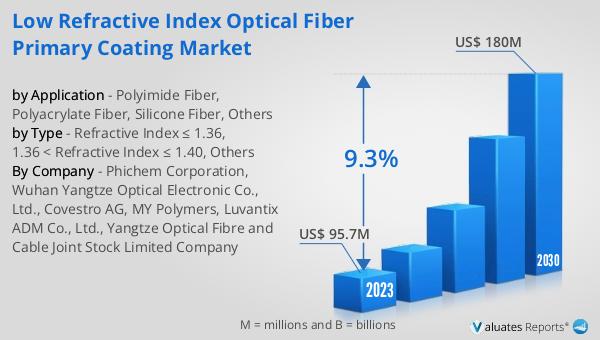
The global Low Refractive Index Optical Fiber Primary Coating market was valued at US$ 95.7 million in 2023 and is anticipated to reach US$ 180 million by 2030, witnessing a CAGR of 9.3% during the forecast period 2024-2030. This market outlook indicates a robust growth trajectory for the industry, driven by increasing demand for high-speed data transmission and advancements in medical technology. The significant growth rate reflects the rising importance of efficient and reliable optical fiber systems in various applications, including telecommunications, medical devices, and industrial uses. The market's expansion is also supported by ongoing research and development efforts aimed at improving the performance and efficiency of low refractive index coatings. As the need for high-quality optical fibers continues to grow, the Global Low Refractive Index Optical Fiber Primary Coating Market is expected to play a crucial role in meeting the demands of modern technology and communication systems.


Report Metric Details
Report Name Low Refractive Index Optical Fiber Primary Coating Market
Accounted market size in 2023 US$ 95.7 million
Forecasted market size in 2030 US$ 180 million
CAGR 9.3%
Base Year 2023
Forecasted years 2024 - 2030
by Type
  • Refractive Index ≤ 1.36
  • 1.36 < Refractive Index ≤ 1.40
  • Others
by Application
  • Polyimide Fiber
  • Polyacrylate Fiber
  • Silicone Fiber
  • Others
Production by Region
  • North America
  • Europe
  • China
  • Japan
Consumption by Region
  • North America (United States, Canada)
  • Europe (Germany, France, UK, Italy, Russia)
  • Asia-Pacific (China, Japan, South Korea, Taiwan)
  • Southeast Asia (India)
  • Latin America (Mexico, Brazil)
By Company Phichem Corporation, Wuhan Yangtze Optical Electronic Co., Ltd., Covestro AG, MY Polymers, Luvantix ADM Co., Ltd., Yangtze Optical Fibre and Cable Joint Stock Limited Company
Forecast units USD million in value
Report coverage Revenue and volume forecast, company share, competitive landscape, growth factors and trends

Global Strong Cation Exchange Agarose Gel Market Research Report 2025

What is Global Strong Cation Exchange Agarose Gel Market? The Global Strong Cation Exchange Agarose Gel Market is a specialized segment wit...