What is Global Viral Gene Therapy Market?
The Global Viral Gene Therapy Market is a rapidly evolving sector within the broader field of biotechnology and medical research. This market focuses on the development and application of viral vectors to deliver therapeutic genes into patients' cells to treat various genetic disorders and diseases. Viral gene therapy leverages the natural ability of viruses to introduce genetic material into host cells, but in this case, the viruses are engineered to be safe and to carry beneficial genes instead of harmful ones. The market encompasses a wide range of activities, including research and development, clinical trials, regulatory approvals, and commercialization of gene therapy products. The ultimate goal is to provide long-lasting or even permanent cures for diseases that currently have limited treatment options. This innovative approach has shown promise in treating conditions such as cancer, genetic disorders, and infectious diseases, making it a focal point for investment and research in the medical community.
Integrating Viral Vectors, Non-Integrating Viral Vectors in the Global Viral Gene Therapy Market:
Integrating viral vectors and non-integrating viral vectors are two primary types of vectors used in the Global Viral Gene Therapy Market, each with distinct characteristics and applications. Integrating viral vectors, such as lentiviruses and retroviruses, incorporate the therapeutic gene into the host cell's genome. This integration ensures that the therapeutic gene is passed on to daughter cells during cell division, making it particularly useful for treating conditions that require long-term gene expression. However, the integration process carries a risk of insertional mutagenesis, where the insertion of the viral DNA disrupts normal cellular functions, potentially leading to cancer or other issues. On the other hand, non-integrating viral vectors, such as adenoviruses and adeno-associated viruses (AAVs), deliver the therapeutic gene into the host cell without integrating it into the genome. This approach minimizes the risk of insertional mutagenesis but may require repeated administrations to maintain therapeutic levels of gene expression, especially in rapidly dividing cells. Non-integrating vectors are often preferred for applications where transient gene expression is sufficient or where the target cells are non-dividing, such as in certain types of muscular or ophthalmologic diseases. Both types of vectors have their advantages and limitations, and the choice between them depends on the specific disease being targeted, the required duration of gene expression, and the safety profile needed for the patient population. The development and optimization of these vectors are crucial for the success of viral gene therapies, and ongoing research aims to improve their efficiency, specificity, and safety.
Metabolic Diseases, Cardiovascular Diseases, Muscular Diseases, Hematologic Diseases, Ophthalmologic Diseases, Infectious Diseases, Others in the Global Viral Gene Therapy Market:
The Global Viral Gene Therapy Market has shown significant potential in treating a variety of diseases, including metabolic, cardiovascular, muscular, hematologic, ophthalmologic, and infectious diseases, among others. In the realm of metabolic diseases, viral gene therapy can introduce functional copies of genes that are defective or missing, thereby restoring normal metabolic functions. For example, gene therapy has been explored for conditions like phenylketonuria and Gaucher disease, where the introduction of a functional gene can help in the production of essential enzymes. In cardiovascular diseases, viral gene therapy aims to repair or replace defective genes that contribute to heart conditions. This can involve promoting the growth of new blood vessels in ischemic heart disease or correcting genetic mutations in inherited cardiomyopathies. Muscular diseases, such as Duchenne muscular dystrophy, have also been a focus, with viral vectors delivering genes that can produce dystrophin, a protein essential for muscle function. Hematologic diseases, including hemophilia and certain types of anemia, can benefit from gene therapy by introducing genes that produce clotting factors or healthy hemoglobin. Ophthalmologic diseases, such as Leber congenital amaurosis, have seen promising results with viral gene therapy, where the introduction of functional genes can restore vision. Infectious diseases, including HIV, are being targeted by gene therapies that aim to enhance the immune system's ability to fight off infections or to directly attack the pathogens. The versatility of viral gene therapy makes it a powerful tool in the fight against a wide range of diseases, offering hope for treatments that go beyond symptom management to address the root causes of these conditions.
Global Viral Gene Therapy Market Outlook:
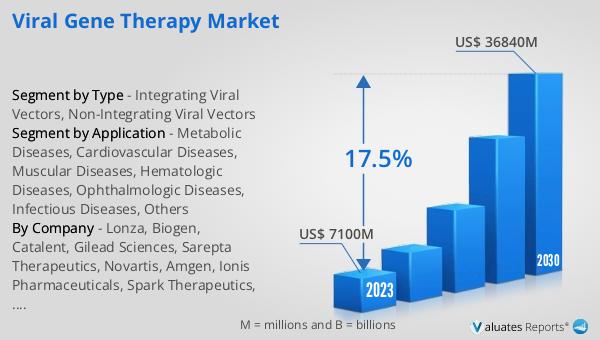
The global Viral Gene Therapy market, valued at US$ 7100 million in 2023, is projected to grow significantly, reaching an estimated US$ 36840 million by 2030. This growth is expected to occur at a compound annual growth rate (CAGR) of 17.5% during the forecast period from 2024 to 2030. This substantial increase reflects the growing recognition of viral gene therapy's potential to revolutionize the treatment of various genetic and acquired diseases. The market's expansion is driven by advancements in biotechnology, increased funding for research and development, and a rising number of clinical trials demonstrating the efficacy and safety of gene therapies. As more gene therapy products receive regulatory approval and enter the market, the accessibility and adoption of these innovative treatments are likely to increase, further fueling market growth. The anticipated growth underscores the importance of continued investment in this field to bring life-changing therapies to patients worldwide.
| Report Metric | Details |
| Report Name | Viral Gene Therapy Market |
| Accounted market size in 2023 | US$ 7100 million |
| Forecasted market size in 2030 | US$ 36840 million |
| CAGR | 17.5% |
| Base Year | 2023 |
| Forecasted years | 2024 - 2030 |
| Segment by Type |
|
| Segment by Application |
|
| By Region |
|
| By Company | Lonza, Biogen, Catalent, Gilead Sciences, Sarepta Therapeutics, Novartis, Amgen, Ionis Pharmaceuticals, Spark Therapeutics, Shanghai Sunway Biotech, SIBIONO, AnGes, Orchard Therapeutics |
| Forecast units | USD million in value |
| Report coverage | Revenue and volume forecast, company share, competitive landscape, growth factors and trends |




