Friday, December 5, 2025

Global Collapsible Tea Kettle Market Research Report 2025

What is Global Collapsible Tea Kettle Market?

The Global Collapsible Tea Kettle Market is an intriguing segment within the broader kitchenware industry, characterized by its innovative design and practical utility. These kettles are designed to be compact and portable, making them ideal for a variety of settings where space is at a premium. The collapsible feature allows the kettle to be folded down to a fraction of its full size, which is particularly beneficial for travelers, campers, and those living in small spaces. Made from materials like silicone and stainless steel, these kettles are not only durable but also lightweight, enhancing their portability. The market for collapsible tea kettles is driven by the increasing demand for convenient and space-saving kitchen appliances. As more people embrace minimalist lifestyles and seek products that offer both functionality and efficiency, the demand for collapsible tea kettles is expected to grow. Additionally, the rise in outdoor recreational activities and travel has further fueled the market, as these kettles are perfect for on-the-go use. With a variety of designs and capacities available, consumers can choose a kettle that best suits their needs, whether for personal use or as a thoughtful gift. The market's growth is also supported by advancements in material technology, which have improved the safety and performance of these kettles, making them a reliable choice for boiling water quickly and efficiently.
Collapsible Tea Kettle Market

High Capacity, Small and Medium Capacity in the Global Collapsible Tea Kettle Market:

In the Global Collapsible Tea Kettle Market, capacity plays a crucial role in meeting diverse consumer needs. High-capacity kettles are designed for those who require larger volumes of hot water, making them suitable for families or group settings. These kettles typically hold more than one liter of water, allowing users to prepare multiple cups of tea or coffee in one go. The convenience of a high-capacity kettle is particularly appreciated in settings where time is of the essence, such as during busy mornings or when hosting gatherings. On the other hand, small and medium-capacity kettles cater to individuals or smaller households. These kettles usually range from 0.5 to 1 liter in capacity, offering a perfect balance between portability and functionality. They are ideal for personal use, allowing users to quickly boil water for a single cup of tea or coffee without the need for a larger appliance. The compact size of these kettles makes them easy to store and transport, which is a significant advantage for those with limited kitchen space or for travelers who need a reliable way to heat water on the go. The versatility of collapsible tea kettles is further enhanced by their ability to operate on various heat sources, including electric, gas, and induction stoves. This adaptability ensures that users can enjoy the benefits of a collapsible kettle regardless of their kitchen setup. Additionally, the use of high-quality materials such as food-grade silicone and stainless steel ensures that these kettles are safe to use and easy to clean, providing a hassle-free experience for consumers. As the market continues to evolve, manufacturers are focusing on enhancing the design and functionality of collapsible tea kettles to meet the changing preferences of consumers. Innovations such as rapid boiling technology, temperature control features, and ergonomic designs are being incorporated to improve user experience and satisfaction. Furthermore, the growing awareness of environmental sustainability has led to the development of eco-friendly collapsible kettles that minimize energy consumption and reduce waste. This aligns with the increasing consumer demand for products that are not only convenient but also environmentally responsible. The Global Collapsible Tea Kettle Market is poised for growth as more consumers recognize the benefits of these versatile and space-saving appliances. Whether for personal use or as a practical gift, collapsible tea kettles offer a unique combination of convenience, efficiency, and style, making them a valuable addition to any kitchen.

Dorm Rooms, Homes, Camping, Traveling, Offices, Hotels, Others in the Global Collapsible Tea Kettle Market:

The Global Collapsible Tea Kettle Market finds its applications across a wide range of settings, each benefiting from the unique features of these innovative appliances. In dorm rooms, where space is often limited, collapsible tea kettles provide a convenient solution for students who need a quick and easy way to prepare hot beverages or instant meals. Their compact design allows them to be easily stored in small spaces, such as a dorm room shelf or a shared kitchen area. For homes, collapsible tea kettles offer a practical alternative to traditional kettles, especially in kitchens where counter space is at a premium. Their ability to fold down when not in use makes them an excellent choice for those who value efficiency and organization. Additionally, the variety of designs and colors available allows homeowners to choose a kettle that complements their kitchen decor. Camping enthusiasts also benefit greatly from collapsible tea kettles, as they are lightweight and easy to pack, making them an essential item for outdoor adventures. Their ability to operate on various heat sources, including portable stoves and campfires, ensures that campers can enjoy a hot cup of tea or coffee no matter where they are. Similarly, travelers appreciate the portability of collapsible tea kettles, which can be easily packed into a suitcase or backpack. Whether staying in a hotel or a vacation rental, travelers can enjoy the comfort of a hot beverage without relying on the amenities provided by their accommodation. In office settings, collapsible tea kettles offer a convenient way for employees to prepare hot drinks without leaving their desks. Their compact size makes them suitable for individual use, allowing employees to enjoy a personalized tea or coffee break without the need for a communal kitchen. Hotels can also enhance their guest experience by providing collapsible tea kettles in rooms, offering guests the convenience of preparing their own hot beverages at any time. This added amenity can be particularly appealing to business travelers or those who prefer the comfort of their own room. Beyond these specific settings, collapsible tea kettles are also used in a variety of other contexts, such as in recreational vehicles, boats, and tiny homes, where space and weight are critical considerations. Their versatility and practicality make them a valuable addition to any setting where hot water is needed quickly and efficiently. As the demand for portable and space-saving appliances continues to grow, the Global Collapsible Tea Kettle Market is well-positioned to meet the needs of consumers across a diverse range of applications.

Global Collapsible Tea Kettle Market Outlook:

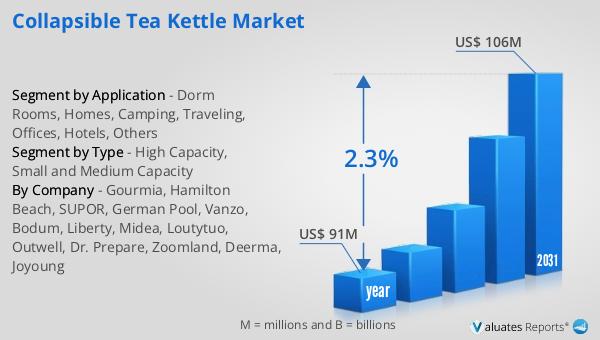
The outlook for the Global Collapsible Tea Kettle Market indicates a steady growth trajectory over the coming years. In 2024, the market was valued at approximately US$ 91 million, reflecting a strong demand for these innovative kitchen appliances. By 2031, the market is expected to expand to a revised size of US$ 106 million, driven by a compound annual growth rate (CAGR) of 2.3% during the forecast period. This growth is indicative of the increasing consumer preference for convenient and space-saving solutions in the kitchenware segment. The steady rise in market value can be attributed to several factors, including the growing trend of minimalist living and the increasing popularity of outdoor activities such as camping and traveling. As more consumers seek products that offer both functionality and portability, collapsible tea kettles are becoming an attractive option for a wide range of users. Additionally, advancements in material technology and design innovations are enhancing the appeal of these kettles, making them a reliable choice for consumers who value efficiency and style. The market's growth is also supported by the rising awareness of environmental sustainability, with manufacturers focusing on developing eco-friendly products that minimize energy consumption and reduce waste. As the Global Collapsible Tea Kettle Market continues to evolve, it is poised to meet the diverse needs of consumers across various settings, from homes and offices to outdoor adventures and travel.


Report Metric Details
Report Name Collapsible Tea Kettle Market
Accounted market size in year US$ 91 million
Forecasted market size in 2031 US$ 106 million
CAGR 2.3%
Base Year year
Forecasted years 2025 - 2031
Segment by Type
  • High Capacity
  • Small and Medium Capacity
Segment by Application
  • Dorm Rooms
  • Homes
  • Camping
  • Traveling
  • Offices
  • Hotels
  • Others
Consumption by Region
  • North America (United States, Canada)
  • Europe (Germany, France, UK, Italy, Russia)
  • Asia-Pacific (China, Japan, South Korea, Taiwan)
  • Southeast Asia (India)
  • Latin America (Mexico, Brazil)
By Company Gourmia, Hamilton Beach, SUPOR, German Pool, Vanzo, Bodum, Liberty, Midea, Loutytuo, Outwell, Dr. Prepare, Zoomland, Deerma, Joyoung
Forecast units USD million in value
Report coverage Revenue and volume forecast, company share, competitive landscape, growth factors and trends

Global Self-service Patient Kiosk Market Research Report 2025

What is Global Self-service Patient Kiosk Market?

The Global Self-service Patient Kiosk Market is an innovative segment within the healthcare industry that focuses on enhancing patient experience and streamlining administrative processes. These kiosks are essentially automated systems that allow patients to perform various tasks independently, such as checking in for appointments, updating personal information, and making payments. By reducing the need for direct interaction with administrative staff, these kiosks help in minimizing wait times and improving the overall efficiency of healthcare facilities. The market for these kiosks is expanding as healthcare providers increasingly recognize the benefits of automation in improving patient satisfaction and operational efficiency. With the integration of advanced technologies like touch screens, biometric identification, and secure payment systems, self-service patient kiosks are becoming an essential component of modern healthcare infrastructure. They not only enhance the patient experience but also allow healthcare providers to allocate resources more effectively, focusing on delivering quality care. As the demand for more efficient healthcare services grows, the Global Self-service Patient Kiosk Market is poised to play a crucial role in transforming how healthcare services are delivered and experienced.

Self-service Patient Kiosk Market

Indoor Kiosks, Outdoor Kiosks in the Global Self-service Patient Kiosk Market:

Indoor kiosks and outdoor kiosks are two primary types of self-service patient kiosks that cater to different environments and user needs within the Global Self-service Patient Kiosk Market. Indoor kiosks are typically found within the confines of healthcare facilities such as hospitals, clinics, and medical offices. These kiosks are designed to operate in controlled environments, offering a range of functionalities that enhance patient interaction and streamline administrative tasks. They are equipped with user-friendly interfaces, often featuring touch screens that guide patients through various processes such as appointment check-ins, form submissions, and payment transactions. Indoor kiosks are strategically placed in waiting areas or near entrances to ensure easy access for patients, thereby reducing congestion at reception desks and allowing staff to focus on more critical tasks. On the other hand, outdoor kiosks are designed to withstand environmental elements and are often located outside healthcare facilities or in public spaces. These kiosks are built with robust materials to endure weather conditions such as rain, heat, and cold, ensuring durability and reliability. Outdoor kiosks serve as convenient access points for patients who may need to perform tasks such as scheduling appointments, accessing health information, or obtaining directions to healthcare facilities. They are particularly beneficial in rural or underserved areas where access to healthcare services may be limited. By providing 24/7 access, outdoor kiosks ensure that patients can engage with healthcare services at their convenience, thereby improving accessibility and patient engagement. Both indoor and outdoor kiosks are integral to the Global Self-service Patient Kiosk Market, offering unique advantages that cater to diverse patient needs and healthcare settings. As technology continues to advance, these kiosks are expected to incorporate more sophisticated features such as artificial intelligence and machine learning, further enhancing their functionality and impact on the healthcare industry.

Hospital, Pharmacy, Others in the Global Self-service Patient Kiosk Market:

The usage of Global Self-service Patient Kiosk Market in hospitals, pharmacies, and other healthcare settings is transforming the way patients interact with healthcare services. In hospitals, self-service kiosks are primarily used to streamline the patient check-in process, reducing wait times and improving the overall patient experience. Patients can use these kiosks to check in for appointments, update their personal information, and make payments, all without the need for direct interaction with administrative staff. This not only enhances patient satisfaction but also allows hospital staff to focus on more critical tasks, such as patient care. Additionally, kiosks in hospitals can be used to provide patients with important information, such as directions to specific departments or details about their treatment plans. In pharmacies, self-service kiosks offer a convenient way for patients to manage their prescriptions. Patients can use these kiosks to refill prescriptions, check medication availability, and make payments. This reduces the need for patients to wait in line, improving the efficiency of pharmacy operations and enhancing the overall patient experience. Furthermore, kiosks in pharmacies can provide patients with information about their medications, including dosage instructions and potential side effects, ensuring that patients are well-informed about their treatment. In other healthcare settings, such as clinics and medical offices, self-service kiosks are used to streamline administrative processes and improve patient engagement. Patients can use these kiosks to schedule appointments, access their medical records, and receive important health information. This not only enhances the patient experience but also improves the efficiency of healthcare operations, allowing staff to focus on delivering quality care. Overall, the usage of self-service kiosks in hospitals, pharmacies, and other healthcare settings is revolutionizing the way patients interact with healthcare services, improving accessibility, efficiency, and patient satisfaction.

Global Self-service Patient Kiosk Market Outlook:

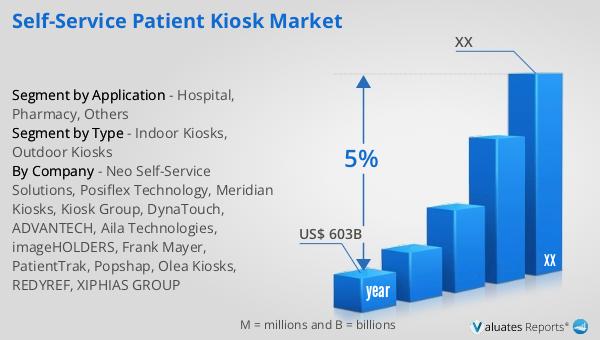
Based on our analysis, the global market for medical devices is projected to reach approximately $603 billion in 2023, with an anticipated growth rate of 5% annually over the next six years. This growth is indicative of the increasing demand for advanced medical technologies and innovations that enhance patient care and streamline healthcare operations. The expansion of the medical device market is driven by several factors, including the rising prevalence of chronic diseases, an aging population, and the growing emphasis on improving healthcare infrastructure worldwide. As healthcare providers seek to adopt more efficient and effective solutions, the demand for medical devices, including self-service patient kiosks, is expected to rise. These kiosks play a crucial role in modernizing healthcare facilities by automating administrative tasks and improving patient engagement. With the integration of advanced technologies such as artificial intelligence and machine learning, self-service kiosks are becoming more sophisticated, offering enhanced functionalities that cater to the evolving needs of healthcare providers and patients alike. As the global market for medical devices continues to grow, the adoption of self-service patient kiosks is likely to increase, further transforming the healthcare landscape and improving the delivery of healthcare services.


Report Metric Details
Report Name Self-service Patient Kiosk Market
Accounted market size in year US$ 603 billion
CAGR 5%
Base Year year
Segment by Type
  • Indoor Kiosks
  • Outdoor Kiosks
Segment by Application
  • Hospital
  • Pharmacy
  • Others
Consumption by Region
  • North America (United States, Canada)
  • Europe (Germany, France, UK, Italy, Russia)
  • Asia-Pacific (China, Japan, South Korea, Taiwan)
  • Southeast Asia (India)
  • Latin America (Mexico, Brazil)
By Company Neo Self-Service Solutions, Posiflex Technology, Meridian Kiosks, Kiosk Group, DynaTouch, ADVANTECH, Aila Technologies, imageHOLDERS, Frank Mayer, PatientTrak, Popshap, Olea Kiosks, REDYREF, XIPHIAS GROUP
Forecast units USD million in value
Report coverage Revenue and volume forecast, company share, competitive landscape, growth factors and trends

Global Gel Batteries for Solar Market Research Report 2025

What is Global Gel Batteries for Solar Market?

The global gel batteries for solar market is a specialized segment within the broader energy storage industry, focusing on the use of gel-based lead-acid batteries in solar power systems. These batteries are designed to store energy generated from solar panels, providing a reliable power source even when the sun isn't shining. Gel batteries are known for their durability and ability to withstand extreme temperatures, making them ideal for solar applications. They contain a gel-like electrolyte, which reduces the risk of leakage and allows for a maintenance-free operation. This market is driven by the increasing adoption of renewable energy sources, particularly solar power, as countries strive to reduce their carbon footprint and transition to cleaner energy solutions. The demand for gel batteries is also fueled by their long lifespan and deep discharge capabilities, which are essential for efficient energy storage in solar systems. As more regions invest in solar infrastructure, the global gel batteries for solar market is expected to grow, offering sustainable energy solutions to meet the rising energy demands.

Gel Batteries for Solar Market

Below 100 Ah, 100Ah~200Ah, More Than 200Ah in the Global Gel Batteries for Solar Market:

In the global gel batteries for solar market, batteries are categorized based on their capacity, measured in ampere-hours (Ah). The first category, below 100 Ah, includes smaller batteries typically used in residential solar systems or small-scale applications. These batteries are ideal for homeowners looking to harness solar energy for personal use, such as powering lights, small appliances, or emergency backup systems. Their compact size and lower capacity make them affordable and easy to install, appealing to individuals seeking to reduce their reliance on traditional power grids. The second category, 100Ah to 200Ah, represents a mid-range capacity suitable for both residential and commercial applications. These batteries offer a balance between capacity and cost, making them popular among small businesses and larger households with higher energy needs. They can support a wider range of devices and provide a more substantial backup during power outages. The third category, more than 200Ah, encompasses high-capacity batteries designed for industrial and large-scale solar installations. These batteries are crucial for businesses and facilities with significant energy demands, such as factories, data centers, or remote operations. Their robust capacity ensures a steady power supply, even during extended periods of low sunlight. As the global push for renewable energy continues, the demand for gel batteries across all capacity ranges is expected to rise, driven by the need for reliable and efficient energy storage solutions.

Emergency Lighting, Photovoltaic, Others in the Global Gel Batteries for Solar Market:

Gel batteries for solar applications are utilized in various areas, each with specific requirements and benefits. In emergency lighting, gel batteries provide a reliable power source during outages, ensuring that critical areas remain illuminated. Their ability to deliver consistent power without frequent maintenance makes them ideal for emergency systems, where reliability is paramount. These batteries can be integrated into existing lighting systems, offering a seamless transition to backup power when needed. In photovoltaic systems, gel batteries play a crucial role in storing energy generated by solar panels. They allow for the efficient use of solar power, even when sunlight is not available, by storing excess energy for later use. This capability is essential for maximizing the benefits of solar installations, particularly in regions with variable weather conditions. Gel batteries' deep discharge capabilities and long lifespan make them a preferred choice for photovoltaic applications, where consistent performance is critical. Beyond emergency lighting and photovoltaic systems, gel batteries are used in various other applications, such as off-grid power systems, telecommunications, and remote monitoring stations. Their versatility and reliability make them suitable for diverse environments, from rural areas with limited grid access to urban settings requiring backup power solutions. As the demand for sustainable energy solutions grows, the usage of gel batteries in these areas is expected to expand, supporting the transition to cleaner and more efficient energy systems.

Global Gel Batteries for Solar Market Outlook:

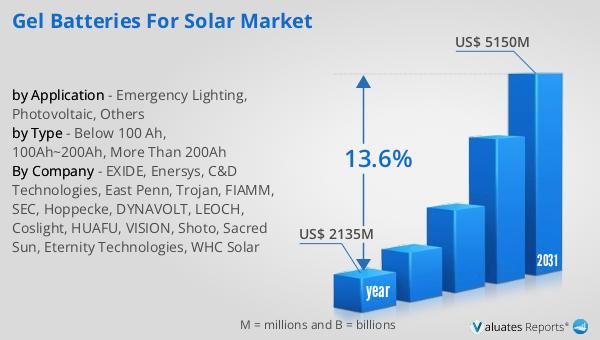
The outlook for the global gel batteries for solar market is promising, with significant growth anticipated over the coming years. In 2024, the market was valued at approximately US$ 2135 million, and it is projected to reach around US$ 5150 million by 2031, reflecting a compound annual growth rate (CAGR) of 13.6% during this period. This growth is driven by the increasing adoption of solar energy and the need for efficient energy storage solutions. According to the International Energy Agency, China's market share in key products of the solar supply chain has surpassed 80%, highlighting the country's dominance in this sector. However, from 2023 onwards, the average annual growth rate of new photovoltaic installed capacity is expected to exceed 21%, indicating a robust expansion of solar infrastructure globally. This growth will likely spur further demand for gel batteries, as they are integral to the efficient storage and utilization of solar energy. As countries continue to invest in renewable energy and seek to reduce their carbon emissions, the global gel batteries for solar market is poised for significant development, offering sustainable solutions to meet the world's growing energy needs.


Report Metric Details
Report Name Gel Batteries for Solar Market
Accounted market size in year US$ 2135 million
Forecasted market size in 2031 US$ 5150 million
CAGR 13.6%
Base Year year
Forecasted years 2025 - 2031
by Type
  • Below 100 Ah
  • 100Ah~200Ah
  • More Than 200Ah
by Application
  • Emergency Lighting
  • Photovoltaic
  • Others
Production by Region
  • North America
  • Europe
  • China
  • Japan
Consumption by Region
  • North America (United States, Canada)
  • Europe (Germany, France, UK, Italy, Russia)
  • Asia-Pacific (China, Japan, South Korea, Taiwan)
  • Southeast Asia (India)
  • Latin America (Mexico, Brazil)
By Company EXIDE, Enersys, C&D Technologies, East Penn, Trojan, FIAMM, SEC, Hoppecke, DYNAVOLT, LEOCH, Coslight, HUAFU, VISION, Shoto, Sacred Sun, Eternity Technologies, WHC Solar
Forecast units USD million in value
Report coverage Revenue and volume forecast, company share, competitive landscape, growth factors and trends

Global Portable Glucose Meters Market Research Report 2025

What is Global Portable Glucose Meters Market?

The Global Portable Glucose Meters Market refers to the worldwide industry focused on the production and distribution of portable devices used to measure blood glucose levels. These devices are crucial for individuals with diabetes, allowing them to monitor their blood sugar levels conveniently and manage their condition effectively. The market has seen significant growth due to the increasing prevalence of diabetes, advancements in technology, and the rising demand for home healthcare solutions. Portable glucose meters are designed to be user-friendly, providing quick and accurate readings, which are essential for timely medical interventions. The market is characterized by a variety of products that cater to different needs, including basic models for personal use and more advanced versions with connectivity features for healthcare professionals. The global reach of this market is supported by a network of manufacturers, suppliers, and healthcare providers who work together to ensure that these essential devices are accessible to those who need them. As the demand for efficient diabetes management tools continues to rise, the Global Portable Glucose Meters Market is expected to expand further, driven by innovation and the growing awareness of diabetes care.

Portable Glucose Meters Market

Glucose Oxidase Method, Glucose Dehydrogenase Method, Others in the Global Portable Glucose Meters Market:

The Global Portable Glucose Meters Market is underpinned by various methodologies used to measure blood glucose levels, with the Glucose Oxidase Method and the Glucose Dehydrogenase Method being the most prominent. The Glucose Oxidase Method is a widely used enzymatic technique that involves the oxidation of glucose by the enzyme glucose oxidase. This reaction produces hydrogen peroxide, which is then measured to determine the glucose concentration in the blood. This method is known for its specificity to glucose and is commonly used in many portable glucose meters due to its reliability and accuracy. However, it can be affected by the presence of other substances in the blood, such as ascorbic acid or uric acid, which may interfere with the results. On the other hand, the Glucose Dehydrogenase Method employs the enzyme glucose dehydrogenase to catalyze the oxidation of glucose. This method is less susceptible to interference from other substances, making it a preferred choice in certain situations. It is particularly advantageous in environments where the presence of interfering substances is a concern. Additionally, glucose dehydrogenase-based meters often require less blood for testing, which can be more comfortable for users. Beyond these two primary methods, there are other techniques employed in the market, each with its own set of advantages and limitations. Some devices may use electrochemical sensors that provide rapid results and are easy to use, while others might incorporate optical sensors for non-invasive testing. The choice of method often depends on the specific needs of the user, such as the required accuracy, ease of use, and cost considerations. As technology continues to advance, the Global Portable Glucose Meters Market is likely to see further innovations in testing methodologies, aimed at improving user experience and enhancing the accuracy of glucose monitoring. These advancements are crucial in supporting the growing demand for effective diabetes management solutions worldwide.

Medical, Home Care in the Global Portable Glucose Meters Market:

The usage of portable glucose meters in the Global Portable Glucose Meters Market spans across various areas, with significant applications in both medical and home care settings. In the medical field, these devices are indispensable tools for healthcare professionals who need to monitor and manage the blood glucose levels of their patients. Hospitals and clinics rely on portable glucose meters to provide quick and accurate readings, which are essential for making informed decisions about patient care. These devices help in the diagnosis and management of diabetes, allowing healthcare providers to tailor treatment plans based on real-time data. The portability of these meters ensures that they can be used in various settings, from emergency rooms to outpatient clinics, providing flexibility and convenience for both patients and healthcare providers. In home care, portable glucose meters have revolutionized the way individuals manage their diabetes. These devices empower patients to take control of their health by allowing them to monitor their blood sugar levels regularly and make necessary adjustments to their diet, medication, or lifestyle. The ease of use and accessibility of portable glucose meters have made them a staple in home healthcare, enabling individuals to maintain their independence while effectively managing their condition. The ability to track glucose levels at home reduces the need for frequent visits to healthcare facilities, saving time and resources for both patients and the healthcare system. Moreover, many modern portable glucose meters come equipped with connectivity features that allow users to share their readings with healthcare providers remotely. This capability facilitates continuous monitoring and support, ensuring that patients receive timely interventions when needed. The integration of technology in these devices has further enhanced their utility, making them an integral part of diabetes management in both medical and home care settings. As the prevalence of diabetes continues to rise globally, the demand for portable glucose meters in these areas is expected to grow, driven by the need for effective and convenient monitoring solutions.

Global Portable Glucose Meters Market Outlook:

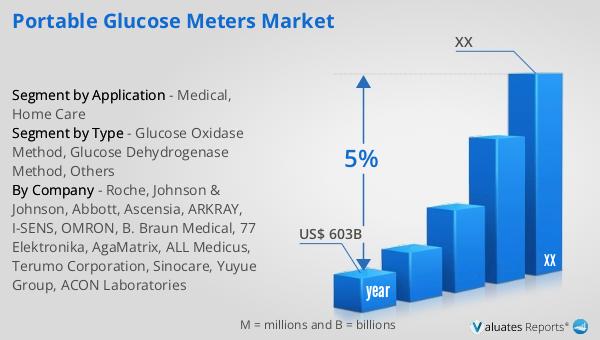
Based on our research, the global market for medical devices, which includes portable glucose meters, is projected to reach approximately $603 billion in 2023. This market is anticipated to experience a steady growth rate, with a compound annual growth rate (CAGR) of 5% over the next six years. This growth is driven by several factors, including the increasing prevalence of chronic diseases such as diabetes, advancements in medical technology, and the rising demand for home healthcare solutions. The expansion of the medical devices market reflects the growing need for innovative and efficient healthcare solutions that can improve patient outcomes and enhance the quality of life. Portable glucose meters, as a crucial component of this market, play a vital role in diabetes management, offering users the ability to monitor their blood sugar levels conveniently and accurately. The continuous development of new technologies and the integration of digital health solutions are expected to further propel the growth of the portable glucose meters market, making it an essential segment within the broader medical devices industry. As healthcare systems worldwide strive to improve access to quality care, the demand for portable and user-friendly medical devices is likely to increase, supporting the overall growth of the market.


Report Metric Details
Report Name Portable Glucose Meters Market
Accounted market size in year US$ 603 billion
CAGR 5%
Base Year year
Segment by Type
  • Glucose Oxidase Method
  • Glucose Dehydrogenase Method
  • Others
Segment by Application
  • Medical
  • Home Care
Consumption by Region
  • North America (United States, Canada)
  • Europe (Germany, France, UK, Italy, Russia)
  • Asia-Pacific (China, Japan, South Korea, Taiwan)
  • Southeast Asia (India)
  • Latin America (Mexico, Brazil)
By Company Roche, Johnson & Johnson, Abbott, Ascensia, ARKRAY, I-SENS, OMRON, B. Braun Medical, 77 Elektronika, AgaMatrix, ALL Medicus, Terumo Corporation, Sinocare, Yuyue Group, ACON Laboratories
Forecast units USD million in value
Report coverage Revenue and volume forecast, company share, competitive landscape, growth factors and trends

Global Wireless LED Dental Headlight Market Research Report 2025

What is Global Wireless LED Dental Headlight Market?

The Global Wireless LED Dental Headlight Market is an innovative segment within the broader medical device industry, focusing on providing advanced lighting solutions for dental professionals. These headlights are designed to offer optimal illumination during dental procedures, enhancing visibility and precision. Unlike traditional wired headlights, wireless LED dental headlights offer greater mobility and ease of use, eliminating the constraints of cords and allowing dentists to move freely without the risk of entanglement. The market for these devices is driven by the increasing demand for efficient and ergonomic dental equipment, as well as the growing awareness of the importance of proper lighting in dental practices. With advancements in LED technology, these headlights provide bright, consistent light with minimal heat output, ensuring comfort for both the dentist and the patient. Additionally, the long battery life and lightweight design of these devices make them a practical choice for dental professionals seeking to improve their workflow and patient outcomes. As dental practices continue to modernize and prioritize patient care, the adoption of wireless LED dental headlights is expected to rise, contributing to the growth of this market segment.

Wireless LED Dental Headlight Market

TTL Loupes, Flip-up Loupes in the Global Wireless LED Dental Headlight Market:

TTL (Through-The-Lens) Loupes and Flip-up Loupes are essential tools in the Global Wireless LED Dental Headlight Market, each offering unique benefits to dental professionals. TTL Loupes are custom-made to fit the user's specific interpupillary distance and are mounted directly onto the lenses of the glasses. This design provides a fixed magnification and a wider field of view, allowing dentists to maintain a natural posture while working. The integration of wireless LED headlights with TTL Loupes enhances their functionality by providing focused illumination directly in the line of sight, reducing eye strain and improving precision during procedures. On the other hand, Flip-up Loupes offer adjustable magnification and can be flipped up when not in use, providing flexibility for dentists who require varying levels of magnification for different tasks. The combination of Flip-up Loupes with wireless LED headlights allows for easy adjustment of the light angle and intensity, catering to the specific needs of each procedure. Both types of loupes are designed to improve ergonomics and reduce the risk of musculoskeletal disorders, which are common among dental professionals due to prolonged periods of working in awkward positions. The choice between TTL and Flip-up Loupes often depends on personal preference and the specific requirements of the dental practice. However, the integration of wireless LED headlights with both types of loupes represents a significant advancement in dental technology, offering enhanced visibility, comfort, and efficiency. As the demand for high-quality dental care continues to grow, the adoption of these advanced tools is likely to increase, driving further innovation and development in the Global Wireless LED Dental Headlight Market.

Hospitals, Dental Clinics, Others in the Global Wireless LED Dental Headlight Market:

The Global Wireless LED Dental Headlight Market finds its application in various settings, including hospitals, dental clinics, and other healthcare facilities. In hospitals, these headlights are used by oral surgeons and dental specialists who require precise lighting during complex surgical procedures. The wireless design allows for greater mobility and flexibility in the operating room, enabling surgeons to focus on the task at hand without the distraction of tangled cords. The bright, consistent light provided by LED technology ensures that even the smallest details are visible, reducing the risk of errors and improving patient outcomes. In dental clinics, wireless LED dental headlights are used by general dentists and hygienists to enhance visibility during routine examinations and procedures. The ergonomic design of these devices helps reduce fatigue and strain, allowing dental professionals to work more efficiently and comfortably. The ability to adjust the light intensity and angle ensures that the illumination is tailored to the specific needs of each procedure, improving accuracy and patient satisfaction. Additionally, the lightweight and portable nature of these headlights makes them ideal for use in mobile dental clinics and outreach programs, where access to traditional lighting equipment may be limited. In other healthcare settings, such as veterinary clinics and educational institutions, wireless LED dental headlights are used to provide high-quality lighting for a variety of applications. The versatility and convenience of these devices make them a valuable tool for any healthcare professional seeking to improve their practice and deliver exceptional care. As the demand for advanced dental equipment continues to rise, the Global Wireless LED Dental Headlight Market is expected to expand, offering new opportunities for innovation and growth.

Global Wireless LED Dental Headlight Market Outlook:

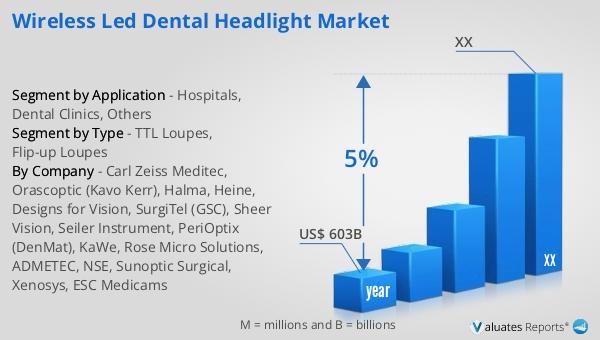
Based on our research, the global market for medical devices is projected to reach approximately $603 billion in 2023, with an anticipated growth rate of 5% annually over the next six years. This growth is indicative of the increasing demand for advanced medical technologies and the continuous innovation within the healthcare sector. The expansion of the medical device market is driven by several factors, including the rising prevalence of chronic diseases, an aging global population, and the growing emphasis on improving patient outcomes through advanced diagnostic and therapeutic solutions. As healthcare systems worldwide strive to enhance the quality of care and reduce costs, the adoption of innovative medical devices, such as wireless LED dental headlights, is expected to play a crucial role in achieving these goals. The integration of cutting-edge technologies into medical devices not only improves their functionality and efficiency but also enhances the overall patient experience. As a result, the medical device industry is poised for significant growth, with new opportunities emerging for manufacturers and healthcare providers alike. The increasing focus on personalized medicine and the development of minimally invasive procedures further contribute to the expansion of this market, as patients and healthcare professionals seek more effective and less invasive treatment options. As the global medical device market continues to evolve, the demand for advanced solutions like wireless LED dental headlights is expected to rise, driving further innovation and development in this dynamic industry.


Report Metric Details
Report Name Wireless LED Dental Headlight Market
Accounted market size in year US$ 603 billion
CAGR 5%
Base Year year
Segment by Type
  • TTL Loupes
  • Flip-up Loupes
Segment by Application
  • Hospitals
  • Dental Clinics
  • Others
Consumption by Region
  • North America (United States, Canada)
  • Europe (Germany, France, UK, Italy, Russia)
  • Asia-Pacific (China, Japan, South Korea, Taiwan)
  • Southeast Asia (India)
  • Latin America (Mexico, Brazil)
By Company Carl Zeiss Meditec, Orascoptic (Kavo Kerr), Halma, Heine, Designs for Vision, SurgiTel (GSC), Sheer Vision, Seiler Instrument, PeriOptix (DenMat), KaWe, Rose Micro Solutions, ADMETEC, NSE, Sunoptic Surgical, Xenosys, ESC Medicams
Forecast units USD million in value
Report coverage Revenue and volume forecast, company share, competitive landscape, growth factors and trends

Global Healthcare Touch Screen Kiosk Market Research Report 2025

What is Global Healthcare Touch Screen Kiosk Market?

The Global Healthcare Touch Screen Kiosk Market is a rapidly evolving sector that integrates advanced technology with healthcare services to enhance patient experience and streamline operations. These kiosks are interactive, self-service stations equipped with touch screens, allowing patients to check in, schedule appointments, pay bills, and access medical information without the need for direct human interaction. This technology is particularly beneficial in reducing wait times, improving service efficiency, and minimizing administrative burdens on healthcare staff. As healthcare facilities strive to improve patient satisfaction and operational efficiency, the demand for touch screen kiosks is on the rise. These kiosks are not only found in hospitals but also in clinics, pharmacies, and other healthcare settings, offering a versatile solution for various administrative and patient-facing tasks. The market is driven by the increasing adoption of digital solutions in healthcare, the need for cost-effective management of healthcare services, and the growing emphasis on patient-centered care. With advancements in technology, these kiosks are becoming more sophisticated, offering features such as multilingual support, telemedicine capabilities, and integration with electronic health records (EHRs), making them an indispensable tool in modern healthcare environments.

Healthcare Touch Screen Kiosk Market

Indoor Kiosks, Outdoor Kiosks in the Global Healthcare Touch Screen Kiosk Market:

Indoor kiosks and outdoor kiosks serve distinct purposes within the Global Healthcare Touch Screen Kiosk Market, each tailored to meet specific needs and environments. Indoor kiosks are typically located within healthcare facilities such as hospitals, clinics, and pharmacies. These kiosks are designed to operate in controlled environments, protected from weather elements, and are often used for patient check-ins, appointment scheduling, and information dissemination. They are strategically placed in waiting areas, lobbies, or near entrances to facilitate easy access for patients and visitors. Indoor kiosks are equipped with user-friendly interfaces, often featuring large touch screens and intuitive navigation to accommodate users of all ages and technological proficiency. They may also include additional functionalities such as payment processing, wayfinding, and access to health records, enhancing the overall patient experience and operational efficiency of the facility. On the other hand, outdoor kiosks are built to withstand various weather conditions and are typically installed in locations such as hospital parking lots, entrances, or other outdoor areas where patients and visitors can access them at any time. These kiosks are constructed with durable materials and are often equipped with weatherproofing features such as waterproof screens, temperature control systems, and robust enclosures to protect the internal components from environmental factors. Outdoor kiosks are particularly useful for providing 24/7 access to healthcare services, allowing patients to check in, make payments, or access information even outside regular operating hours. They are also valuable in managing patient flow during peak times or emergencies, offering an alternative to indoor facilities that may be overwhelmed. Both indoor and outdoor kiosks play a crucial role in enhancing the accessibility and efficiency of healthcare services, catering to the diverse needs of patients and healthcare providers. As the healthcare industry continues to embrace digital transformation, the integration of these kiosks into healthcare settings is expected to grow, driven by the need for improved patient engagement, operational efficiency, and cost-effective service delivery. The versatility and adaptability of these kiosks make them a valuable asset in the modern healthcare landscape, providing a seamless interface between patients and healthcare providers.

Hospital, Pharmacy, Others in the Global Healthcare Touch Screen Kiosk Market:

The usage of Global Healthcare Touch Screen Kiosks in hospitals, pharmacies, and other healthcare settings is transforming the way healthcare services are delivered and accessed. In hospitals, these kiosks are primarily used for patient check-ins, reducing the need for manual registration processes and minimizing wait times. Patients can easily check in for their appointments by entering their details on the touch screen, which then updates the hospital's system in real-time. This not only streamlines the check-in process but also reduces the administrative burden on hospital staff, allowing them to focus on more critical tasks. Additionally, kiosks in hospitals can be used for wayfinding, helping patients and visitors navigate the often complex layouts of healthcare facilities. By providing interactive maps and directions, kiosks enhance the overall patient experience and reduce the stress associated with finding one's way in large hospitals. In pharmacies, touch screen kiosks serve as a convenient tool for prescription management and medication information. Patients can use these kiosks to refill prescriptions, check medication availability, and access detailed information about their medications, including dosage instructions and potential side effects. This self-service approach not only improves efficiency but also empowers patients to take an active role in managing their health. Furthermore, kiosks in pharmacies can facilitate payment processing, allowing patients to pay for their medications quickly and securely. Beyond hospitals and pharmacies, touch screen kiosks are also utilized in other healthcare settings such as clinics, urgent care centers, and diagnostic labs. In these environments, kiosks can be used for appointment scheduling, test result retrieval, and patient education. By providing easy access to health information and services, kiosks help improve patient engagement and satisfaction. They also play a crucial role in reducing the workload of healthcare staff, enabling them to focus on delivering quality care. As healthcare providers continue to seek innovative solutions to enhance service delivery and patient experience, the adoption of touch screen kiosks is expected to increase, driven by their ability to streamline operations, improve accessibility, and support patient-centered care.

Global Healthcare Touch Screen Kiosk Market Outlook:

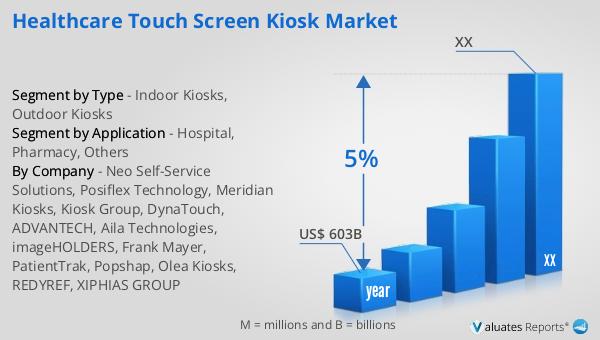
Our research indicates that the global market for medical devices is projected to reach approximately $603 billion by the year 2023, with an anticipated growth rate of 5% annually over the next six years. This growth is reflective of the increasing demand for advanced medical technologies and the continuous innovation within the healthcare sector. The expansion of the medical device market is driven by several factors, including the rising prevalence of chronic diseases, an aging global population, and the growing emphasis on improving healthcare infrastructure and services. As healthcare systems worldwide strive to enhance patient outcomes and operational efficiency, the adoption of cutting-edge medical devices is becoming increasingly essential. This trend is further supported by advancements in technology, such as the integration of artificial intelligence, the Internet of Things (IoT), and telemedicine, which are transforming the way healthcare is delivered and managed. The projected growth of the medical device market underscores the critical role that these technologies play in modern healthcare, offering innovative solutions to meet the evolving needs of patients and healthcare providers. As the market continues to expand, it presents significant opportunities for stakeholders across the healthcare ecosystem, from manufacturers and suppliers to healthcare providers and patients, to benefit from the advancements in medical technology.


Report Metric Details
Report Name Healthcare Touch Screen Kiosk Market
Accounted market size in year US$ 603 billion
CAGR 5%
Base Year year
Segment by Type
  • Indoor Kiosks
  • Outdoor Kiosks
Segment by Application
  • Hospital
  • Pharmacy
  • Others
Consumption by Region
  • North America (United States, Canada)
  • Europe (Germany, France, UK, Italy, Russia)
  • Asia-Pacific (China, Japan, South Korea, Taiwan)
  • Southeast Asia (India)
  • Latin America (Mexico, Brazil)
By Company Neo Self-Service Solutions, Posiflex Technology, Meridian Kiosks, Kiosk Group, DynaTouch, ADVANTECH, Aila Technologies, imageHOLDERS, Frank Mayer, PatientTrak, Popshap, Olea Kiosks, REDYREF, XIPHIAS GROUP
Forecast units USD million in value
Report coverage Revenue and volume forecast, company share, competitive landscape, growth factors and trends

Global Kitchen Garbage Crush Disposals Market Research Report 2025

What is Global Kitchen Garbage Crush Disposals Market?

The Global Kitchen Garbage Crush Disposals Market refers to the industry focused on the production and distribution of devices designed to manage kitchen waste efficiently. These devices, commonly known as garbage disposals, are installed under kitchen sinks and are used to shred food waste into smaller pieces, making it easier to flush them down the plumbing system. This market has gained significant traction due to increasing awareness about waste management and environmental sustainability. As urbanization and population density rise, the need for efficient waste disposal solutions becomes more critical. Kitchen garbage disposals help reduce the volume of waste sent to landfills, thereby minimizing environmental impact. They also contribute to maintaining hygiene in kitchens by preventing the accumulation of food waste, which can attract pests and cause unpleasant odors. The market is driven by technological advancements, such as quieter and more energy-efficient models, and the growing trend of smart kitchen appliances. Additionally, government regulations promoting sustainable waste management practices further boost the adoption of these devices. As a result, the Global Kitchen Garbage Crush Disposals Market is poised for continued growth, driven by both consumer demand and regulatory support.

Kitchen Garbage Crush Disposals Market

Third Level Grinding, Fourth Level Grinding, Others in the Global Kitchen Garbage Crush Disposals Market:

In the Global Kitchen Garbage Crush Disposals Market, different levels of grinding technology are employed to enhance the efficiency and effectiveness of waste disposal. Third Level Grinding refers to a system where the garbage disposal unit uses a three-stage grinding process to break down food waste into finer particles. This level of grinding is particularly beneficial for households or commercial establishments that generate a significant amount of food waste, as it ensures that even tough waste materials are adequately processed. The three-stage process typically involves an initial grinding stage to break down large chunks, followed by a secondary grinding stage that further reduces the size of the particles. The final stage involves a polishing grind that ensures the waste is fine enough to be easily flushed through the plumbing system without causing blockages. This level of grinding is often found in high-end models and is favored for its ability to handle a wide variety of food waste, including fibrous and hard materials like bones and fruit pits.

Household, Commercial in the Global Kitchen Garbage Crush Disposals Market:

Fourth Level Grinding takes the technology a step further by incorporating an additional grinding stage. This advanced system is designed for environments where the volume and variety of food waste are exceptionally high, such as in large commercial kitchens or food processing facilities. The fourth stage typically involves a more refined grinding process that ensures even the smallest particles are broken down to a size that poses no risk to plumbing systems. This level of grinding is particularly useful for establishments that deal with a diverse range of food waste, including items that are notoriously difficult to process, such as shellfish shells and corn cobs. The additional grinding stage not only enhances the efficiency of waste disposal but also contributes to the longevity of the plumbing system by minimizing the risk of clogs and blockages.

Global Kitchen Garbage Crush Disposals Market Outlook:

Other grinding technologies in the Global Kitchen Garbage Crush Disposals Market include systems that incorporate innovative features such as reverse grinding, which helps prevent jams by allowing the grinding mechanism to reverse direction if it encounters resistance. Some models also include multi-grind technology, which uses a combination of grinding stages and cutting mechanisms to achieve optimal waste reduction. These advanced systems are designed to cater to specific needs, whether it's for residential use or in commercial settings where the demand for efficient waste management is high. The choice of grinding technology often depends on factors such as the volume of waste generated, the types of food waste typically disposed of, and the specific requirements of the user. As technology continues to evolve, the market is likely to see further innovations that enhance the performance and efficiency of kitchen garbage disposals, making them an indispensable tool in modern waste management.


Report Metric Details
Report Name Kitchen Garbage Crush Disposals Market
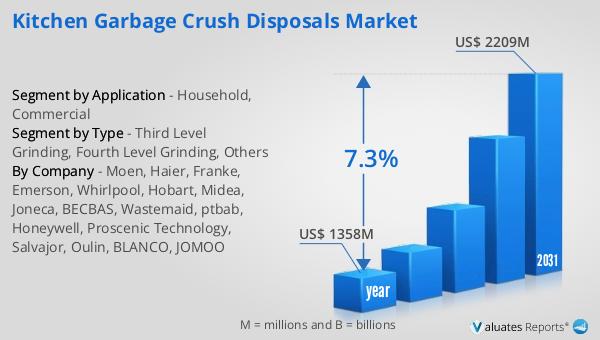
Accounted market size in year US$ 1358 million
Forecasted market size in 2031 US$ 2209 million
CAGR 7.3%
Base Year year
Forecasted years 2025 - 2031
Segment by Type
  • Third Level Grinding
  • Fourth Level Grinding
  • Others
Segment by Application
  • Household
  • Commercial
Consumption by Region
  • North America (United States, Canada)
  • Europe (Germany, France, UK, Italy, Russia)
  • Asia-Pacific (China, Japan, South Korea, Taiwan)
  • Southeast Asia (India)
  • Latin America (Mexico, Brazil)
By Company Moen, Haier, Franke, Emerson, Whirlpool, Hobart, Midea, Joneca, BECBAS, Wastemaid, ptbab, Honeywell, Proscenic Technology, Salvajor, Oulin, BLANCO, JOMOO
Forecast units USD million in value
Report coverage Revenue and volume forecast, company share, competitive landscape, growth factors and trends

Global Strong Cation Exchange Agarose Gel Market Research Report 2025

What is Global Strong Cation Exchange Agarose Gel Market? The Global Strong Cation Exchange Agarose Gel Market is a specialized segment wit...