Wednesday, December 3, 2025

Global Diving Equipment Market Research Report 2025

What is Global Diving Equipment Market?

The Global Diving Equipment Market encompasses a wide range of products designed for underwater exploration and activities. This market includes equipment such as masks, snorkels, fins, buoyancy control devices, regulators, and diving suits, which are essential for both recreational and professional divers. The market is driven by the increasing popularity of water sports and underwater tourism, as well as advancements in diving technology that enhance safety and performance. Additionally, the growing interest in marine conservation and underwater research has contributed to the demand for specialized diving equipment. Manufacturers in this market are continually innovating to provide more comfortable, durable, and efficient products to meet the diverse needs of divers worldwide. The market is also influenced by environmental regulations and safety standards, which ensure that the equipment meets specific criteria for underwater use. As a result, the Global Diving Equipment Market is a dynamic and evolving industry that plays a crucial role in enabling safe and enjoyable underwater experiences.
Diving Equipment Market

Open Respiratory System, Closed Respiratory System in the Global Diving Equipment Market:

The Global Diving Equipment Market is characterized by two primary types of respiratory systems: the open respiratory system and the closed respiratory system. The open respiratory system, commonly used in recreational diving, involves the use of a scuba tank that supplies air to the diver through a regulator. This system allows divers to breathe underwater by providing a continuous flow of air, which is exhaled into the water. The open system is favored for its simplicity and ease of use, making it ideal for amateur divers and those new to the sport. It is also relatively affordable and widely available, contributing to its popularity among recreational divers. On the other hand, the closed respiratory system, also known as a rebreather, is more complex and is typically used by professional divers and those engaged in technical diving. This system recycles the diver's exhaled air by removing carbon dioxide and replenishing oxygen, allowing for longer dive times and deeper exploration. The closed system is highly efficient and reduces the amount of gas needed for a dive, making it suitable for extended underwater missions. However, it requires specialized training and is more expensive than the open system, which limits its use to experienced divers and professionals. Both systems have their advantages and are essential components of the Global Diving Equipment Market, catering to the diverse needs of divers around the world.

Amateur Diving, Professional Diving in the Global Diving Equipment Market:

The Global Diving Equipment Market serves a wide range of applications, including amateur diving and professional diving. Amateur diving, often referred to as recreational diving, is a popular leisure activity enjoyed by millions of people worldwide. It involves exploring underwater environments for fun and relaxation, often in tropical destinations with clear waters and vibrant marine life. The equipment used in amateur diving is designed to be user-friendly and accessible, with a focus on safety and comfort. This includes basic gear such as masks, snorkels, fins, and buoyancy control devices, as well as more advanced equipment like dive computers and underwater cameras. The market for amateur diving equipment is driven by the growing interest in water sports and the desire for unique travel experiences. On the other hand, professional diving encompasses a wide range of activities, including commercial diving, scientific research, and military operations. Professional divers require specialized equipment that meets stringent safety standards and can withstand harsh underwater conditions. This includes advanced gear such as rebreathers, dry suits, and underwater communication systems. The market for professional diving equipment is driven by the demand for skilled divers in industries such as oil and gas, marine construction, and environmental conservation. Both amateur and professional diving play a significant role in the Global Diving Equipment Market, contributing to its growth and development.

Global Diving Equipment Market Outlook:

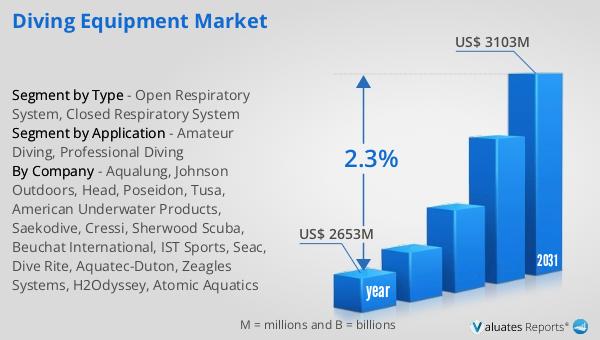
In 2024, the global market for diving equipment was valued at approximately $2,653 million. This market is anticipated to grow steadily, reaching an estimated value of $3,103 million by 2031. This growth represents a compound annual growth rate (CAGR) of 2.3% over the forecast period. The steady increase in market size reflects the rising interest in diving activities, both for recreational and professional purposes. The demand for diving equipment is driven by several factors, including the increasing popularity of water sports, advancements in diving technology, and the growing interest in marine conservation and underwater research. As more people engage in diving activities, the need for reliable and efficient equipment continues to rise. Manufacturers are responding to this demand by developing innovative products that enhance safety, comfort, and performance. Additionally, environmental regulations and safety standards play a crucial role in shaping the market, ensuring that diving equipment meets specific criteria for underwater use. Overall, the Global Diving Equipment Market is poised for steady growth, driven by the diverse needs of divers and the ongoing advancements in diving technology.


Report Metric Details
Report Name Diving Equipment Market
Accounted market size in year US$ 2653 million
Forecasted market size in 2031 US$ 3103 million
CAGR 2.3%
Base Year year
Forecasted years 2025 - 2031
Segment by Type
  • Open Respiratory System
  • Closed Respiratory System
Segment by Application
  • Amateur Diving
  • Professional Diving
Consumption by Region
  • North America (United States, Canada)
  • Europe (Germany, France, UK, Italy, Russia)
  • Asia-Pacific (China, Japan, South Korea, Taiwan)
  • Southeast Asia (India)
  • Latin America (Mexico, Brazil)
By Company Aqualung, Johnson Outdoors, Head, Poseidon, Tusa, American Underwater Products, Saekodive, Cressi, Sherwood Scuba, Beuchat International, IST Sports, Seac, Dive Rite, Aquatec-Duton, Zeagles Systems, H2Odyssey, Atomic Aquatics
Forecast units USD million in value
Report coverage Revenue and volume forecast, company share, competitive landscape, growth factors and trends

Global Sticky Note Market Research Report 2025

What is Global Sticky Note Market?

The Global Sticky Note Market refers to the worldwide industry involved in the production, distribution, and sale of sticky notes, which are small pieces of paper with a re-adherable strip of adhesive on the back. These notes are commonly used for jotting down reminders, making lists, or marking pages in books and documents. The market encompasses a variety of sticky note sizes, colors, and designs, catering to different consumer preferences and needs. Sticky notes have become an essential tool in offices, schools, and households due to their convenience and versatility. The market is driven by factors such as increasing demand for office supplies, the growing trend of organizing and planning, and the rise of creative and personalized stationery products. Additionally, the market is influenced by technological advancements, such as the development of eco-friendly and digitally integrated sticky notes. As a result, the Global Sticky Note Market continues to expand, offering a wide range of products to meet the diverse needs of consumers worldwide.

Sticky Note Market

3" x 3", 3" x 6", 4" x 4", Others in the Global Sticky Note Market:

In the Global Sticky Note Market, various sizes of sticky notes are available to cater to different user needs and preferences. The 3" x 3" sticky note is perhaps the most popular and widely used size. Its compact dimensions make it ideal for quick notes, reminders, and messages. This size is perfect for sticking on computer monitors, desks, or any surface where space is limited. The 3" x 3" sticky notes are often used in offices for jotting down quick thoughts or reminders and are also popular in schools for marking pages in textbooks or notebooks. The 3" x 6" sticky note offers a bit more space, making it suitable for longer messages or lists. This size is often used in meetings or brainstorming sessions where more detailed notes are required. It provides enough room to write more information without taking up too much space. The 3" x 6" sticky notes are also useful in households for creating shopping lists or leaving detailed instructions. The 4" x 4" sticky note provides a square shape that offers a balance between space and compactness. This size is often used for more detailed notes or for creating small charts or diagrams. It is popular in both office and educational settings where more information needs to be conveyed. The 4" x 4" sticky notes are also used in creative projects, allowing for more artistic expression. Other sizes of sticky notes are available to meet specific needs. These may include larger sizes for posters or presentations, or smaller sizes for tabs or labels. The variety of sizes in the Global Sticky Note Market ensures that there is a sticky note for every purpose, whether it's for professional, educational, or personal use. The availability of different sizes allows consumers to choose the right sticky note for their specific needs, enhancing productivity and organization.

Office, Household, School in the Global Sticky Note Market:

Sticky notes are widely used in various areas such as offices, households, and schools, each with its unique applications and benefits. In office settings, sticky notes are indispensable tools for organization and communication. They are used to jot down quick reminders, create to-do lists, and leave messages for colleagues. Sticky notes are often used in meetings and brainstorming sessions to capture ideas and facilitate collaboration. They can be easily moved and rearranged, making them ideal for planning and organizing tasks. In households, sticky notes serve as convenient reminders for family members. They can be used to leave messages on the refrigerator, create shopping lists, or remind family members of important tasks or appointments. Sticky notes are also useful for organizing household chores and schedules, helping to keep the household running smoothly. In schools, sticky notes are valuable tools for both students and teachers. Students use them to mark important pages in textbooks, jot down quick notes, or create study aids. Teachers use sticky notes to provide feedback on assignments, organize lesson plans, or create interactive learning activities. The versatility and ease of use of sticky notes make them an essential tool in educational settings. Overall, the usage of sticky notes in offices, households, and schools highlights their versatility and practicality. They are simple yet effective tools that enhance organization, communication, and productivity in various settings.

Global Sticky Note Market Outlook:

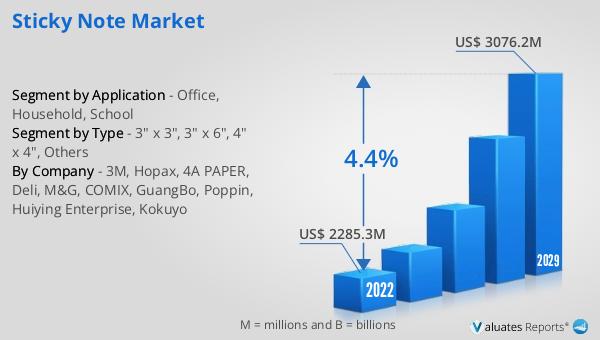
The global market for sticky notes was valued at approximately $2.47 billion in 2024. This market is anticipated to grow steadily, reaching an estimated size of $3.325 billion by 2031. This growth is expected to occur at a compound annual growth rate (CAGR) of 4.4% over the forecast period. The steady increase in market size reflects the ongoing demand for sticky notes across various sectors, including offices, schools, and households. The growth can be attributed to the continued reliance on sticky notes for organization, communication, and creativity. Despite the rise of digital alternatives, sticky notes remain popular due to their simplicity, ease of use, and tangible nature. The market's expansion is also driven by innovations in sticky note products, such as eco-friendly options and digitally integrated notes. These advancements cater to the evolving needs of consumers, ensuring that sticky notes remain relevant in a digital age. As a result, the Global Sticky Note Market is poised for continued growth, offering a wide range of products to meet the diverse needs of consumers worldwide.


Report Metric Details
Report Name Sticky Note Market
Accounted market size in year US$ 2470 million
Forecasted market size in 2031 US$ 3325 million
CAGR 4.4%
Base Year year
Forecasted years 2025 - 2031
Segment by Type
  • 3" x 3"
  • 3" x 6"
  • 4" x 4"
  • Others
Segment by Application
  • Office
  • Household
  • School
Consumption by Region
  • North America (United States, Canada)
  • Europe (Germany, France, UK, Italy, Russia)
  • Asia-Pacific (China, Japan, South Korea, Taiwan)
  • Southeast Asia (India)
  • Latin America (Mexico, Brazil)
By Company 3M, Hopax, 4A PAPER, Deli, M&G, COMIX, GuangBo, Poppin, Huiying Enterprise, Kokuyo
Forecast units USD million in value
Report coverage Revenue and volume forecast, company share, competitive landscape, growth factors and trends

Global Wireless Gamepad Market Research Report 2025

What is Global Wireless Gamepad Market?

The Global Wireless Gamepad Market refers to the worldwide industry focused on the production, distribution, and sale of wireless game controllers. These devices are designed to enhance the gaming experience by providing players with a more intuitive and flexible way to interact with video games across various platforms. Unlike traditional wired controllers, wireless gamepads offer the convenience of untethered play, allowing gamers to move freely without being restricted by cables. This market encompasses a wide range of products, from entry-level models that cater to casual gamers to high-end devices aimed at hardcore gaming enthusiasts. The growth of this market is driven by the increasing popularity of video games, advancements in wireless technology, and the rising demand for more immersive gaming experiences. As gaming continues to evolve, the Global Wireless Gamepad Market is expected to expand, offering innovative solutions that cater to the diverse needs of gamers worldwide. The market's development is also influenced by trends such as the integration of haptic feedback, motion sensors, and customizable buttons, which enhance the overall gaming experience. As a result, manufacturers are continually innovating to meet the changing preferences of consumers, making the Global Wireless Gamepad Market a dynamic and competitive industry.

Wireless Gamepad Market

Entry Level, Enthusiast Level, Hardcore Level in the Global Wireless Gamepad Market:

The Global Wireless Gamepad Market can be segmented into three distinct categories based on the level of gaming experience: Entry Level, Enthusiast Level, and Hardcore Level. Each category caters to different types of gamers, offering features and functionalities that align with their specific needs and preferences. Entry Level gamepads are designed for casual gamers who are new to the gaming world or those who play games occasionally. These gamepads are typically more affordable and offer basic features that are sufficient for playing a wide range of games. They are often compatible with multiple platforms, such as PCs, smartphones, and smart TVs, making them versatile options for gamers who do not require advanced functionalities. Entry Level gamepads prioritize ease of use and comfort, ensuring that even novice players can enjoy a seamless gaming experience without the need for extensive setup or configuration. Enthusiast Level gamepads, on the other hand, are targeted at gamers who have a deeper interest in gaming and seek enhanced performance and features. These gamepads often come with additional functionalities such as programmable buttons, improved ergonomics, and better build quality. Enthusiast gamers are willing to invest more in their gaming equipment to gain a competitive edge and enjoy a more immersive experience. These gamepads may also offer customization options, allowing players to tailor the controller to their specific gaming style and preferences. The Enthusiast Level segment is characterized by a balance between performance and affordability, making it an attractive option for gamers who want more than just the basics but are not ready to commit to the high costs associated with Hardcore Level gamepads. Hardcore Level gamepads are designed for professional gamers and those who take gaming very seriously. These gamepads are equipped with the latest technology and features that provide the highest level of performance and precision. They often include advanced features such as customizable triggers, high sensitivity sensors, and premium materials for durability and comfort during extended gaming sessions. Hardcore gamers demand the best in terms of responsiveness and accuracy, and these gamepads are engineered to meet those expectations. The Hardcore Level segment represents the pinnacle of gaming technology, offering unparalleled control and customization options that cater to the most demanding gamers. In summary, the Global Wireless Gamepad Market offers a diverse range of products that cater to different levels of gaming experience. Whether a gamer is just starting out, has a keen interest in gaming, or is a professional seeking the best equipment, there is a wireless gamepad available to meet their needs. This segmentation allows manufacturers to target specific consumer groups and develop products that align with their preferences, ensuring that the market continues to grow and evolve in response to the changing demands of gamers worldwide.

PC, Smartphone, Smart TV in the Global Wireless Gamepad Market:

The usage of wireless gamepads in the Global Wireless Gamepad Market spans across various platforms, including PCs, smartphones, and smart TVs, each offering unique benefits and challenges. On PCs, wireless gamepads provide an alternative to traditional keyboard and mouse setups, offering a more comfortable and intuitive way to play games. Many PC games are designed with gamepad support, allowing players to enjoy a console-like experience on their computers. Wireless gamepads eliminate the clutter of cables, providing a cleaner and more organized gaming setup. They also offer the flexibility to play from a distance, which is particularly beneficial for gamers who prefer to connect their PCs to larger screens or projectors. The compatibility of wireless gamepads with PCs is often facilitated by Bluetooth or proprietary wireless technologies, ensuring seamless connectivity and minimal input lag. On smartphones, wireless gamepads enhance the mobile gaming experience by providing physical controls that are often lacking on touchscreen devices. Mobile games have become increasingly complex and demanding, requiring precise inputs that can be challenging to achieve with touch controls alone. Wireless gamepads offer a solution by providing tactile feedback and more accurate control, allowing players to enjoy a wider range of games with greater ease. The portability of wireless gamepads makes them ideal companions for mobile gaming, as they can be easily carried and connected to smartphones via Bluetooth. This convenience has contributed to the growing popularity of mobile gaming, as players can enjoy console-like experiences on the go. Smart TVs represent another platform where wireless gamepads are gaining traction. As smart TVs become more advanced and capable of running a variety of apps and games, the demand for compatible game controllers has increased. Wireless gamepads allow users to play games directly on their smart TVs without the need for additional consoles or devices. This integration of gaming into the living room experience has made gaming more accessible to a wider audience, including families and casual gamers who may not own dedicated gaming consoles. The use of wireless gamepads with smart TVs is facilitated by Bluetooth connectivity, ensuring easy pairing and reliable performance. In conclusion, the Global Wireless Gamepad Market is characterized by its versatility and adaptability across different platforms. Whether used with PCs, smartphones, or smart TVs, wireless gamepads offer enhanced control and convenience, making them an essential accessory for modern gaming. As technology continues to advance, the integration of wireless gamepads into various devices is expected to grow, further expanding the market and providing gamers with more options to enjoy their favorite games.

Global Wireless Gamepad Market Outlook:

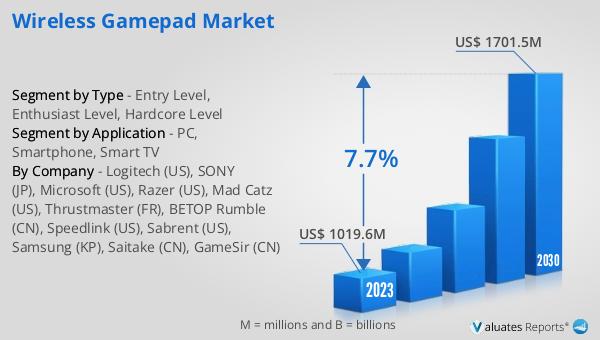
The global market for wireless gamepads was valued at approximately $1,166 million in 2024, and it is anticipated to grow significantly, reaching an estimated size of $1,945 million by 2031. This growth trajectory represents a compound annual growth rate (CAGR) of 7.7% over the forecast period. The increasing demand for wireless gamepads can be attributed to several factors, including the rising popularity of video games across various platforms, advancements in wireless technology, and the growing preference for more immersive gaming experiences. As gamers seek greater flexibility and convenience, wireless gamepads have become an essential accessory, offering untethered play and enhanced control. The market's expansion is also driven by the continuous innovation in gamepad design and functionality, with manufacturers introducing new features such as haptic feedback, motion sensors, and customizable buttons. These advancements cater to the diverse needs of gamers, from casual players to hardcore enthusiasts, ensuring that the market remains dynamic and competitive. As the gaming industry continues to evolve, the global wireless gamepad market is poised for sustained growth, providing opportunities for manufacturers to capitalize on the increasing demand for high-quality gaming accessories.


Report Metric Details
Report Name Wireless Gamepad Market
Accounted market size in year US$ 1166 million
Forecasted market size in 2031 US$ 1945 million
CAGR 7.7%
Base Year year
Forecasted years 2025 - 2031
Segment by Type
  • Entry Level
  • Enthusiast Level
  • Hardcore Level
Segment by Application
  • PC
  • Smartphone
  • Smart TV
Consumption by Region
  • North America (United States, Canada)
  • Europe (Germany, France, UK, Italy, Russia)
  • Asia-Pacific (China, Japan, South Korea, Taiwan)
  • Southeast Asia (India)
  • Latin America (Mexico, Brazil)
By Company Logitech (US), SONY (JP), Microsoft (US), Razer (US), Mad Catz (US), Thrustmaster (FR), BETOP Rumble (CN), Speedlink (US), Sabrent (US), Samsung (KP), Saitake (CN), GameSir (CN)
Forecast units USD million in value
Report coverage Revenue and volume forecast, company share, competitive landscape, growth factors and trends

Global Gold Jewelry Market Research Report 2025

What is Global Gold Jewelry Market?

The global gold jewelry market is a dynamic and expansive sector that encompasses the production, distribution, and sale of gold jewelry worldwide. Gold jewelry has been cherished for centuries, not only for its aesthetic appeal but also for its cultural significance and investment value. The market is driven by various factors, including economic conditions, cultural traditions, and consumer preferences. Gold jewelry is often seen as a symbol of wealth and status, making it a popular choice for special occasions such as weddings, anniversaries, and religious ceremonies. The market is highly competitive, with numerous players ranging from small artisans to large multinational corporations. These entities operate across different regions, each with its unique consumer preferences and purchasing power. The demand for gold jewelry is influenced by factors such as gold prices, fashion trends, and disposable income levels. Additionally, technological advancements in jewelry design and manufacturing have enabled the creation of intricate and innovative pieces, further fueling consumer interest. As a result, the global gold jewelry market continues to evolve, adapting to changing consumer tastes and economic conditions, while maintaining its timeless allure and significance.

Gold Jewelry Market

18k Gold, 14K Gold, 24K Gold, Others in the Global Gold Jewelry Market:

Gold jewelry is crafted in various karats, each representing a different level of purity and characteristics. Among the most popular are 18K, 14K, and 24K gold, each offering unique qualities that cater to diverse consumer preferences. Starting with 24K gold, it is the purest form of gold, consisting of 99.9% gold content. Its rich, vibrant yellow hue is highly prized, especially in regions like Asia and the Middle East, where cultural traditions often favor pure gold. However, due to its softness, 24K gold is less durable and more prone to scratching and bending, making it less suitable for everyday wear. It is often used in pieces that are more ornamental or ceremonial, such as wedding jewelry or investment-grade items. Moving to 18K gold, this alloy contains 75% gold and 25% other metals, such as copper or silver, which enhance its strength and durability. This balance makes 18K gold a popular choice for fine jewelry, offering a luxurious appearance with improved resilience. Its slightly paler color compared to 24K gold is often preferred in Western markets, where understated elegance is valued. The addition of other metals also allows for a variety of color options, including white and rose gold, broadening its appeal. Next, 14K gold, comprising 58.3% gold, is even more durable due to its higher alloy content. This makes it an excellent choice for everyday jewelry, such as rings and bracelets, which are subject to frequent wear and tear. Its affordability compared to higher karat gold also makes it accessible to a wider audience, without compromising on quality or appearance. The versatility of 14K gold, available in various colors, caters to diverse fashion preferences and is particularly popular in North America. Beyond these common karats, the market also includes other variations, such as 10K gold, which contains 41.7% gold. While less common in high-end jewelry, 10K gold offers an economical option for consumers seeking the look of gold at a lower price point. Each type of gold has its place in the global jewelry market, catering to different needs and preferences, from the opulence of 24K gold to the practicality of 14K gold. The choice of karat often depends on factors such as cultural significance, intended use, and personal style, reflecting the diverse and multifaceted nature of the gold jewelry market.

Man, Women, Kids in the Global Gold Jewelry Market:

The global gold jewelry market serves a wide range of consumers, including men, women, and children, each with distinct preferences and uses for gold jewelry. For women, gold jewelry is often a staple of personal adornment, used to enhance beauty and express individual style. Women’s gold jewelry ranges from delicate necklaces and earrings to bold statement pieces, catering to various occasions and fashion trends. In many cultures, gold jewelry holds significant sentimental value, often passed down through generations as heirlooms. It is also a popular choice for bridal jewelry, symbolizing love and commitment. For men, gold jewelry is typically more understated, focusing on items like watches, rings, and cufflinks. These pieces often serve as status symbols, reflecting personal success and sophistication. Men's gold jewelry tends to favor simpler designs, with an emphasis on functionality and elegance. However, there is a growing trend towards more expressive and personalized pieces, as men increasingly embrace jewelry as a form of self-expression. In the case of children, gold jewelry is often gifted for special occasions such as birthdays, religious ceremonies, or cultural milestones. These pieces are usually smaller and designed with safety in mind, featuring smooth edges and secure clasps. Gold jewelry for children often carries cultural significance, serving as a symbol of protection and good fortune. Across all demographics, gold jewelry is valued not only for its aesthetic appeal but also for its investment potential. As a tangible asset, gold jewelry can retain value over time, providing financial security in uncertain economic conditions. This dual function of beauty and investment makes gold jewelry a versatile and enduring choice for consumers worldwide. The global gold jewelry market continues to evolve, adapting to changing consumer preferences and cultural trends, while maintaining its timeless allure and significance for men, women, and children alike.

Global Gold Jewelry Market Outlook:

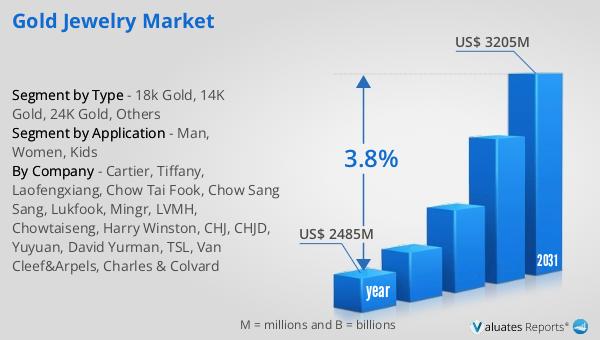
In 2024, the global gold jewelry market was estimated to be worth approximately $2,485 million. This figure highlights the significant value and demand for gold jewelry on a worldwide scale. Looking ahead, the market is expected to grow, reaching an estimated size of $3,205 million by 2031. This growth trajectory represents a compound annual growth rate (CAGR) of 3.8% over the forecast period. Such a steady increase underscores the enduring appeal and importance of gold jewelry across various cultures and economies. The projected growth can be attributed to several factors, including rising disposable incomes, increasing consumer interest in luxury goods, and the cultural significance of gold jewelry in many regions. Additionally, the market's expansion is supported by innovations in jewelry design and manufacturing, which continue to attract new consumers and retain existing ones. As the market evolves, it remains a vital component of the global luxury goods sector, reflecting both traditional values and modern trends. The anticipated growth of the gold jewelry market signifies its resilience and adaptability in the face of changing economic conditions and consumer preferences, ensuring its continued relevance and appeal in the years to come.


Report Metric Details
Report Name Gold Jewelry Market
Accounted market size in year US$ 2485 million
Forecasted market size in 2031 US$ 3205 million
CAGR 3.8%
Base Year year
Forecasted years 2025 - 2031
Segment by Type
  • 18k Gold
  • 14K Gold
  • 24K Gold
  • Others
Segment by Application
  • Man
  • Women
  • Kids
Consumption by Region
  • North America (United States, Canada)
  • Europe (Germany, France, UK, Italy, Russia)
  • Asia-Pacific (China, Japan, South Korea, Taiwan)
  • Southeast Asia (India)
  • Latin America (Mexico, Brazil)
By Company Cartier, Tiffany, Laofengxiang, Chow Tai Fook, Chow Sang Sang, Lukfook, Mingr, LVMH, Chowtaiseng, Harry Winston, CHJ, CHJD, Yuyuan, David Yurman, TSL, Van Cleef&Arpels, Charles & Colvard
Forecast units USD million in value
Report coverage Revenue and volume forecast, company share, competitive landscape, growth factors and trends

Global Softball Gloves Market Research Report 2025

What is Global Softball Gloves Market?

The Global Softball Gloves Market is a dynamic and evolving segment within the sports equipment industry, catering to both professional and amateur players worldwide. Softball gloves are essential gear for players, designed to enhance performance by providing a secure grip and protection during gameplay. These gloves are crafted from various materials, including leather and synthetic fabrics, each offering different levels of durability, flexibility, and comfort. The market is influenced by factors such as the growing popularity of softball as a recreational and competitive sport, advancements in glove manufacturing technologies, and the increasing participation of women and youth in sports. Additionally, the market is segmented based on glove type, size, material, and end-user, allowing manufacturers to cater to diverse consumer preferences and needs. As the sport continues to gain traction globally, the demand for high-quality, innovative softball gloves is expected to rise, driving market growth and encouraging manufacturers to invest in research and development to create products that meet the evolving demands of players. The market's expansion is also supported by the increasing availability of softball gloves through online retail channels, making it easier for consumers to access a wide range of products.

Softball Gloves Market

Adult American Softball Gloves, Youth American Softball Gloves in the Global Softball Gloves Market:

Adult American Softball Gloves and Youth American Softball Gloves are two significant categories within the Global Softball Gloves Market, each catering to different age groups and skill levels. Adult American Softball Gloves are designed for players who have developed advanced skills and require gloves that offer superior performance, durability, and comfort. These gloves are typically made from high-quality leather, providing a snug fit and excellent grip, which is crucial for adult players who participate in competitive leagues and tournaments. The design of adult gloves often includes features such as reinforced finger stalls, adjustable wrist straps, and padded palms to enhance protection and control during intense gameplay. On the other hand, Youth American Softball Gloves are tailored for younger players who are still developing their skills and need gloves that are lightweight, flexible, and easy to handle. These gloves are often made from synthetic materials, which are more affordable and require less maintenance than leather. Youth gloves are designed to accommodate smaller hands and often feature vibrant colors and designs to appeal to younger players. The focus for youth gloves is on comfort and ease of use, allowing young players to build confidence and improve their skills on the field. Both adult and youth gloves are available in various sizes and styles, catering to different positions such as infield, outfield, and catcher, ensuring that players can find the perfect glove to suit their specific needs. The market for these gloves is driven by factors such as the increasing popularity of softball among different age groups, the growing number of softball leagues and tournaments, and the rising awareness of the importance of using appropriate gear for safety and performance. Manufacturers are continually innovating to create gloves that offer the perfect balance of comfort, durability, and performance, ensuring that players of all ages can enjoy the game to the fullest. As the Global Softball Gloves Market continues to grow, the demand for both adult and youth gloves is expected to rise, providing opportunities for manufacturers to expand their product offerings and reach a wider audience.

Profession Player, Amateur Player in the Global Softball Gloves Market:

The usage of Global Softball Gloves Market products varies significantly between professional and amateur players, each with distinct needs and preferences. Professional players, who compete at the highest levels of the sport, require gloves that offer exceptional performance, durability, and comfort. These players often have specific preferences for glove materials, design, and fit, as they rely on their equipment to enhance their performance on the field. Professional softball gloves are typically made from premium leather, which provides a superior grip, flexibility, and durability. The design of these gloves often includes advanced features such as reinforced finger stalls, adjustable wrist straps, and padded palms to ensure maximum protection and control during intense gameplay. Professional players may also have custom gloves made to their exact specifications, allowing them to achieve the perfect fit and feel. On the other hand, amateur players, who participate in recreational leagues or play for fun, may prioritize affordability and ease of use when selecting softball gloves. These players often opt for gloves made from synthetic materials, which are more affordable and require less maintenance than leather. Amateur gloves are designed to be lightweight and flexible, making them easy to handle for players of all skill levels. The focus for amateur gloves is on comfort and ease of use, allowing players to enjoy the game without the need for extensive break-in periods or maintenance. The market for softball gloves is driven by the increasing popularity of the sport among both professional and amateur players, as well as the growing awareness of the importance of using appropriate gear for safety and performance. Manufacturers are continually innovating to create gloves that cater to the diverse needs of players, offering a wide range of products that vary in terms of materials, design, and price. As the Global Softball Gloves Market continues to expand, the demand for both professional and amateur gloves is expected to rise, providing opportunities for manufacturers to reach a wider audience and offer products that meet the evolving needs of players.

Global Softball Gloves Market Outlook:

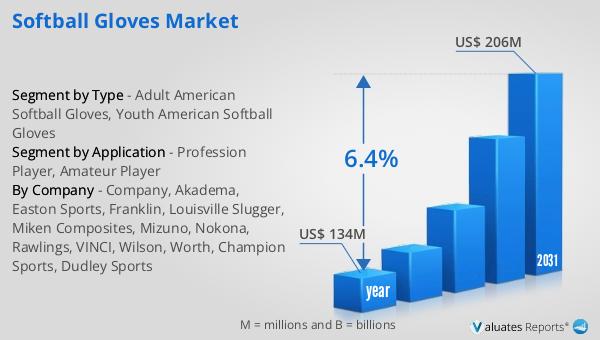
In 2024, the Global Softball Gloves Market was valued at approximately $134 million. This figure represents the total worth of all softball gloves sold worldwide during that year. Looking ahead, the market is expected to grow significantly, reaching an estimated value of $206 million by 2031. This growth is projected to occur at a compound annual growth rate (CAGR) of 6.4% over the forecast period. A CAGR of 6.4% indicates a steady increase in market size each year, reflecting the rising demand for softball gloves globally. This growth can be attributed to several factors, including the increasing popularity of softball as a sport, advancements in glove manufacturing technologies, and the growing participation of women and youth in sports. As more people take up softball, either recreationally or competitively, the demand for high-quality gloves is expected to rise, driving market expansion. Additionally, the increasing availability of softball gloves through online retail channels is making it easier for consumers to access a wide range of products, further contributing to market growth. As the market continues to evolve, manufacturers are likely to invest in research and development to create innovative products that meet the changing needs of players, ensuring sustained growth in the coming years.


Report Metric Details
Report Name Softball Gloves Market
Accounted market size in year US$ 134 million
Forecasted market size in 2031 US$ 206 million
CAGR 6.4%
Base Year year
Forecasted years 2025 - 2031
Segment by Type
  • Adult American Softball Gloves
  • Youth American Softball Gloves
Segment by Application
  • Profession Player
  • Amateur Player
Consumption by Region
  • North America (United States, Canada)
  • Europe (Germany, France, UK, Italy, Russia)
  • Asia-Pacific (China, Japan, South Korea, Taiwan)
  • Southeast Asia (India)
  • Latin America (Mexico, Brazil)
By Company Company, Akadema, Easton Sports, Franklin, Louisville Slugger, Miken Composites, Mizuno, Nokona, Rawlings, VINCI, Wilson, Worth, Champion Sports, Dudley Sports
Forecast units USD million in value
Report coverage Revenue and volume forecast, company share, competitive landscape, growth factors and trends

Global Flue Pipe Market Research Report 2025

What is Global Flue Pipe Market?

The Global Flue Pipe Market is a significant segment within the broader heating and ventilation industry, focusing on the components that facilitate the safe and efficient expulsion of exhaust gases from fireplaces, stoves, and industrial applications. Flue pipes are essential for directing combustion gases away from living spaces, ensuring safety and compliance with environmental regulations. The market encompasses a variety of flue pipe types, including twin wall, single wall, and flexible chimney liners, each designed to meet specific installation and performance requirements. The demand for flue pipes is driven by the need for efficient heating solutions, stringent environmental standards, and the growing adoption of renewable energy sources that require specialized venting systems. As urbanization and industrialization continue to rise globally, the flue pipe market is expected to expand, driven by new construction projects and the retrofitting of existing buildings. Additionally, advancements in materials and technology are leading to the development of more durable and efficient flue systems, further propelling market growth. The market is characterized by a mix of established players and new entrants, all striving to innovate and capture a share of this essential industry.

Flue Pipe Market

Twin Wall Flue Pipes, Single Wall Flue Pipes, Flexible Chimney Flue Liner, Others in the Global Flue Pipe Market:

Twin wall flue pipes are a popular choice in the Global Flue Pipe Market due to their robust construction and superior insulation properties. These pipes consist of two layers of stainless steel with an insulating layer in between, which helps maintain the temperature of the flue gases and prevents condensation. This design makes them ideal for use in both residential and commercial settings, where maintaining consistent temperatures is crucial for efficiency and safety. Twin wall flue pipes are often used in situations where the flue needs to pass through walls or roofs, as their insulation minimizes heat loss and reduces the risk of fire hazards. On the other hand, single wall flue pipes are typically used in applications where the flue is not exposed to cold temperatures or where the pipe is installed within a chimney. These pipes are more economical and easier to install, making them a popular choice for straightforward installations. However, they lack the insulation properties of twin wall pipes, which can lead to heat loss and condensation issues if not properly managed. Flexible chimney flue liners are another critical component of the flue pipe market, designed to navigate the twists and turns of existing chimneys. These liners are made from stainless steel and are highly adaptable, making them ideal for retrofitting older chimneys that may not be perfectly straight. They provide a cost-effective solution for improving the safety and efficiency of existing chimney systems, ensuring that exhaust gases are safely expelled from the building. Other types of flue pipes in the market include ceramic and clay flue liners, which are often used in traditional masonry chimneys. These liners offer excellent durability and heat resistance, making them a long-lasting option for chimney construction. However, they can be more challenging to install and may require professional expertise to ensure a proper fit. Overall, the Global Flue Pipe Market offers a diverse range of products to meet the varying needs of consumers, from high-performance twin wall systems to flexible liners for older chimneys. As technology advances and environmental regulations become more stringent, the market is likely to see continued innovation and growth, with manufacturers focusing on developing more efficient and sustainable flue solutions.

Standard Fireplaces, Stoves, Industrial Application in the Global Flue Pipe Market:

The Global Flue Pipe Market plays a crucial role in the functionality and safety of standard fireplaces, stoves, and industrial applications. In standard fireplaces, flue pipes are essential for directing smoke and combustion gases out of the home, preventing the buildup of harmful substances like carbon monoxide. Properly installed flue pipes ensure that fireplaces operate efficiently, providing warmth and ambiance without compromising indoor air quality. The choice of flue pipe can significantly impact the performance of a fireplace, with twin wall systems offering superior insulation and safety features for modern installations. In the context of stoves, flue pipes are equally important for ensuring safe and efficient operation. Wood-burning and pellet stoves rely on flue systems to expel exhaust gases and maintain optimal combustion conditions. The type of flue pipe used can affect the stove's efficiency, with insulated twin wall pipes often recommended for installations where the flue passes through unheated spaces. Flexible chimney liners are also commonly used in stove installations, particularly when retrofitting existing chimneys to accommodate new appliances. In industrial applications, flue pipes are critical for managing the exhaust from large-scale combustion processes. Factories and power plants use flue systems to control emissions and comply with environmental regulations, making them an integral part of industrial operations. The materials and design of industrial flue pipes must withstand high temperatures and corrosive gases, often requiring specialized coatings and construction techniques. The Global Flue Pipe Market caters to these diverse applications by offering a range of products designed to meet specific performance and regulatory requirements. As industries continue to prioritize sustainability and efficiency, the demand for advanced flue systems is expected to grow, driving innovation and development within the market.

Global Flue Pipe Market Outlook:

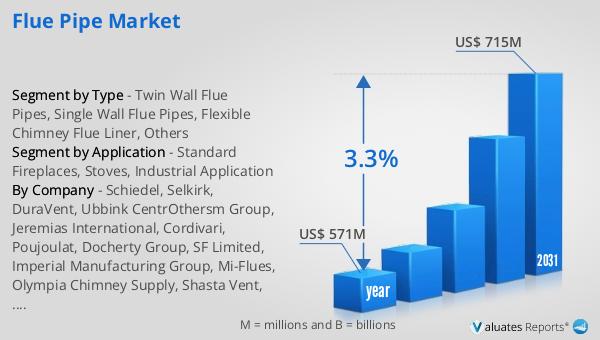
In 2024, the global flue pipe market was valued at approximately $571 million. Looking ahead, projections indicate that by 2031, this market is expected to expand to a revised size of around $715 million. This growth trajectory represents a compound annual growth rate (CAGR) of 3.3% over the forecast period. This steady growth reflects the increasing demand for efficient and environmentally friendly heating solutions across various sectors, including residential, commercial, and industrial applications. The market's expansion is driven by several factors, including the rising adoption of renewable energy sources, which often require specialized venting systems, and the ongoing need for retrofitting and upgrading existing heating systems to meet modern efficiency standards. Additionally, stringent environmental regulations are pushing manufacturers to innovate and develop more sustainable flue pipe solutions, further contributing to market growth. As urbanization and industrialization continue to rise globally, the demand for flue pipes is expected to increase, supported by new construction projects and the retrofitting of existing buildings. The market is characterized by a mix of established players and new entrants, all striving to capture a share of this essential industry through innovation and competitive pricing strategies.


Report Metric Details
Report Name Flue Pipe Market
Accounted market size in year US$ 571 million
Forecasted market size in 2031 US$ 715 million
CAGR 3.3%
Base Year year
Forecasted years 2025 - 2031
Segment by Type
  • Twin Wall Flue Pipes
  • Single Wall Flue Pipes
  • Flexible Chimney Flue Liner
  • Others
Segment by Application
  • Standard Fireplaces
  • Stoves
  • Industrial Application
Consumption by Region
  • North America (United States, Canada)
  • Europe (Germany, France, UK, Italy, Russia)
  • Asia-Pacific (China, Japan, South Korea, Taiwan)
  • Southeast Asia (India)
  • Latin America (Mexico, Brazil)
By Company Schiedel, Selkirk, DuraVent, Ubbink CentrOthersm Group, Jeremias International, Cordivari, Poujoulat, Docherty Group, SF Limited, Imperial Manufacturing Group, Mi-Flues, Olympia Chimney Supply, Shasta Vent, Security Chimneys International, Ruilun Metal Products
Forecast units USD million in value
Report coverage Revenue and volume forecast, company share, competitive landscape, growth factors and trends

Global Prothrombin Complex Market Research Report 2025

What is Global Prothrombin Complex Market?

The Global Prothrombin Complex Market is a specialized segment within the broader pharmaceutical and healthcare industry, focusing on the production and distribution of prothrombin complex concentrates (PCCs). These concentrates are essential for patients who require rapid reversal of anticoagulation, particularly in emergency situations such as severe bleeding or before urgent surgical procedures. PCCs are composed of various clotting factors, primarily factors II, VII, IX, and X, which are crucial for blood coagulation. The market is driven by the increasing prevalence of bleeding disorders, such as hemophilia, and the rising number of patients on anticoagulant therapy. Additionally, advancements in medical technology and increased awareness about bleeding disorders contribute to the market's growth. The demand for PCCs is also fueled by the aging population, which is more susceptible to conditions requiring anticoagulation therapy. As healthcare systems worldwide strive to improve patient outcomes and reduce hospital stays, the role of PCCs becomes increasingly significant. The market is characterized by a few key players who dominate the landscape, offering a range of products tailored to different clinical needs. Overall, the Global Prothrombin Complex Market is poised for steady growth as it continues to address critical needs in patient care.

Prothrombin Complex Market

500 IU/Vial, 600 IU/Vial, 1000 IU/Vial, Others in the Global Prothrombin Complex Market:

In the Global Prothrombin Complex Market, products are often categorized based on their potency, measured in International Units (IU) per vial. The most common potencies available are 500 IU/vial, 600 IU/vial, and 1000 IU/vial, with other variations also present to meet specific clinical requirements. Each potency level serves different therapeutic needs and patient profiles. The 500 IU/vial option is typically used for patients who require a lower dose of clotting factors, often in cases of mild bleeding or as a preventive measure before minor surgical procedures. This potency is particularly beneficial for pediatric patients or those with a lower body weight, where precise dosing is crucial to avoid complications such as thrombosis. The 600 IU/vial potency offers a slightly higher concentration of clotting factors, making it suitable for moderate bleeding episodes or as a prophylactic treatment in patients with a moderate risk of bleeding. This option provides a balance between efficacy and safety, ensuring that patients receive adequate clotting support without excessive exposure to clotting factors. The 1000 IU/vial potency is designed for severe bleeding episodes or situations where rapid and robust reversal of anticoagulation is necessary. This high-potency option is often used in emergency settings, such as trauma or major surgery, where time is of the essence, and effective hemostasis is critical. The availability of different potencies allows healthcare providers to tailor treatment to the individual needs of each patient, optimizing outcomes and minimizing risks. In addition to these standard potencies, the market also offers other variations to accommodate specific clinical scenarios. These may include higher potencies for patients with severe bleeding disorders or lower potencies for those with unique metabolic or physiological considerations. The flexibility in dosing options is a key advantage of the Global Prothrombin Complex Market, enabling personalized medicine approaches that enhance patient care. Furthermore, the development of recombinant PCCs, which are produced using advanced biotechnological methods, represents a significant innovation in the market. These products offer the potential for improved safety profiles and reduced risk of viral transmission, addressing some of the limitations associated with plasma-derived PCCs. As the market continues to evolve, the focus on product innovation and patient-centric solutions remains paramount. Manufacturers are investing in research and development to create next-generation PCCs that offer enhanced efficacy, safety, and convenience. This includes exploring novel delivery methods, such as subcutaneous administration, which could further improve patient compliance and quality of life. The Global Prothrombin Complex Market is also influenced by regulatory considerations, as stringent guidelines govern the production and distribution of these critical products. Compliance with international standards ensures that PCCs are safe, effective, and of high quality, providing reassurance to healthcare providers and patients alike. Overall, the diverse range of potencies and ongoing innovations in the Global Prothrombin Complex Market underscore its vital role in modern healthcare, addressing the complex needs of patients with bleeding disorders and those requiring anticoagulation management.

Hemophilia B, Vitamin K Deficiency, Others in the Global Prothrombin Complex Market:

The Global Prothrombin Complex Market plays a crucial role in the management of various medical conditions, including Hemophilia B, Vitamin K Deficiency, and other bleeding disorders. Hemophilia B, also known as Christmas disease, is a genetic disorder caused by a deficiency of clotting factor IX. Patients with this condition experience prolonged bleeding episodes, which can be life-threatening if not managed effectively. Prothrombin complex concentrates (PCCs) are used to provide the necessary clotting factors, including factor IX, to prevent or control bleeding in these patients. The use of PCCs in Hemophilia B is particularly important during surgical procedures or after trauma, where rapid hemostasis is required. By administering PCCs, healthcare providers can ensure that patients achieve adequate clotting, reducing the risk of complications and improving overall outcomes. In cases of Vitamin K Deficiency, which can occur due to poor dietary intake, malabsorption, or certain medications, PCCs are used to replenish the deficient clotting factors. Vitamin K is essential for the synthesis of clotting factors II, VII, IX, and X, and its deficiency can lead to increased bleeding risk. PCCs provide a rapid and effective means of restoring hemostasis in patients with Vitamin K Deficiency, particularly in emergency situations where time is critical. The use of PCCs in this context highlights their versatility and importance in managing a range of bleeding disorders. Beyond Hemophilia B and Vitamin K Deficiency, the Global Prothrombin Complex Market also addresses other conditions that require anticoagulation reversal or clotting support. This includes patients on anticoagulant therapy, such as warfarin, who may experience bleeding complications or require urgent surgical intervention. PCCs offer a rapid and reliable method of reversing anticoagulation, allowing for safe and effective management of these patients. The ability to quickly restore normal clotting function is a significant advantage of PCCs, providing healthcare providers with a valuable tool in emergency and critical care settings. Additionally, PCCs are used in the management of liver disease, where impaired synthesis of clotting factors can lead to bleeding complications. By supplementing the deficient factors, PCCs help to stabilize patients and prevent further bleeding, supporting their recovery and improving quality of life. The Global Prothrombin Complex Market continues to expand its applications, driven by ongoing research and innovation. As new insights into bleeding disorders and anticoagulation management emerge, the role of PCCs is likely to grow, offering new opportunities for improving patient care. Overall, the Global Prothrombin Complex Market is an essential component of modern healthcare, providing critical support for patients with a wide range of bleeding disorders and anticoagulation needs.

Global Prothrombin Complex Market Outlook:

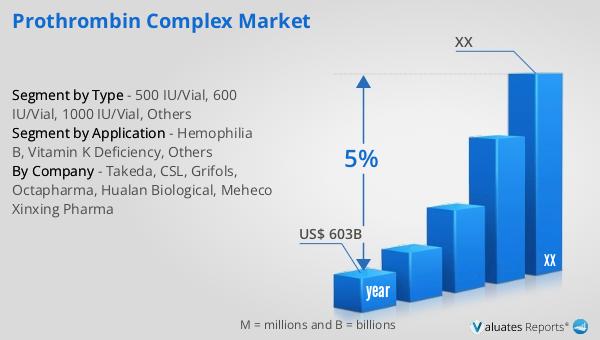
Based on our analysis, the global market for medical devices is projected to reach approximately $603 billion in 2023. This substantial market size underscores the critical role that medical devices play in modern healthcare, facilitating diagnosis, treatment, and management of various health conditions. The market is expected to experience a steady growth rate, with a compound annual growth rate (CAGR) of 5% over the next six years. This growth trajectory reflects the increasing demand for advanced medical technologies, driven by factors such as an aging population, rising prevalence of chronic diseases, and technological advancements in medical device design and functionality. As healthcare systems worldwide strive to improve patient outcomes and enhance the quality of care, the adoption of innovative medical devices is likely to accelerate. The market's expansion is also supported by favorable regulatory environments and increased healthcare spending in both developed and emerging economies. Furthermore, the integration of digital technologies, such as artificial intelligence and the Internet of Things, into medical devices is expected to drive further innovation and market growth. These advancements offer the potential for improved diagnostic accuracy, personalized treatment options, and enhanced patient monitoring, contributing to better healthcare outcomes. Overall, the global medical device market is poised for significant growth, driven by a combination of demographic, technological, and economic factors that are reshaping the healthcare landscape.


Report Metric Details
Report Name Prothrombin Complex Market
Accounted market size in year US$ 603 billion
CAGR 5%
Base Year year
Segment by Type
  • 500 IU/Vial
  • 600 IU/Vial
  • 1000 IU/Vial
  • Others
Segment by Application
  • Hemophilia B
  • Vitamin K Deficiency
  • Others
Consumption by Region
  • North America (United States, Canada)
  • Europe (Germany, France, UK, Italy, Russia)
  • Asia-Pacific (China, Japan, South Korea, Taiwan)
  • Southeast Asia (India)
  • Latin America (Mexico, Brazil)
By Company Takeda, CSL, Grifols, Octapharma, Hualan Biological, Meheco Xinxing Pharma
Forecast units USD million in value
Report coverage Revenue and volume forecast, company share, competitive landscape, growth factors and trends

Global Strong Cation Exchange Agarose Gel Market Research Report 2025

What is Global Strong Cation Exchange Agarose Gel Market? The Global Strong Cation Exchange Agarose Gel Market is a specialized segment wit...