Tuesday, December 2, 2025

Global Weight Reduction Medicine Market Research Report 2025

What is Global Weight Reduction Medicine Market?

The Global Weight Reduction Medicine Market is a dynamic and rapidly evolving sector within the broader pharmaceutical industry. This market focuses on the development, production, and distribution of medications designed to aid in weight loss and management. These medicines are increasingly in demand due to rising obesity rates and heightened awareness of health and wellness. The market encompasses a wide range of products, including prescription drugs, over-the-counter medications, and supplements, each tailored to meet the diverse needs of consumers seeking to reduce weight. Factors such as lifestyle changes, increased disposable income, and growing health consciousness are driving the market's expansion. Additionally, advancements in medical research and technology are leading to the development of more effective and safer weight reduction medicines. As a result, the Global Weight Reduction Medicine Market is poised for significant growth, offering numerous opportunities for pharmaceutical companies to innovate and cater to the needs of a health-conscious global population.
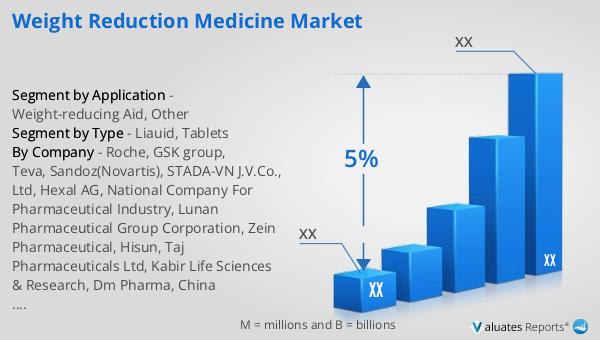
Weight Reduction Medicine Market

Liauid, Tablets in the Global Weight Reduction Medicine Market:

In the Global Weight Reduction Medicine Market, liquid and tablet forms of medication play a crucial role in providing consumers with versatile options for weight management. Liquid weight reduction medicines are often favored for their ease of consumption and rapid absorption into the bloodstream. These formulations are particularly beneficial for individuals who have difficulty swallowing pills or prefer a more palatable option. Liquid medicines can be easily mixed with beverages or taken directly, making them a convenient choice for many users. They are also advantageous for precise dosing, as they can be measured accurately to suit individual needs. On the other hand, tablet-based weight reduction medicines are popular due to their portability and long shelf life. Tablets are easy to store and transport, making them ideal for individuals with busy lifestyles who need a convenient weight management solution on the go. They are typically formulated with a combination of active ingredients that work synergistically to promote weight loss by suppressing appetite, increasing metabolism, or blocking fat absorption. Tablets also offer the advantage of controlled release, allowing for a steady and sustained effect over time. Both liquid and tablet forms of weight reduction medicines are subject to rigorous testing and regulation to ensure their safety and efficacy. Manufacturers invest heavily in research and development to create formulations that are not only effective but also minimize potential side effects. The choice between liquid and tablet forms often depends on individual preferences, lifestyle, and specific health needs. As the Global Weight Reduction Medicine Market continues to grow, the availability of diverse product forms ensures that consumers have access to tailored solutions that meet their unique requirements. This diversity in product offerings is a testament to the market's commitment to addressing the varied needs of a global consumer base, ultimately contributing to the overall goal of promoting healthier lifestyles and combating obesity.

Weight-reducing Aid, Other in the Global Weight Reduction Medicine Market:

The usage of Global Weight Reduction Medicine Market products extends beyond mere weight-reducing aids, encompassing a variety of applications that cater to different health and wellness goals. As weight-reducing aids, these medicines are primarily used to assist individuals in achieving and maintaining a healthy weight. They work through various mechanisms, such as appetite suppression, metabolic enhancement, and fat absorption inhibition, to facilitate weight loss. These aids are often part of a comprehensive weight management program that includes dietary changes and physical activity. In addition to their role as weight-reducing aids, weight reduction medicines are also utilized in other areas of health management. For instance, they can be prescribed to individuals with obesity-related health conditions, such as type 2 diabetes, hypertension, and cardiovascular diseases, to help mitigate the risks associated with excess weight. By promoting weight loss, these medicines can improve overall health outcomes and reduce the burden of chronic diseases. Furthermore, weight reduction medicines are sometimes used in pre- and post-operative settings for patients undergoing bariatric surgery. In these cases, the medicines help patients achieve the necessary weight loss before surgery and support weight maintenance after the procedure. The versatility of weight reduction medicines in addressing various health concerns highlights their importance in the broader context of healthcare and wellness. As the Global Weight Reduction Medicine Market continues to evolve, the development of innovative products that cater to diverse health needs will remain a key focus, ensuring that individuals have access to effective solutions for achieving their health and wellness goals.

Global Weight Reduction Medicine Market Outlook:

The global pharmaceutical market was valued at approximately 1,475 billion USD in 2022, reflecting its expansive growth and significance in the global economy. This market is projected to grow at a compound annual growth rate (CAGR) of 5% over the next six years, indicating a steady increase in demand for pharmaceutical products worldwide. In comparison, the chemical drug market, a significant segment of the pharmaceutical industry, has shown notable growth as well. It was estimated to have increased from 1,005 billion USD in 2018 to 1,094 billion USD in 2022. This growth underscores the ongoing advancements and innovations within the chemical drug sector, which continue to drive its expansion. The increase in the chemical drug market highlights the rising demand for effective and innovative medications that address a wide range of health conditions. As the pharmaceutical industry continues to evolve, the focus on research and development, coupled with technological advancements, will likely contribute to the sustained growth of both the overall pharmaceutical market and the chemical drug segment. This growth trajectory reflects the industry's commitment to meeting the diverse healthcare needs of a global population, ensuring access to safe and effective medications that improve health outcomes and enhance quality of life.


Report Metric Details
Report Name Weight Reduction Medicine Market
CAGR 5%
Segment by Type
  • Liauid
  • Tablets
Segment by Application
  • Weight-reducing Aid
  • Other
Consumption by Region
  • North America (United States, Canada)
  • Europe (Germany, France, UK, Italy, Russia)
  • Asia-Pacific (China, Japan, South Korea, Taiwan)
  • Southeast Asia (India)
  • Latin America (Mexico, Brazil)
By Company Roche, GSK group, Teva, Sandoz(Novartis), STADA-VN J.V.Co., Ltd, Hexal AG, National Company For Pharmaceutical Industry, Lunan Pharmaceutical Group Corporation, Zein Pharmaceutical, Hisun, Taj Pharmaceuticals Ltd, Kabir Life Sciences & Research, Dm Pharma, China Zhongshan Pharm
Forecast units USD million in value
Report coverage Revenue and volume forecast, company share, competitive landscape, growth factors and trends

Global Herbal Oil Market Research Report 2025

What is Global Herbal Oil Market?

The Global Herbal Oil Market is a dynamic and rapidly growing sector that encompasses a wide range of essential oils derived from plants and herbs. These oils are extracted through various methods such as steam distillation, cold pressing, and solvent extraction, and are renowned for their therapeutic properties and aromatic qualities. Herbal oils have been used for centuries in traditional medicine and are now gaining popularity in modern applications across different industries. The market is driven by increasing consumer awareness about the benefits of natural and organic products, as well as a growing preference for alternative medicine and holistic health practices. The demand for herbal oils is also fueled by their versatile applications in food and beverages, pharmaceuticals, cosmetics, and personal care products, among others. As consumers become more health-conscious and environmentally aware, the global herbal oil market is expected to continue its upward trajectory, offering a plethora of opportunities for manufacturers and suppliers worldwide. The market's growth is further supported by advancements in extraction technologies and the development of innovative products that cater to diverse consumer needs and preferences. Overall, the Global Herbal Oil Market represents a promising and lucrative segment within the broader natural products industry.

Herbal Oil Market

Orange, Citronella, Corn Mint, Eucalyptus, Clove Leaf, Others in the Global Herbal Oil Market:

The Global Herbal Oil Market features a diverse array of oils, each with unique properties and applications. Orange oil, for instance, is derived from the peel of oranges and is celebrated for its uplifting and refreshing scent. It is commonly used in aromatherapy to alleviate stress and anxiety, and its antimicrobial properties make it a popular ingredient in cleaning products. Citronella oil, extracted from the leaves and stems of different species of Cymbopogon, is widely recognized for its insect-repellent qualities. It is a staple in outdoor candles and sprays, providing a natural alternative to chemical repellents. Corn mint oil, also known as Japanese mint oil, is rich in menthol and is often used in the production of mentholated products such as balms and ointments. Its cooling effect makes it a favorite in the pharmaceutical and personal care industries. Eucalyptus oil, obtained from the leaves of eucalyptus trees, is known for its antiseptic and anti-inflammatory properties. It is frequently used in respiratory treatments and is a common ingredient in cough syrups and chest rubs. Clove leaf oil, derived from the leaves of the clove plant, is valued for its analgesic and antimicrobial properties. It is often used in dental care products to relieve toothaches and maintain oral hygiene. Beyond these, the market includes a variety of other herbal oils such as lavender, tea tree, and rosemary, each offering distinct benefits and uses. Lavender oil is renowned for its calming effects and is a popular choice in aromatherapy and skincare products. Tea tree oil is celebrated for its potent antibacterial and antifungal properties, making it a staple in acne treatments and antiseptic solutions. Rosemary oil is known for its stimulating effects on the mind and body, often used to enhance memory and concentration. The versatility and efficacy of these herbal oils make them indispensable in various industries, driving their demand and contributing to the growth of the Global Herbal Oil Market. As consumers increasingly seek natural and sustainable alternatives, the market for herbal oils is poised for continued expansion, offering a wealth of opportunities for innovation and development.

Food & Beverages, Pharmaceutical, Cosmetics & Personal Care Products, Spa & Salon Products, Household Cleaning Products, Others in the Global Herbal Oil Market:

The Global Herbal Oil Market finds extensive applications across a range of industries, each leveraging the unique properties of these oils to enhance their products and services. In the food and beverages sector, herbal oils are used as natural flavoring agents and preservatives. Their aromatic qualities and health benefits make them a popular choice for enhancing the taste and nutritional value of various food products. For instance, peppermint oil is often used in confectionery and beverages for its refreshing flavor, while rosemary oil is used in marinades and dressings for its antioxidant properties. In the pharmaceutical industry, herbal oils are incorporated into a variety of medicinal formulations due to their therapeutic properties. Eucalyptus oil, for example, is used in cough syrups and inhalants for its decongestant effects, while tea tree oil is included in topical creams and ointments for its antimicrobial benefits. The cosmetics and personal care industry also heavily relies on herbal oils for their skin and hair care products. Lavender oil is a common ingredient in lotions and creams for its soothing effects, while argan oil is used in hair treatments for its nourishing properties. In the spa and salon industry, herbal oils are integral to aromatherapy and massage treatments, providing relaxation and rejuvenation to clients. Essential oils like chamomile and sandalwood are used in massage oils and diffusers to create a calming ambiance and enhance the overall spa experience. Household cleaning products also benefit from the inclusion of herbal oils, which offer natural antibacterial and antifungal properties. Lemon and tea tree oils are popular choices for eco-friendly cleaning solutions, providing effective cleaning power without the use of harsh chemicals. Beyond these applications, herbal oils are also used in various other sectors, including agriculture, where they serve as natural pesticides and growth enhancers. The versatility and efficacy of herbal oils make them a valuable addition to a wide range of products, driving their demand and contributing to the growth of the Global Herbal Oil Market. As consumers continue to prioritize natural and sustainable products, the market for herbal oils is expected to expand further, offering numerous opportunities for innovation and development across different industries.

Global Herbal Oil Market Outlook:

In 2022, the global pharmaceutical market reached a valuation of 1,475 billion USD, demonstrating a steady growth trajectory with a compound annual growth rate (CAGR) of 5% projected over the next six years. This growth is indicative of the increasing demand for pharmaceutical products worldwide, driven by factors such as an aging population, rising prevalence of chronic diseases, and advancements in medical technology. In comparison, the chemical drug market has also shown significant growth, with its value rising from 1,005 billion USD in 2018 to 1,094 billion USD in 2022. This increase reflects the ongoing demand for chemical-based medications, which continue to play a crucial role in the treatment and management of various health conditions. The growth of both the pharmaceutical and chemical drug markets underscores the importance of continued innovation and development in the healthcare sector, as companies strive to meet the evolving needs of patients and healthcare providers. As the global population continues to grow and healthcare needs become more complex, the demand for effective and accessible pharmaceutical solutions is expected to remain strong, driving further growth and investment in the industry. The interplay between natural and chemical-based products also highlights the potential for integration and collaboration, as companies explore new ways to enhance the efficacy and safety of their offerings. Overall, the outlook for the global pharmaceutical and chemical drug markets remains positive, with ample opportunities for growth and advancement in the coming years.


Report Metric Details
Report Name Herbal Oil Market
CAGR 5%
Segment by Type
  • Orange
  • Citronella
  • Corn Mint
  • Eucalyptus
  • Clove Leaf
  • Others
Segment by Application
  • Food & Beverages
  • Pharmaceutical
  • Cosmetics & Personal Care Products
  • Spa & Salon Products
  • Household Cleaning Products
  • Others
Consumption by Region
  • North America (United States, Canada)
  • Europe (Germany, France, UK, Italy, Russia)
  • Asia-Pacific (China, Japan, South Korea, Taiwan)
  • Southeast Asia (India)
  • Latin America (Mexico, Brazil)
By Company Biolandes, Essential Oils of New Zealand, Farotti Essenze, Falcon, H.Reynaud & Fils (HRF), The Lebermuth Company, Moksha Lifestyle Products, Young Living Essential Oils, Ungerer Limited, RK-Essential Oils, Meena Perfumery, TFS Corporation
Forecast units USD million in value
Report coverage Revenue and volume forecast, company share, competitive landscape, growth factors and trends

Global Baby Pram and Stroller Market Research Report 2025

What is Global Baby Pram and Stroller Market?

The Global Baby Pram and Stroller Market is a dynamic and evolving sector that caters to the needs of parents and caregivers worldwide. This market encompasses a wide range of products designed to transport infants and toddlers safely and comfortably. Baby prams and strollers are essential for parents who need to move around with their little ones, whether for a leisurely walk in the park or a quick trip to the grocery store. The market is driven by factors such as increasing urbanization, rising disposable incomes, and a growing awareness of child safety. Parents today are more informed and discerning, seeking products that offer convenience, safety, and style. Manufacturers in this market are continually innovating, introducing features like lightweight materials, compact folding mechanisms, and multi-functional designs to meet the diverse needs of modern families. As a result, the Global Baby Pram and Stroller Market is not only expanding in terms of volume but also evolving in terms of product offerings, making it an exciting space to watch.

Baby Pram and Stroller Market

Lightweight, Standard, Multi Optional Systems, 3-wheelers in the Global Baby Pram and Stroller Market:

In the Global Baby Pram and Stroller Market, various types of products cater to different needs and preferences of parents. Lightweight strollers are particularly popular among urban dwellers and frequent travelers. These strollers are designed to be easily portable, often featuring a compact fold and a lightweight frame, making them ideal for parents who are always on the go. They are perfect for quick errands or short trips, offering convenience without compromising on safety. Standard strollers, on the other hand, are more robust and versatile. They are designed for everyday use and often come with additional features such as adjustable seating, storage baskets, and sun canopies. These strollers provide a comfortable ride for the child and are built to withstand regular use over various terrains. Multi-optional systems are a step further in versatility, offering a combination of features that can be customized according to the needs of the child and the parent. These systems often include interchangeable seats, car seat compatibility, and adjustable handlebars, providing a comprehensive solution for families looking for a long-term investment. 3-wheelers, also known as jogging strollers, are designed for active parents who enjoy outdoor activities. These strollers typically feature a sturdy frame, large wheels, and enhanced suspension systems, making them suitable for jogging or navigating rough terrains. They offer a smooth ride for the child while allowing parents to maintain an active lifestyle. Each type of stroller in the Global Baby Pram and Stroller Market is designed with specific features to cater to the diverse needs of families, ensuring that there is a suitable option for every lifestyle and preference.

Under 1 Years Old, 1 to 2.5 Years Old, Above 2.5 Years Old in the Global Baby Pram and Stroller Market:

The usage of baby prams and strollers varies significantly depending on the age group of the child. For infants under 1 year old, prams are often the preferred choice. These are designed to provide a flat, comfortable sleeping surface for newborns, ensuring their safety and comfort during outings. Prams offer excellent support for the baby's developing spine and are equipped with features like adjustable hoods and padded interiors to protect the infant from harsh weather conditions. As the child grows and reaches the age of 1 to 2.5 years, parents often transition to strollers. At this stage, children are more curious and eager to explore their surroundings. Strollers designed for this age group typically offer a more upright seating position, allowing the child to observe the world around them. They come with safety harnesses, reclining seats, and ample storage space for essentials like diapers and snacks. For children above 2.5 years old, strollers with higher weight capacities and more robust designs are necessary. These strollers are built to accommodate the increased activity levels and weight of older toddlers. They often feature adjustable footrests, larger wheels for better maneuverability, and durable materials to withstand the wear and tear of daily use. The Global Baby Pram and Stroller Market offers a wide range of products tailored to the specific needs of each age group, ensuring that parents can find the right solution for their child's developmental stage.

Global Baby Pram and Stroller Market Outlook:

The outlook for the Global Baby Pram and Stroller Market is promising, with significant growth anticipated over the coming years. In 2024, the market was valued at approximately US$ 2,542 million. By 2031, it is expected to expand to a revised size of US$ 3,288 million, reflecting a compound annual growth rate (CAGR) of 3.8% during the forecast period. This growth is driven by several factors, including increasing urbanization, rising disposable incomes, and a growing awareness of child safety and convenience. As more families move to urban areas, the demand for practical and efficient baby transportation solutions continues to rise. Additionally, with more parents working and leading busy lifestyles, the need for convenient and reliable prams and strollers is more pronounced than ever. Manufacturers are responding to these trends by innovating and introducing new features that cater to the evolving needs of modern families. The market's expansion is also supported by the increasing availability of these products through online and offline retail channels, making them more accessible to a broader audience. Overall, the Global Baby Pram and Stroller Market is poised for steady growth, driven by a combination of demographic, economic, and lifestyle factors.


Report Metric Details
Report Name Baby Pram and Stroller Market
Accounted market size in year US$ 2542 million
Forecasted market size in 2031 US$ 3288 million
CAGR 3.8%
Base Year year
Forecasted years 2025 - 2031
Segment by Type
  • Lightweight
  • Standard
  • Multi Optional Systems
  • 3-wheelers
Segment by Application
  • Under 1 Years Old
  • 1 to 2.5 Years Old
  • Above 2.5 Years Old
Consumption by Region
  • North America (United States, Canada)
  • Europe (Germany, France, UK, Italy, Russia)
  • Asia-Pacific (China, Japan, South Korea, Taiwan)
  • Southeast Asia (India)
  • Latin America (Mexico, Brazil)
By Company Good Baby, Combi, Seebaby, Artsana, Newell Rubbermaid, Shenma Group, BBH, Mybaby, Aing, Emmaljunga, UPPAbaby, Stokke, Roadmate, Hauck, Dorel, ABC Design, Peg Perego
Forecast units USD million in value
Report coverage Revenue and volume forecast, company share, competitive landscape, growth factors and trends

Global Hair Color Products Market Research Report 2025

What is Global Hair Color Products Market?

The Global Hair Color Products Market is a dynamic and ever-evolving sector within the beauty and personal care industry. It encompasses a wide range of products designed to alter or enhance the natural color of hair. These products cater to diverse consumer needs, from covering gray hair to making bold fashion statements. The market is driven by factors such as changing fashion trends, increasing consumer awareness about personal grooming, and the growing popularity of hair color products among both men and women. Additionally, the rise of social media and the influence of celebrities have significantly contributed to the demand for hair color products. The market is segmented into various product types, including temporary, semi-permanent, and permanent hair dyes, each offering unique benefits and catering to different consumer preferences. With advancements in technology and the introduction of innovative formulations, the global hair color products market continues to expand, offering consumers a wide array of choices to express their individuality and style.

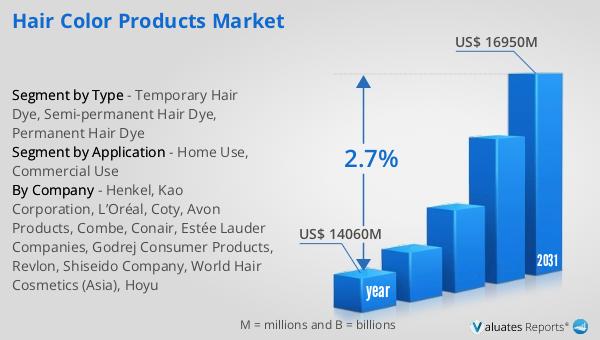
Hair Color Products Market

Temporary Hair Dye, Semi-permanent Hair Dye, Permanent Hair Dye in the Global Hair Color Products Market:

Temporary hair dye is a popular choice for those looking to experiment with different colors without making a long-term commitment. These dyes coat the surface of the hair shaft and typically wash out after one or two shampoos. They are ideal for special occasions or for those who want to try a new look without the permanence of other dyes. Temporary hair dyes are available in a variety of vibrant colors and are often used for creative and bold looks. They are easy to apply and do not require any mixing, making them a convenient option for at-home use. Semi-permanent hair dye, on the other hand, penetrates the hair shaft slightly more than temporary dyes, allowing the color to last for several weeks. These dyes gradually fade with each wash, providing a more natural transition back to the original hair color. Semi-permanent dyes are ammonia-free and less damaging to the hair, making them a popular choice for those who want to enhance their natural color or add subtle highlights. They are also a great option for those who want to cover gray hair without the commitment of permanent dyes. Permanent hair dye offers the longest-lasting results and is designed to provide full coverage and vibrant color. These dyes contain ammonia and peroxide, which open the hair cuticle and allow the color to penetrate deeply into the hair shaft. This process results in a more permanent change to the hair color, which can last until the hair grows out or is recolored. Permanent dyes are ideal for those who want to make a significant change to their hair color or cover gray hair completely. They offer a wide range of shades and are often used in professional salon settings. However, due to the chemicals involved, they can be more damaging to the hair and require proper aftercare to maintain hair health. In the global hair color products market, each type of dye has its own set of advantages and disadvantages, catering to different consumer needs and preferences. Temporary dyes offer flexibility and creativity, semi-permanent dyes provide a balance between longevity and gentleness, and permanent dyes deliver long-lasting and dramatic results. As consumers become more conscious of the ingredients in their hair care products, there is a growing demand for natural and organic hair dyes that minimize chemical exposure while still delivering vibrant color. This trend is influencing the development of new formulations and products in the market, offering consumers more choices than ever before.

Home Use, Commercial Use in the Global Hair Color Products Market:

The usage of global hair color products varies significantly between home use and commercial use, each with its own set of characteristics and consumer preferences. For home use, hair color products are designed to be user-friendly and convenient, allowing individuals to achieve salon-quality results in the comfort of their own homes. These products often come with detailed instructions and all the necessary tools, such as gloves and applicators, to ensure a smooth application process. Home users typically opt for temporary or semi-permanent dyes, as they are easier to apply and less damaging to the hair. The affordability and accessibility of home-use hair color products make them a popular choice for those who want to experiment with different looks without the expense of a salon visit. Additionally, the rise of online tutorials and beauty influencers has empowered consumers to try DIY hair coloring techniques, further driving the demand for home-use products. In contrast, commercial use of hair color products is primarily seen in professional salon settings, where trained stylists use high-quality products to achieve precise and customized results. Salons often use permanent hair dyes to provide clients with long-lasting color and full coverage. The expertise of professional stylists ensures that the color application is tailored to the client's specific needs, taking into account factors such as skin tone, hair type, and desired outcome. Salons also have access to a wider range of products and shades, allowing for more creative and personalized color options. The commercial use of hair color products is characterized by a focus on quality and customer satisfaction, with salons often offering additional services such as hair treatments and styling to enhance the overall experience. While home use and commercial use of hair color products serve different purposes, both segments contribute to the growth of the global hair color products market. The convenience and affordability of home-use products appeal to budget-conscious consumers, while the expertise and quality of salon services attract those seeking professional results. As the market continues to evolve, there is an increasing overlap between the two segments, with some consumers opting for a combination of home and salon treatments to achieve their desired look. This trend is driving innovation in the market, with manufacturers developing products that cater to both home and commercial use, offering consumers more flexibility and choice.

Global Hair Color Products Market Outlook:

In 2024, the global market for hair color products was valued at approximately $14.06 billion. By 2031, it is anticipated to grow to a revised size of around $16.95 billion, reflecting a compound annual growth rate (CAGR) of 2.7% over the forecast period. This growth trajectory highlights the steady demand for hair color products across various consumer segments. The market's expansion can be attributed to several factors, including the increasing popularity of hair coloring as a form of self-expression and the growing acceptance of hair color products among a diverse demographic. As consumers become more adventurous with their hair color choices, the demand for innovative and high-quality products continues to rise. Additionally, the influence of social media and celebrity trends plays a significant role in shaping consumer preferences and driving market growth. The introduction of new formulations and the availability of a wide range of shades further contribute to the market's expansion. As the global hair color products market evolves, manufacturers are focusing on developing products that cater to the changing needs and preferences of consumers, offering a variety of options that allow individuals to express their unique style and personality.


Report Metric Details
Report Name Hair Color Products Market
Accounted market size in year US$ 14060 million
Forecasted market size in 2031 US$ 16950 million
CAGR 2.7%
Base Year year
Forecasted years 2025 - 2031
Segment by Type
  • Temporary Hair Dye
  • Semi-permanent Hair Dye
  • Permanent Hair Dye
Segment by Application
  • Home Use
  • Commercial Use
Consumption by Region
  • North America (United States, Canada)
  • Europe (Germany, France, UK, Italy, Russia)
  • Asia-Pacific (China, Japan, South Korea, Taiwan)
  • Southeast Asia (India)
  • Latin America (Mexico, Brazil)
By Company Henkel, Kao Corporation, L’Oréal, Coty, Avon Products, Combe, Conair, Estée Lauder Companies, Godrej Consumer Products, Revlon, Shiseido Company, World Hair Cosmetics (Asia), Hoyu
Forecast units USD million in value
Report coverage Revenue and volume forecast, company share, competitive landscape, growth factors and trends

Global Particulate Respirator Market Research Report 2025

What is Global Particulate Respirator Market?

The Global Particulate Respirator Market refers to the worldwide industry focused on the production and distribution of respirators designed to protect individuals from inhaling harmful airborne particles. These respirators are essential in various settings, including industrial, healthcare, and environmental sectors, where exposure to dust, smoke, and other particulate matter poses significant health risks. The market encompasses a range of products, including disposable and reusable respirators, each tailored to meet specific safety standards and user needs. The demand for particulate respirators has been driven by increasing awareness of occupational health and safety, stringent regulatory requirements, and the rising prevalence of respiratory diseases. Additionally, events such as pandemics have underscored the importance of effective respiratory protection, further propelling market growth. Manufacturers in this market are continually innovating to enhance the comfort, fit, and filtration efficiency of their products, ensuring they meet the evolving needs of consumers and regulatory bodies. As a result, the Global Particulate Respirator Market is a dynamic and rapidly evolving sector, playing a crucial role in safeguarding public health and safety across the globe.

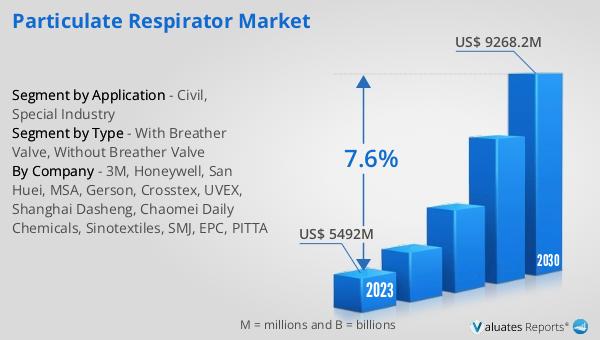
Particulate Respirator Market

With Breather Valve, Without Breather Valve in the Global Particulate Respirator Market:

In the Global Particulate Respirator Market, respirators are broadly categorized into two types based on the presence or absence of a breather valve: those with a breather valve and those without. Respirators with a breather valve are designed to facilitate easier exhalation, making them more comfortable for prolonged use. The valve reduces heat and moisture build-up inside the mask, which can be particularly beneficial in hot and humid environments or during strenuous activities. This feature makes them popular among workers in industries such as construction, mining, and manufacturing, where respirators are worn for extended periods. However, while the valve enhances comfort, it does not filter exhaled air, which means these respirators are not suitable for environments where source control is critical, such as in healthcare settings during infectious disease outbreaks. On the other hand, respirators without a breather valve provide two-way protection by filtering both inhaled and exhaled air. This makes them ideal for use in healthcare and other environments where preventing the spread of infectious agents is paramount. These respirators are often used by healthcare professionals, laboratory workers, and in situations where maintaining a sterile environment is crucial. Despite being less comfortable for long-term wear due to increased heat and moisture retention, their ability to provide comprehensive protection makes them indispensable in certain settings. The choice between respirators with or without a breather valve ultimately depends on the specific requirements of the environment and the level of protection needed. Manufacturers in the Global Particulate Respirator Market continue to innovate, striving to balance comfort and protection to meet the diverse needs of users across different sectors.

Civil, Special Industry in the Global Particulate Respirator Market:

The Global Particulate Respirator Market finds significant application in both civil and special industry sectors, each with distinct requirements and challenges. In civil applications, particulate respirators are commonly used by the general public and in various occupational settings to protect against environmental pollutants and occupational hazards. For instance, in urban areas with high levels of air pollution, individuals may use respirators to safeguard their respiratory health during daily commutes or outdoor activities. Similarly, workers in industries such as construction, agriculture, and manufacturing rely on respirators to protect against dust, fumes, and other airborne contaminants. These respirators are designed to be user-friendly and cost-effective, ensuring accessibility for a wide range of users. In special industry applications, the requirements for particulate respirators are often more stringent due to the presence of hazardous substances and the need for higher levels of protection. Industries such as pharmaceuticals, chemical manufacturing, and mining demand respirators that can effectively filter out fine particles and toxic substances. In these settings, respirators must meet rigorous safety standards and provide a secure fit to ensure maximum protection. Additionally, special industry applications may require respirators with advanced features, such as compatibility with other personal protective equipment (PPE) or the ability to withstand harsh environmental conditions. The Global Particulate Respirator Market continues to evolve to meet the diverse needs of both civil and special industry users, with manufacturers focusing on enhancing the performance, comfort, and usability of their products.

Global Particulate Respirator Market Outlook:

The global market for particulate respirators was valued at approximately $6.38 billion in 2024 and is anticipated to grow to a revised size of $10.58 billion by 2031, reflecting a compound annual growth rate (CAGR) of 7.6% over the forecast period. This growth trajectory underscores the increasing demand for effective respiratory protection across various sectors, driven by heightened awareness of occupational health and safety, as well as the ongoing need to mitigate the risks associated with airborne pollutants and infectious agents. In parallel, the broader medical devices market, which encompasses a wide range of products including particulate respirators, was estimated at $603 billion in 2023. This sector is projected to grow at a CAGR of 5% over the next six years, highlighting the expanding role of medical devices in enhancing healthcare outcomes and improving quality of life. The robust growth of the particulate respirator market is indicative of the critical importance of respiratory protection in safeguarding public health and safety, as well as the ongoing innovation and development within the industry to meet the evolving needs of consumers and regulatory bodies. As the market continues to expand, manufacturers are focused on enhancing the performance, comfort, and usability of their products to ensure they meet the highest standards of safety and effectiveness.


Report Metric Details
Report Name Particulate Respirator Market
Accounted market size in year US$ 6380 million
Forecasted market size in 2031 US$ 10580 million
CAGR 7.6%
Base Year year
Forecasted years 2025 - 2031
Segment by Type
  • With Breather Valve
  • Without Breather Valve
Segment by Application
  • Civil
  • Special Industry
Consumption by Region
  • North America (United States, Canada)
  • Europe (Germany, France, UK, Italy, Russia)
  • Asia-Pacific (China, Japan, South Korea, Taiwan)
  • Southeast Asia (India)
  • Latin America (Mexico, Brazil)
By Company 3M, Honeywell, San Huei, MSA, Gerson, Crosstex, UVEX, Shanghai Dasheng, Chaomei Daily Chemicals, Sinotextiles, SMJ, EPC, PITTA
Forecast units USD million in value
Report coverage Revenue and volume forecast, company share, competitive landscape, growth factors and trends

Global Supplied Air Respirators (SCBA) Market Research Report 2025

What is Global Supplied Air Respirators (SCBA) Market?

The Global Supplied Air Respirators (SCBA) Market is a crucial segment within the broader safety equipment industry, focusing on devices that provide breathable air in environments where air quality is compromised. These respirators are essential for workers in hazardous conditions, ensuring they have a continuous supply of clean air. SCBAs are widely used in industries such as firefighting, chemical manufacturing, and mining, where exposure to toxic gases or oxygen-deficient atmospheres is a significant risk. The market for these devices is driven by stringent safety regulations and the increasing awareness of workplace safety. Technological advancements have led to the development of more efficient and user-friendly SCBAs, further propelling market growth. Additionally, the rise in industrialization and urbanization, particularly in developing regions, has increased the demand for effective respiratory protection solutions. As industries continue to prioritize employee safety, the Global Supplied Air Respirators Market is expected to expand, offering innovative solutions to meet the evolving needs of various sectors. The market's growth is also supported by the increasing investments in research and development, aimed at enhancing the performance and comfort of these critical safety devices.

Supplied Air Respirators (SCBA) Market

Disposable, Non-Disposable in the Global Supplied Air Respirators (SCBA) Market:

The Global Supplied Air Respirators (SCBA) Market can be broadly categorized into disposable and non-disposable respirators, each serving distinct purposes and catering to different user needs. Disposable respirators are designed for single-use applications, providing a cost-effective solution for short-term exposure to hazardous environments. These are typically used in industries where the risk of contamination is high, and the need for frequent replacement is necessary to maintain hygiene and safety standards. Disposable respirators are lightweight, easy to use, and require minimal maintenance, making them a popular choice in sectors such as healthcare, where protection against airborne pathogens is critical. On the other hand, non-disposable respirators are built for long-term use, offering durability and reliability in more demanding environments. These respirators are often equipped with replaceable filters and cartridges, allowing for extended use and adaptability to various contaminants. Non-disposable SCBAs are commonly used in industries such as firefighting, mining, and chemical manufacturing, where workers are exposed to hazardous substances over prolonged periods. The choice between disposable and non-disposable respirators largely depends on the specific requirements of the job, the duration of exposure, and the level of protection needed. While disposable respirators offer convenience and cost savings for short-term use, non-disposable options provide a more sustainable and robust solution for long-term protection. The market for both types of respirators is influenced by factors such as regulatory standards, technological advancements, and the growing emphasis on occupational safety. As industries continue to evolve, the demand for both disposable and non-disposable SCBAs is expected to rise, driven by the need for effective respiratory protection in diverse work environments. Manufacturers are continually innovating to enhance the performance, comfort, and usability of these devices, ensuring they meet the ever-changing needs of the global workforce. The ongoing development of new materials and technologies is also contributing to the growth of the SCBA market, offering improved protection and user experience. As a result, both disposable and non-disposable respirators play a vital role in safeguarding workers' health and safety across various industries, highlighting the importance of choosing the right type of respirator for specific applications.

Industrial Protection, Military Protection, Medical Protection, Fire Uniform, Daily Protection, Other in the Global Supplied Air Respirators (SCBA) Market:

The usage of Global Supplied Air Respirators (SCBA) Market spans across various sectors, each with unique requirements and challenges. In industrial protection, SCBAs are essential for safeguarding workers in environments with hazardous substances, such as chemical plants, oil refineries, and construction sites. These respirators provide a reliable source of clean air, protecting workers from inhaling toxic fumes, dust, and other airborne contaminants. In military protection, SCBAs are used to shield personnel from chemical, biological, radiological, and nuclear threats. The military demands high-performance respirators that can withstand extreme conditions and provide long-duration protection. In the medical field, SCBAs are crucial for healthcare professionals working in environments with infectious diseases or hazardous chemicals. These respirators ensure that medical staff can perform their duties safely without the risk of exposure to harmful pathogens. Firefighters rely heavily on SCBAs as part of their fire uniform, enabling them to enter smoke-filled buildings and rescue individuals without compromising their respiratory health. The ability to breathe clean air in such dangerous situations is vital for their safety and effectiveness. For daily protection, SCBAs are used by individuals working in environments with occasional exposure to harmful substances, such as laboratories or workshops. These respirators offer peace of mind and protection for those who may encounter hazardous materials in their daily tasks. Other applications of SCBAs include use in emergency response situations, where first responders need reliable respiratory protection to handle chemical spills, natural disasters, or other crises. The versatility and adaptability of SCBAs make them indispensable across various sectors, ensuring the safety and well-being of individuals working in challenging environments. As industries continue to prioritize safety and compliance with regulatory standards, the demand for SCBAs is expected to grow, driving innovation and development in this critical market.

Global Supplied Air Respirators (SCBA) Market Outlook:

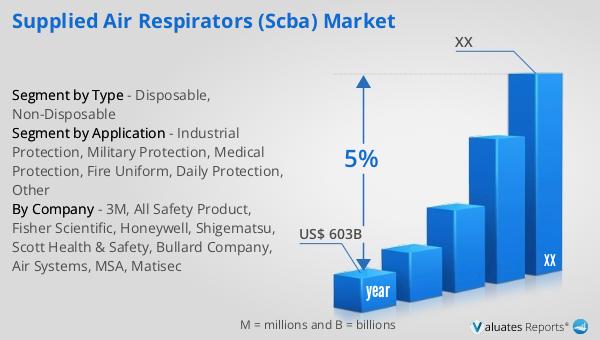
Our research indicates that the global market for medical devices is projected to reach approximately $603 billion by the year 2023, with an anticipated growth rate of 5% annually over the next six years. This growth trajectory underscores the increasing demand for medical devices across various healthcare sectors, driven by advancements in technology, an aging global population, and the rising prevalence of chronic diseases. The medical device industry encompasses a wide range of products, from diagnostic equipment and surgical instruments to wearable health monitors and implantable devices. As healthcare systems worldwide strive to improve patient outcomes and reduce costs, the adoption of innovative medical devices is becoming increasingly crucial. The projected growth in the medical device market reflects the ongoing efforts to enhance healthcare delivery and address the evolving needs of patients and healthcare providers. With continuous advancements in medical technology and the integration of digital solutions, the market is poised for significant expansion, offering new opportunities for manufacturers and stakeholders in the healthcare industry. As the demand for high-quality, efficient, and cost-effective medical devices continues to rise, the global market is set to experience robust growth, driven by the need for improved healthcare solutions and the increasing focus on patient-centric care.


Report Metric Details
Report Name Supplied Air Respirators (SCBA) Market
Accounted market size in year US$ 603 billion
CAGR 5%
Base Year year
Segment by Type
  • Disposable
  • Non-Disposable
Segment by Application
  • Industrial Protection
  • Military Protection
  • Medical Protection
  • Fire Uniform
  • Daily Protection
  • Other
Consumption by Region
  • North America (United States, Canada)
  • Europe (Germany, France, UK, Italy, Russia)
  • Asia-Pacific (China, Japan, South Korea, Taiwan)
  • Southeast Asia (India)
  • Latin America (Mexico, Brazil)
By Company 3M, All Safety Product, Fisher Scientific, Honeywell, Shigematsu, Scott Health & Safety, Bullard Company, Air Systems, MSA, Matisec
Forecast units USD million in value
Report coverage Revenue and volume forecast, company share, competitive landscape, growth factors and trends

Global Fuse (electrical) Market Research Report 2025

What is Global Fuse (electrical) Market?

The Global Fuse (electrical) Market is a critical component of the electrical and electronics industry, serving as a fundamental safety device designed to protect electrical circuits from overcurrent conditions. Fuses are essential in preventing damage to electrical systems and reducing the risk of fire hazards by interrupting the flow of electricity when a fault is detected. The market encompasses a wide range of fuse types, including industrial power fuses, UL fuses, axial radial thru-hole fuses, cartridge fuses, surface mount fuses, and specialty power fuses, each tailored to specific applications and industries. As technology advances and the demand for reliable electrical systems grows, the global fuse market continues to expand, driven by the increasing need for efficient power management and safety solutions across various sectors. The market's growth is further fueled by the rising adoption of renewable energy sources, the proliferation of electronic devices, and the ongoing development of smart grid technologies. With a focus on innovation and sustainability, manufacturers are continually enhancing fuse designs to meet the evolving needs of modern electrical systems, ensuring optimal performance and protection in an ever-changing technological landscape.

Fuse (electrical) Market

Industrial Power and UL Fuses, Axial Radial Thru Hole Fuses, Cartridge Fuses, Surface Mount Fuses, Specialty Power Fuses, Other in the Global Fuse (electrical) Market:

Industrial Power and UL Fuses are integral to the Global Fuse (electrical) Market, providing robust solutions for high-power applications. These fuses are designed to handle significant electrical loads, making them ideal for industrial settings where machinery and equipment demand reliable protection against overcurrent. UL fuses, in particular, adhere to stringent safety standards set by Underwriters Laboratories, ensuring high-quality performance and safety. Axial Radial Thru Hole Fuses are another critical component, offering versatile mounting options for circuit boards. These fuses are commonly used in consumer electronics, automotive applications, and telecommunications equipment, providing reliable protection in compact designs. Cartridge Fuses, known for their cylindrical shape, are widely used in residential and commercial electrical systems. They offer easy installation and replacement, making them a popular choice for protecting household appliances and lighting circuits. Surface Mount Fuses cater to the miniaturization trend in electronics, providing space-saving solutions for printed circuit boards. These fuses are essential in modern electronic devices, including smartphones, laptops, and wearable technology, where compactness and efficiency are paramount. Specialty Power Fuses are designed for unique applications, such as renewable energy systems and electric vehicles, where specific performance characteristics are required. These fuses address the growing demand for sustainable energy solutions and the electrification of transportation. The Global Fuse (electrical) Market also includes other fuse types, each catering to specific industry needs and technological advancements. As the market evolves, manufacturers continue to innovate, developing fuses that offer enhanced performance, reliability, and safety across diverse applications.

Industry, Automotive, Energy in the Global Fuse (electrical) Market:

The Global Fuse (electrical) Market plays a vital role in various sectors, including Industry, Automotive, and Energy, by providing essential protection and safety solutions. In the industrial sector, fuses are crucial for safeguarding machinery and equipment from electrical faults, ensuring uninterrupted operations and minimizing downtime. They are used in manufacturing plants, processing facilities, and automation systems, where reliable power management is critical. In the automotive industry, fuses are integral to vehicle electrical systems, protecting components such as lighting, infotainment, and powertrain systems from overcurrent conditions. As vehicles become more technologically advanced, the demand for specialized fuses that can handle complex electrical architectures continues to grow. In the energy sector, fuses are essential for protecting power generation and distribution systems, including renewable energy installations such as solar and wind farms. They ensure the safe and efficient operation of energy infrastructure, preventing damage to equipment and reducing the risk of power outages. The increasing adoption of renewable energy sources and the development of smart grid technologies further drive the demand for advanced fuse solutions. Overall, the Global Fuse (electrical) Market is indispensable in ensuring the safety, reliability, and efficiency of electrical systems across these key sectors, supporting the ongoing transition to a more sustainable and technologically advanced future.

Global Fuse (electrical) Market Outlook:

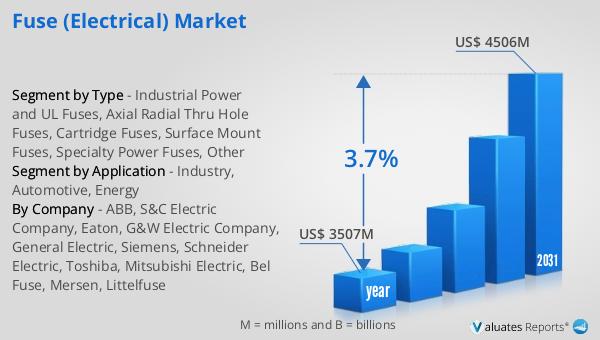
In 2024, the global market for electrical fuses was valued at approximately $3,507 million. This market is anticipated to grow steadily, reaching an estimated size of $4,506 million by 2031. This growth trajectory represents a compound annual growth rate (CAGR) of 3.7% over the forecast period. The steady increase in market size reflects the rising demand for electrical fuses across various industries, driven by the need for enhanced safety and reliability in electrical systems. As industries continue to evolve and adopt new technologies, the demand for efficient and effective fuse solutions is expected to rise, contributing to the market's expansion. The growth of the Global Fuse (electrical) Market is also supported by the increasing focus on renewable energy sources and the development of smart grid technologies, which require advanced protection solutions to ensure optimal performance and safety. As a result, manufacturers are investing in research and development to create innovative fuse designs that meet the evolving needs of modern electrical systems. This ongoing innovation and adaptation to changing market demands are key factors driving the growth of the Global Fuse (electrical) Market.


Report Metric Details
Report Name Fuse (electrical) Market
Accounted market size in year US$ 3507 million
Forecasted market size in 2031 US$ 4506 million
CAGR 3.7%
Base Year year
Forecasted years 2025 - 2031
Segment by Type
  • Industrial Power and UL Fuses
  • Axial Radial Thru Hole Fuses
  • Cartridge Fuses
  • Surface Mount Fuses
  • Specialty Power Fuses
  • Other
Segment by Application
  • Industry
  • Automotive
  • Energy
Consumption by Region
  • North America (United States, Canada)
  • Europe (Germany, France, UK, Italy, Russia)
  • Asia-Pacific (China, Japan, South Korea, Taiwan)
  • Southeast Asia (India)
  • Latin America (Mexico, Brazil)
By Company ABB, S&C Electric Company, Eaton, G&W Electric Company, General Electric, Siemens, Schneider Electric, Toshiba, Mitsubishi Electric, Bel Fuse, Mersen, Littelfuse
Forecast units USD million in value
Report coverage Revenue and volume forecast, company share, competitive landscape, growth factors and trends

Global Strong Cation Exchange Agarose Gel Market Research Report 2025

What is Global Strong Cation Exchange Agarose Gel Market? The Global Strong Cation Exchange Agarose Gel Market is a specialized segment wit...