Monday, December 1, 2025

Global Racing Bicycles Market Research Report 2025

What is Global Racing Bicycles Market?

The Global Racing Bicycles Market is a dynamic and evolving sector that caters to the needs of cycling enthusiasts and professional racers worldwide. This market encompasses a wide range of bicycles specifically designed for racing purposes, including road bikes, mountain bikes, and other specialized racing bicycles. These bicycles are engineered to deliver high performance, speed, and agility, making them ideal for competitive racing events. The market is driven by factors such as the growing popularity of cycling as a sport, increasing participation in racing events, and the rising demand for lightweight and technologically advanced bicycles. Additionally, the market is influenced by trends such as the adoption of electric racing bicycles and the integration of smart technologies for enhanced performance tracking. Manufacturers in this market are continuously innovating to meet the evolving needs of consumers, offering bicycles with improved aerodynamics, advanced materials, and cutting-edge components. The Global Racing Bicycles Market is characterized by intense competition among key players, who are striving to gain a competitive edge through product differentiation, strategic partnerships, and expansion into emerging markets. Overall, this market presents significant opportunities for growth and innovation, driven by the increasing global interest in cycling as a competitive and recreational activity.
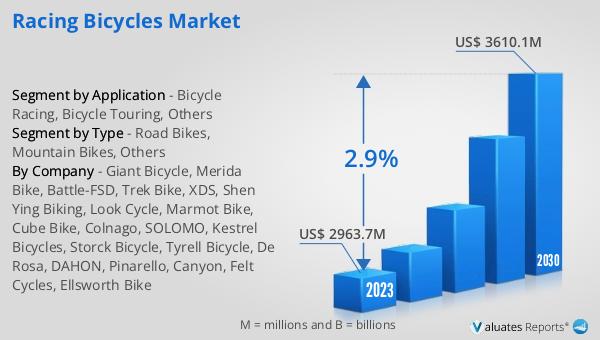
Racing Bicycles Market

Road Bikes, Mountain Bikes, Others in the Global Racing Bicycles Market:

Road bikes, mountain bikes, and other types of racing bicycles each play a unique role in the Global Racing Bicycles Market, catering to different terrains and racing styles. Road bikes are designed for speed and efficiency on paved surfaces, making them the preferred choice for road racing events. These bikes are characterized by their lightweight frames, narrow tires, and aerodynamic design, which allow riders to achieve high speeds with minimal effort. Road bikes often feature drop handlebars for an aerodynamic riding position and are equipped with multiple gears to handle varying terrains and inclines. The demand for road bikes is driven by the popularity of road racing events such as the Tour de France and the increasing number of amateur cyclists participating in local and international competitions. On the other hand, mountain bikes are built to withstand rugged terrains and off-road conditions, making them ideal for mountain biking and cross-country racing. These bikes are equipped with sturdy frames, wide tires with deep treads, and suspension systems to absorb shocks and provide stability on uneven surfaces. Mountain bikes are popular among adventure enthusiasts and those seeking an adrenaline rush in challenging environments. The market for mountain bikes is fueled by the growing interest in outdoor recreational activities and the expansion of mountain biking trails and parks worldwide. In addition to road and mountain bikes, the Global Racing Bicycles Market also includes other specialized racing bicycles designed for specific racing disciplines. These may include track bikes, cyclocross bikes, and BMX bikes, each tailored to the unique demands of their respective racing environments. Track bikes, for instance, are designed for velodrome racing and feature a fixed gear and no brakes, allowing for maximum speed and control on the track. Cyclocross bikes, on the other hand, are versatile and can handle a mix of terrains, including grass, mud, and gravel, making them suitable for cyclocross racing events. BMX bikes are compact and robust, designed for BMX racing and freestyle riding, with features that enable riders to perform tricks and stunts. The diversity of racing bicycles in the market reflects the wide range of cycling disciplines and the growing interest in competitive cycling across different age groups and skill levels. Manufacturers are continually innovating to enhance the performance and appeal of these bicycles, incorporating advanced materials such as carbon fiber for lightweight frames and integrating smart technologies for performance monitoring and analysis. As the Global Racing Bicycles Market continues to evolve, it presents opportunities for manufacturers to cater to the diverse needs of cyclists and capitalize on the increasing popularity of cycling as a competitive sport and recreational activity.

Bicycle Racing, Bicycle Touring, Others in the Global Racing Bicycles Market:

The Global Racing Bicycles Market finds extensive usage in various areas, including bicycle racing, bicycle touring, and other cycling activities. Bicycle racing is one of the primary applications of racing bicycles, with events ranging from local competitions to international championships. Racing bicycles are designed to provide optimal speed, agility, and performance, making them the preferred choice for competitive cyclists. In bicycle racing, the focus is on achieving the fastest time over a set distance, and racing bicycles are engineered to meet these demands with features such as lightweight frames, aerodynamic designs, and high-performance components. The popularity of bicycle racing events, such as the Tour de France, Giro d'Italia, and Vuelta a EspaƱa, has contributed to the growth of the Global Racing Bicycles Market, as more individuals aspire to participate in these prestigious competitions. Bicycle touring, on the other hand, involves long-distance cycling trips, often spanning multiple days or weeks. While touring bicycles are typically designed for comfort and durability, racing bicycles are also used by some touring enthusiasts who prioritize speed and efficiency. Racing bicycles offer the advantage of covering long distances quickly, making them suitable for cyclists who enjoy fast-paced touring experiences. The use of racing bicycles in touring is particularly popular among experienced cyclists who are accustomed to the riding position and handling characteristics of these bikes. In addition to racing and touring, the Global Racing Bicycles Market also caters to other cycling activities, such as recreational riding and fitness cycling. Many individuals use racing bicycles for recreational purposes, enjoying the thrill of high-speed cycling on open roads or scenic routes. The lightweight and efficient design of racing bicycles make them an attractive option for fitness enthusiasts who use cycling as a form of exercise. The integration of smart technologies in racing bicycles, such as GPS tracking and performance monitoring, further enhances their appeal for fitness-oriented cyclists who seek to track their progress and improve their performance. Overall, the Global Racing Bicycles Market serves a diverse range of cycling activities, driven by the growing interest in cycling as a sport, recreational activity, and fitness pursuit. The versatility and performance of racing bicycles make them a popular choice among cyclists of all skill levels, contributing to the market's continued growth and innovation.

Global Racing Bicycles Market Outlook:

In 2024, the global market for racing bicycles was valued at approximately $3.12 billion. This market is anticipated to expand, reaching an estimated size of $3.801 billion by the year 2031. This growth trajectory represents a compound annual growth rate (CAGR) of 2.9% over the forecast period. The steady increase in market value reflects the rising demand for racing bicycles, driven by factors such as the growing popularity of cycling as a competitive sport and recreational activity. As more individuals engage in cycling events and seek high-performance bicycles, manufacturers are responding with innovative designs and advanced technologies to meet consumer expectations. The market's expansion is also supported by the increasing availability of cycling infrastructure and the promotion of cycling as a sustainable mode of transportation. Additionally, the integration of smart technologies and the development of electric racing bicycles are expected to further drive market growth, offering new opportunities for manufacturers and consumers alike. As the global market for racing bicycles continues to evolve, it presents a promising landscape for industry players to capitalize on emerging trends and consumer preferences, ultimately contributing to the market's sustained growth and development.


Report Metric Details
Report Name Racing Bicycles Market
Accounted market size in year US$ 3120 million
Forecasted market size in 2031 US$ 3801 million
CAGR 2.9%
Base Year year
Forecasted years 2025 - 2031
Segment by Type
  • Road Bikes
  • Mountain Bikes
  • Others
Segment by Application
  • Bicycle Racing
  • Bicycle Touring
  • Others
Consumption by Region
  • North America (United States, Canada)
  • Europe (Germany, France, UK, Italy, Russia)
  • Asia-Pacific (China, Japan, South Korea, Taiwan)
  • Southeast Asia (India)
  • Latin America (Mexico, Brazil)
By Company Giant Bicycle, Merida Bike, Battle-FSD, Trek Bike, XDS, Shen Ying Biking, Look Cycle, Marmot Bike, Cube Bike, Colnago, SOLOMO, Kestrel Bicycles, Storck Bicycle, Tyrell Bicycle, De Rosa, DAHON, Pinarello, Canyon, Felt Cycles, Ellsworth Bike
Forecast units USD million in value
Report coverage Revenue and volume forecast, company share, competitive landscape, growth factors and trends

Global Leather Products Market Research Report 2025

What is Global Leather Products Market?

The Global Leather Products Market is a vast and dynamic sector that encompasses a wide range of products made from leather, including footwear, apparel, accessories, and furniture. Leather, a durable and flexible material created by tanning animal rawhide and skins, has been used for centuries due to its strength, comfort, and aesthetic appeal. The market is driven by factors such as increasing consumer demand for high-quality and stylish leather goods, the growth of the fashion industry, and the rising disposable income of consumers worldwide. Additionally, the market is influenced by trends such as the growing preference for sustainable and eco-friendly products, which has led to innovations in leather production and the use of alternative materials. The global leather products market is also characterized by a high level of competition, with numerous players ranging from large multinational corporations to small and medium-sized enterprises. These companies are constantly striving to enhance their product offerings, expand their distribution networks, and improve their manufacturing processes to gain a competitive edge. Overall, the Global Leather Products Market is a dynamic and evolving industry that continues to adapt to changing consumer preferences and market trends.

Leather Products Market

Natural Leather, Artificial Leather in the Global Leather Products Market:

Natural leather, derived from the hides and skins of animals such as cows, sheep, goats, and pigs, is renowned for its durability, comfort, and timeless appeal. It undergoes a meticulous tanning process to transform raw hides into a material that is not only strong and flexible but also resistant to decay. This process can involve vegetable tanning, which uses natural tannins found in plant matter, or chrome tanning, which employs chromium salts for a faster and more uniform finish. Natural leather is highly valued for its unique characteristics, including its ability to develop a rich patina over time, enhancing its aesthetic appeal. It is widely used in the production of high-end footwear, luxury handbags, jackets, and furniture, where its quality and longevity are highly prized. However, the production of natural leather has faced scrutiny due to environmental concerns, as the tanning process can involve harmful chemicals and significant water usage. This has led to a growing interest in sustainable practices and the development of eco-friendly tanning methods that minimize environmental impact. On the other hand, artificial leather, also known as synthetic leather or faux leather, is a man-made material designed to mimic the look and feel of natural leather. It is typically made from a fabric base coated with a plastic polymer, such as polyurethane (PU) or polyvinyl chloride (PVC). Artificial leather offers several advantages, including lower cost, ease of maintenance, and resistance to water and stains. It is widely used in the production of affordable footwear, bags, and upholstery, providing a cost-effective alternative to natural leather. Additionally, artificial leather is often favored by consumers seeking cruelty-free and vegan options, as it does not involve the use of animal products. However, the production of synthetic leather also raises environmental concerns, particularly regarding the use of non-renewable resources and the generation of plastic waste. In response, manufacturers are exploring innovative solutions, such as bio-based materials and recycling technologies, to create more sustainable alternatives. The Global Leather Products Market is thus characterized by a diverse range of materials, each with its own set of advantages and challenges. As consumer preferences continue to evolve, the market is likely to see further innovations in both natural and artificial leather, driven by the demand for high-quality, sustainable, and ethically produced products.

Online Store, Supermarket, Direct Store in the Global Leather Products Market:

The usage of leather products in various retail environments such as online stores, supermarkets, and direct stores highlights the versatility and widespread appeal of leather goods. Online stores have become a significant platform for the sale of leather products, offering consumers the convenience of browsing and purchasing from the comfort of their homes. The digital marketplace allows for a vast selection of leather goods, from luxury handbags and shoes to jackets and accessories, catering to a global audience. Online retailers often provide detailed product descriptions, high-quality images, and customer reviews, enabling consumers to make informed purchasing decisions. Additionally, the rise of e-commerce has facilitated the growth of direct-to-consumer brands, which offer high-quality leather products at competitive prices by eliminating traditional retail markups. Supermarkets, on the other hand, typically offer a more limited selection of leather products, focusing on affordable and practical items such as belts, wallets, and small accessories. These products are often positioned as impulse buys, strategically placed near checkout counters to attract consumers' attention. Supermarkets provide the advantage of immediate availability, allowing consumers to purchase leather goods on the spot without the need for shipping or waiting times. Direct stores, including brand-owned boutiques and specialty leather shops, offer a more personalized shopping experience, with a focus on high-quality craftsmanship and premium products. These stores often showcase a curated selection of leather goods, emphasizing the brand's unique style and heritage. Customers visiting direct stores can benefit from expert advice and personalized service, enhancing their overall shopping experience. The tactile nature of leather products makes direct stores particularly appealing, as consumers can physically touch and feel the quality of the materials before making a purchase. In summary, the Global Leather Products Market is well-represented across various retail channels, each offering distinct advantages and catering to different consumer preferences. Whether through the convenience of online shopping, the accessibility of supermarkets, or the personalized experience of direct stores, leather products continue to be a popular choice for consumers worldwide.

Global Leather Products Market Outlook:

In 2024, the global leather products market was valued at approximately $444.97 billion. This substantial figure reflects the widespread demand and consumption of leather goods across various sectors, including fashion, automotive, and furniture. The market is projected to experience significant growth over the coming years, with expectations to reach a revised size of around $797.55 billion by 2031. This anticipated growth represents a compound annual growth rate (CAGR) of 8.8% during the forecast period. Such a robust growth rate underscores the increasing consumer preference for leather products, driven by factors such as rising disposable incomes, evolving fashion trends, and the enduring appeal of leather as a durable and luxurious material. The market's expansion is also supported by innovations in leather production, including the development of sustainable and eco-friendly alternatives that cater to environmentally conscious consumers. As the market continues to evolve, companies within the leather industry are likely to focus on enhancing their product offerings, expanding their distribution networks, and adopting sustainable practices to meet the growing demand. Overall, the global leather products market presents significant opportunities for growth and innovation, driven by a combination of consumer demand, technological advancements, and a commitment to sustainability.


Report Metric Details
Report Name Leather Products Market
Accounted market size in year US$ 444970 million
Forecasted market size in 2031 US$ 797550 million
CAGR 8.8%
Base Year year
Forecasted years 2025 - 2031
Segment by Type
  • Natural Leather
  • Artificial Leather
Segment by Application
  • Online Store
  • Supermarket
  • Direct Store
Consumption by Region
  • North America (United States, Canada)
  • Europe (Germany, France, UK, Italy, Russia)
  • Asia-Pacific (China, Japan, South Korea, Taiwan)
  • Southeast Asia (India)
  • Latin America (Mexico, Brazil)
By Company Kering SA, Hermes International S.A, Versace, Prada, Dolce and Gabbana, Burberry Group Inc, LVMH Moet Hennessy Louis Vuitton S.E, Giorgio Armani S.P.A, Ralph Lauren Corporation, Ermenegildo Zegna, Kiton, Hugo Boss A.G, Channel, Kering, Levi Strauss Co., GIVI Holding, Nike, Adidas
Forecast units USD million in value
Report coverage Revenue and volume forecast, company share, competitive landscape, growth factors and trends

Global Furniture Market Research Report 2025

What is Global Furniture Market?

The global furniture market is a vast and dynamic industry that encompasses a wide range of products designed to meet the diverse needs of consumers worldwide. This market includes everything from basic household items like chairs, tables, and beds to more specialized pieces such as office desks and ergonomic seating. The furniture market is influenced by various factors, including economic conditions, consumer preferences, and technological advancements. As economies grow and urbanization increases, the demand for furniture rises, driven by the need for both residential and commercial spaces. Additionally, the market is shaped by trends in interior design, sustainability, and the increasing popularity of smart furniture that integrates technology for enhanced functionality. Manufacturers and retailers in the global furniture market must continuously adapt to these changing trends and consumer demands to remain competitive. The market is also characterized by a mix of large multinational companies and smaller, niche players, each contributing to the rich tapestry of options available to consumers. As a result, the global furniture market is not only a reflection of current lifestyle trends but also a significant contributor to the global economy, providing employment and driving innovation in design and materials.

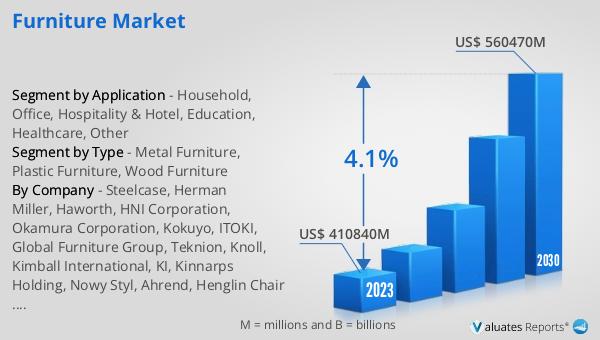
Furniture Market

Wooden Furniture, Leather & Fabric Furniture, Metal Furniture, Plastic Furniture, Others in the Global Furniture Market:

Wooden furniture is a staple in the global furniture market, known for its durability, timeless appeal, and versatility. It is crafted from various types of wood, such as oak, pine, mahogany, and teak, each offering unique characteristics and aesthetics. Wooden furniture is favored for its natural beauty and ability to blend seamlessly with different interior styles, from traditional to contemporary. It is often seen in residential settings, providing warmth and elegance to living spaces. In addition to its aesthetic appeal, wooden furniture is valued for its longevity and the ability to be refinished or repurposed, making it a sustainable choice for environmentally conscious consumers. Leather and fabric furniture, on the other hand, offer comfort and luxury. Leather furniture is prized for its sophisticated look and durability, often used in high-end residential and commercial spaces. It is easy to clean and ages gracefully, developing a patina over time that adds to its charm. Fabric furniture, available in a wide range of colors and patterns, provides versatility and comfort, making it a popular choice for both homes and offices. It allows for personalization and can be easily updated with new upholstery to match changing decor trends. Metal furniture is known for its strength and modern aesthetic. It is commonly used in industrial and minimalist designs, offering a sleek and durable option for both indoor and outdoor use. Metal furniture is often combined with other materials, such as wood or glass, to create unique and stylish pieces. Its resistance to wear and tear makes it ideal for commercial settings, where durability is a priority. Plastic furniture, while often associated with affordability, has evolved to include stylish and innovative designs. It is lightweight, easy to clean, and available in a variety of colors and shapes, making it suitable for both indoor and outdoor use. Plastic furniture is particularly popular in casual settings, such as patios and children's rooms, where practicality and ease of maintenance are important. Other materials used in the global furniture market include glass, rattan, and bamboo, each offering distinct advantages and aesthetic qualities. Glass furniture adds a touch of elegance and sophistication, often used in modern and contemporary designs. Rattan and bamboo furniture are favored for their natural look and eco-friendly properties, commonly seen in outdoor and tropical-themed spaces. These diverse materials and styles reflect the wide range of options available in the global furniture market, catering to the varied tastes and needs of consumers worldwide.

Residential, Commercial in the Global Furniture Market:

The global furniture market serves a multitude of purposes across residential and commercial sectors, each with its unique demands and preferences. In residential settings, furniture plays a crucial role in defining the aesthetic and functionality of a home. It provides comfort, organization, and a sense of personal style, transforming a house into a home. Living room furniture, such as sofas, coffee tables, and entertainment units, creates a welcoming space for relaxation and socializing. Bedroom furniture, including beds, dressers, and nightstands, offers comfort and storage, contributing to a restful environment. Dining room furniture, like tables and chairs, facilitates family gatherings and meals, while home office furniture supports productivity and organization. The choice of materials, colors, and designs in residential furniture reflects personal tastes and lifestyle preferences, with an increasing emphasis on sustainability and multifunctionality. In commercial settings, furniture is essential for creating functional and appealing environments that enhance productivity and customer experience. Office furniture, such as desks, chairs, and storage units, is designed to support ergonomic needs and efficient workflows. In retail and hospitality sectors, furniture contributes to the overall ambiance and customer satisfaction, with a focus on durability and style. Restaurants and cafes require furniture that is both comfortable and easy to maintain, while hotels and resorts prioritize luxury and comfort in their furnishings. Educational institutions and healthcare facilities also rely on specialized furniture to meet the needs of students and patients, emphasizing safety, accessibility, and hygiene. The global furniture market's ability to cater to these diverse needs highlights its importance in shaping the environments where people live, work, and interact. As consumer expectations evolve, the market continues to innovate, offering new solutions that enhance both residential and commercial spaces.

Global Furniture Market Outlook:

In 2024, the global furniture market was valued at approximately $10,690 million. This figure represents the total worth of furniture products sold worldwide, encompassing a wide range of items from basic household furnishings to specialized commercial pieces. The market is projected to grow steadily over the coming years, reaching an estimated value of $12,440 million by 2031. This growth is expected to occur at a compound annual growth rate (CAGR) of 2.2% during the forecast period. This steady increase in market size reflects the ongoing demand for furniture across various sectors, driven by factors such as population growth, urbanization, and changing consumer preferences. As more people move into urban areas and seek to furnish their homes and offices, the demand for furniture is likely to rise. Additionally, trends in interior design and the increasing focus on sustainability and multifunctionality are expected to influence the types of furniture that consumers choose. The global furniture market's growth also highlights the importance of innovation and adaptation in meeting the evolving needs of consumers. Manufacturers and retailers must stay attuned to these trends to remain competitive and capitalize on the opportunities presented by this expanding market.


Report Metric Details
Report Name Furniture Market
Accounted market size in year US$ 10690 million
Forecasted market size in 2031 US$ 12440 million
CAGR 2.2%
Base Year year
Forecasted years 2025 - 2031
Segment by Type
  • Wooden Furniture
  • Leather & Fabric Furniture
  • Metal Furniture
  • Plastic Furniture
  • Others
Segment by Application
  • Residential
  • Commercial
Consumption by Region
  • North America (United States, Canada)
  • Europe (Germany, France, UK, Italy, Russia)
  • Asia-Pacific (China, Japan, South Korea, Taiwan)
  • Southeast Asia (India)
  • Latin America (Mexico, Brazil)
By Company Ashley Furniture, Rooms To Go, Foliot Furniture, Mattress Firm, Williams-Sonoma, LE-AL Asia, Hmart Limited, Berkshire Hathaway, Laz Boy, American Signature, Sleep Number, Gelaimei Hotel Furniture, Fulilai Hotel Furniture Co., Ltd, Northland Furniture., Sleepy's, Buhler Furniture, Mingjia Furniture, JL Furnishings, Telos Furniture
Forecast units USD million in value
Report coverage Revenue and volume forecast, company share, competitive landscape, growth factors and trends

Global uPVC Doors Market Research Report 2025

What is Global uPVC Doors Market?

The Global uPVC Doors Market refers to the worldwide industry focused on the production, distribution, and sale of doors made from unplasticized polyvinyl chloride (uPVC).

uPVC Doors Market

Interior Door, Exterior Door in the Global uPVC Doors Market:

uPVC is a type of plastic that is known for its durability, energy efficiency, and low maintenance requirements.

Residential, Commercial in the Global uPVC Doors Market:

These characteristics make uPVC doors a popular choice for both residential and commercial applications.

Global uPVC Doors Market Outlook:

The market encompasses a wide range of door types, including interior and exterior doors, each designed to meet specific needs and preferences.


Report Metric Details
Report Name uPVC Doors Market
Accounted market size in year US$ 3336 million
Forecasted market size in 2031 US$ 4461 million
CAGR 4.3%
Base Year year
Forecasted years 2025 - 2031
Segment by Type
  • Interior Door
  • Exterior Door
Segment by Application
  • Residential
  • Commercial
Consumption by Region
  • North America (United States, Canada)
  • Europe (Germany, France, UK, Italy, Russia)
  • Asia-Pacific (China, Japan, South Korea, Taiwan)
  • Southeast Asia (India)
  • Latin America (Mexico, Brazil)
By Company VEKA, Rehau, Koemmerling, Aluplast, Dimex, LG Hausys, Fenesta, Deceuninck, Internorm, Everest, Munster Joinery, CONCH, Shide Group, Kinbon, Zhongcai, LESSO, Curtain, BNBM, ViewMax
Forecast units USD million in value
Report coverage Revenue and volume forecast, company share, competitive landscape, growth factors and trends

Global Calcium and Vitamin D Supplements Market Research Report 2025

What is Global Calcium and Vitamin D Supplements Market?

The Global Calcium and Vitamin D Supplements Market is a dynamic and expanding sector within the broader health and wellness industry. These supplements are essential for maintaining bone health, supporting immune function, and ensuring overall well-being. Calcium is crucial for building and maintaining strong bones, while Vitamin D helps the body absorb calcium more effectively. The market for these supplements is driven by increasing awareness of health and wellness, aging populations, and rising incidences of bone-related diseases such as osteoporosis. Consumers are becoming more proactive about their health, leading to a surge in demand for dietary supplements that can help prevent deficiencies and promote long-term health. The market is characterized by a wide range of products, including tablets, capsules, gummies, and powders, catering to different consumer preferences and needs. Additionally, the market is influenced by factors such as regulatory changes, advancements in supplement formulations, and growing consumer interest in natural and organic products. As more people recognize the importance of maintaining adequate calcium and vitamin D levels, the market is expected to continue its growth trajectory, offering numerous opportunities for manufacturers and retailers alike.

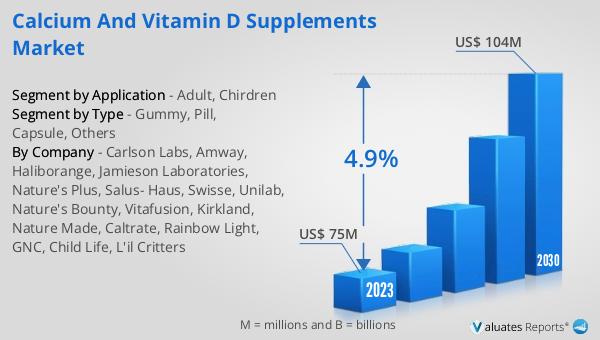
Calcium and Vitamin D Supplements Market

Gummy, Pill, Capsule, Others in the Global Calcium and Vitamin D Supplements Market:

In the Global Calcium and Vitamin D Supplements Market, various forms of supplements cater to diverse consumer preferences and needs. Gummies, pills, capsules, and other forms each have unique characteristics that appeal to different segments of the population. Gummies, for instance, have gained popularity due to their palatable taste and ease of consumption, making them particularly attractive to children and adults who dislike swallowing pills. They often come in a variety of flavors and are perceived as a more enjoyable way to take supplements. However, gummies may contain added sugars and other ingredients that some health-conscious consumers might want to avoid. Pills and capsules, on the other hand, are traditional forms of supplements that are widely used due to their convenience and precise dosage. They are often preferred by adults who are accustomed to taking medications in this form. Capsules, in particular, can be made from gelatin or vegetarian alternatives, catering to different dietary preferences. These forms are typically free from added sugars and are considered a more straightforward way to consume supplements. Other forms of calcium and vitamin D supplements include powders and liquids, which offer flexibility in terms of dosage and can be easily mixed with food or beverages. Powders are particularly popular among athletes and fitness enthusiasts who incorporate them into their daily nutrition regimen. Liquids, meanwhile, are often used for infants or individuals with swallowing difficulties. Each form of supplement has its own set of advantages and potential drawbacks, and the choice often depends on individual preferences, lifestyle, and specific health needs. The market continues to innovate, with manufacturers developing new formulations and delivery methods to enhance the efficacy and appeal of these supplements. As consumer awareness of the importance of calcium and vitamin D continues to grow, the demand for diverse supplement forms is likely to increase, providing ample opportunities for market expansion and product differentiation.

Adult, Chirdren in the Global Calcium and Vitamin D Supplements Market:

The usage of Global Calcium and Vitamin D Supplements Market products varies significantly between adults and children, reflecting the different nutritional needs and health priorities of these groups. For adults, calcium and vitamin D supplements are primarily used to support bone health and prevent conditions such as osteoporosis, which becomes a greater risk with age. As people age, their ability to absorb calcium decreases, making supplementation an important strategy for maintaining bone density and reducing the risk of fractures. Additionally, vitamin D plays a crucial role in immune function, and its supplementation is often recommended to support overall health, particularly in regions with limited sunlight exposure. Adults may also use these supplements to address specific health concerns, such as hypertension or certain autoimmune diseases, where vitamin D has shown potential benefits. For children, calcium and vitamin D are essential for growth and development, particularly in building strong bones and teeth. During childhood and adolescence, the body requires higher amounts of these nutrients to support rapid growth and development. Supplements can be particularly beneficial for children who have dietary restrictions, such as lactose intolerance or veganism, which may limit their intake of calcium-rich foods. Pediatricians often recommend these supplements to ensure that children receive adequate nutrition to support their growth. The form of supplements used by children often differs from adults, with gummies and chewable tablets being popular choices due to their taste and ease of consumption. Parents are increasingly aware of the importance of these nutrients in their children's diets, leading to a growing demand for child-friendly supplement options. Overall, the usage of calcium and vitamin D supplements in both adults and children underscores the importance of these nutrients in maintaining health across different life stages. As awareness of their benefits continues to rise, the market for these supplements is likely to see sustained growth, driven by the diverse needs of consumers across age groups.

Global Calcium and Vitamin D Supplements Market Outlook:

The global market for Calcium and Vitamin D Supplements, valued at $81.5 million in 2024, is on a growth trajectory, with projections indicating it will reach $113 million by 2031. This growth is driven by a compound annual growth rate (CAGR) of 4.9% over the forecast period. This upward trend reflects the increasing consumer awareness of the health benefits associated with calcium and vitamin D supplementation. As more individuals recognize the importance of these nutrients in maintaining bone health and supporting overall well-being, the demand for supplements is expected to rise. The market's expansion is also influenced by demographic factors, such as aging populations and rising incidences of bone-related diseases, which drive the need for preventive health measures. Additionally, advancements in supplement formulations and the growing popularity of natural and organic products contribute to the market's growth. Manufacturers and retailers are likely to benefit from these trends, as they offer opportunities for product innovation and differentiation. As the market continues to evolve, stakeholders will need to stay attuned to consumer preferences and regulatory changes to capitalize on the growth potential in this dynamic sector.


Report Metric Details
Report Name Calcium and Vitamin D Supplements Market
Accounted market size in year US$ 81.5 million
Forecasted market size in 2031 US$ 113 million
CAGR 4.9%
Base Year year
Forecasted years 2025 - 2031
Segment by Type
  • Gummy
  • Pill
  • Capsule
  • Others
Segment by Application
  • Adult
  • Chirdren
Consumption by Region
  • North America (United States, Canada)
  • Europe (Germany, France, UK, Italy, Russia)
  • Asia-Pacific (China, Japan, South Korea, Taiwan)
  • Southeast Asia (India)
  • Latin America (Mexico, Brazil)
By Company Carlson Labs, Amway, Haliborange, Jamieson Laboratories, Nature's Plus, Salus- Haus, Swisse, Unilab, Nature's Bounty, Vitafusion, Kirkland, Nature Made, Caltrate, Rainbow Light, GNC, Child Life, L'il Critters
Forecast units USD million in value
Report coverage Revenue and volume forecast, company share, competitive landscape, growth factors and trends

Global Tick-borne Encephalitis Vaccine Market Research Report 2025

What is Global Tick-borne Encephalitis Vaccine Market?

The Global Tick-borne Encephalitis (TBE) Vaccine Market is a specialized segment within the broader pharmaceutical industry, focusing on vaccines that protect against tick-borne encephalitis, a viral infectious disease transmitted by tick bites. This market is driven by the increasing incidence of TBE, particularly in regions where the disease is endemic, such as parts of Europe and Asia. The vaccines are designed to prevent the onset of TBE, which can lead to severe neurological complications and, in some cases, be fatal. The market encompasses various vaccine types, including those specifically formulated for different strains of the virus, such as the European, Far Eastern, and Siberian variants. The demand for these vaccines is influenced by factors such as rising awareness about the disease, increased travel to endemic areas, and government initiatives to promote vaccination. Additionally, advancements in vaccine technology and the development of more effective formulations contribute to the market's growth. The Global TBE Vaccine Market is characterized by a competitive landscape with several key players involved in research, development, and distribution, striving to enhance vaccine efficacy and accessibility. Overall, this market plays a crucial role in public health by providing essential protection against a potentially debilitating disease.

Tick-borne Encephalitis Vaccine Market

European TBE Virus, Far Eastern TBE Virus, Siberian TBE Virus in the Global Tick-borne Encephalitis Vaccine Market:

The European TBE Virus, Far Eastern TBE Virus, and Siberian TBE Virus are three distinct strains of the tick-borne encephalitis virus, each prevalent in different geographical regions and contributing to the Global Tick-borne Encephalitis Vaccine Market. The European TBE Virus is primarily found in Central, Eastern, and Northern Europe. It is transmitted through the bite of infected Ixodes ricinus ticks, commonly known as the castor bean tick. This strain is known for causing milder symptoms compared to its Far Eastern counterpart, but it can still lead to severe neurological issues if not treated promptly. Vaccines targeting the European TBE Virus are widely used in endemic regions, with public health campaigns often promoting vaccination to prevent outbreaks. The Far Eastern TBE Virus, on the other hand, is prevalent in Russia, China, and parts of Japan. It is transmitted by Ixodes persulcatus ticks, also known as taiga ticks. This strain is associated with more severe symptoms and a higher mortality rate compared to the European strain. Vaccines for the Far Eastern TBE Virus are crucial in these regions, where the disease poses a significant public health threat. Efforts to increase vaccination coverage are ongoing, with governments and health organizations working to raise awareness and improve access to vaccines. The Siberian TBE Virus is found in Siberia and parts of Eastern Europe. It is also transmitted by Ixodes persulcatus ticks and is known for causing a range of symptoms, from mild flu-like illness to severe neurological complications. The Siberian strain is less well-known than the other two, but it still represents a significant health risk in affected areas. Vaccination campaigns targeting the Siberian TBE Virus are essential for preventing the spread of the disease and protecting vulnerable populations. In the context of the Global TBE Vaccine Market, these three strains highlight the need for region-specific vaccines and tailored public health strategies. The market is driven by the demand for effective vaccines that can address the unique challenges posed by each strain, ensuring comprehensive protection against tick-borne encephalitis worldwide.

Pediatric Vaccines, Adult Vaccines, Traveler Vaccines in the Global Tick-borne Encephalitis Vaccine Market:

The Global Tick-borne Encephalitis Vaccine Market plays a vital role in providing protection across various demographics, including pediatric, adult, and traveler populations. Pediatric vaccines are crucial in regions where TBE is endemic, as children are particularly vulnerable to the disease. Vaccination programs targeting children aim to provide early protection, reducing the risk of severe complications associated with TBE. These programs often involve routine immunization schedules, with vaccines administered at specific ages to ensure optimal immunity. In addition to routine vaccinations, public health campaigns in endemic areas emphasize the importance of pediatric vaccination, encouraging parents to vaccinate their children before the tick season begins. Adult vaccines are equally important, as adults are also at risk of contracting TBE, particularly those who engage in outdoor activities or work in environments where ticks are prevalent. Vaccination for adults is often recommended for individuals living in or traveling to endemic regions, as well as for those with occupational exposure to ticks. Adult vaccination programs may include booster doses to maintain immunity over time, ensuring continued protection against the virus. Public health initiatives often target high-risk groups, such as forestry workers, farmers, and outdoor enthusiasts, to increase vaccination coverage and reduce the incidence of TBE. Traveler vaccines are a critical component of the Global TBE Vaccine Market, as international travel to endemic regions poses a risk of exposure to the virus. Travelers who plan to visit areas where TBE is common are advised to receive the vaccine before their trip, particularly if they will be spending time in rural or forested areas. Travel clinics and healthcare providers play a key role in educating travelers about the risks of TBE and the benefits of vaccination, ensuring that they are adequately protected during their travels. The availability of traveler vaccines is essential for preventing the spread of TBE across borders and protecting individuals who may not be familiar with the disease. Overall, the Global TBE Vaccine Market addresses the diverse needs of different populations, providing essential protection against a potentially serious disease. By offering vaccines tailored to pediatric, adult, and traveler populations, the market helps to reduce the incidence of TBE and improve public health outcomes worldwide.

Global Tick-borne Encephalitis Vaccine Market Outlook:

In 2022, the global pharmaceutical market reached a valuation of 1,475 billion USD, demonstrating a steady growth trajectory with a compound annual growth rate (CAGR) of 5% projected over the next six years. This growth reflects the increasing demand for pharmaceutical products and innovations in drug development and healthcare solutions. In comparison, the chemical drug market has shown a more modest increase, with its value rising from 1,005 billion USD in 2018 to 1,094 billion USD in 2022. This growth in the chemical drug market underscores the ongoing need for traditional pharmaceuticals, even as the industry evolves with new technologies and treatment modalities. The expansion of both markets highlights the dynamic nature of the pharmaceutical industry, driven by factors such as an aging population, rising prevalence of chronic diseases, and advancements in medical research. As the industry continues to grow, companies are investing in research and development to create more effective and accessible treatments, addressing the diverse needs of patients worldwide. The interplay between the broader pharmaceutical market and the chemical drug segment illustrates the complexity of the industry, where innovation and tradition coexist to meet the ever-evolving demands of global healthcare.


Report Metric Details
Report Name Tick-borne Encephalitis Vaccine Market
CAGR 5%
Segment by Type
  • European TBE Virus
  • Far Eastern TBE Virus
  • Siberian TBE Virus
Segment by Application
  • Pediatric Vaccines
  • Adult Vaccines
  • Traveler Vaccines
Consumption by Region
  • North America (United States, Canada)
  • Europe (Germany, France, UK, Italy, Russia)
  • Asia-Pacific (China, Japan, South Korea, Taiwan)
  • Southeast Asia (India)
  • Latin America (Mexico, Brazil)
By Company Pfizer, Encephalitis, Cochrane Collaboration, Sonic HealthPlus, Superdrug Health
Forecast units USD million in value
Report coverage Revenue and volume forecast, company share, competitive landscape, growth factors and trends

Global Flexible AMOLED Display Market Research Report 2025

What is Global Flexible AMOLED Display Market?

The Global Flexible AMOLED Display Market is a rapidly evolving segment within the broader display technology industry. AMOLED, which stands for Active-Matrix Organic Light-Emitting Diode, is a type of display technology that offers several advantages over traditional LCD screens, including better color reproduction, faster refresh rates, and the ability to be made flexible. This flexibility allows for innovative applications in various consumer electronics, such as smartphones, smartwatches, and other wearable devices. The market for these displays is driven by the increasing demand for high-quality, energy-efficient screens that can be incorporated into a wide range of devices. As technology advances, the production costs of flexible AMOLED displays are expected to decrease, making them more accessible to manufacturers and consumers alike. This market is characterized by rapid innovation and intense competition among key players, who are constantly striving to improve the performance and durability of their products. The growing popularity of foldable and rollable devices is also contributing to the expansion of this market, as consumers seek more versatile and portable electronic gadgets. Overall, the Global Flexible AMOLED Display Market is poised for significant growth in the coming years, driven by technological advancements and increasing consumer demand for cutting-edge display solutions.

Flexible AMOLED Display Market

Active-Matrix Organic Light-Emitting Diode(AMOLED Display), Passive Matrix OLED(PMOLED) in the Global Flexible AMOLED Display Market:

Active-Matrix Organic Light-Emitting Diode (AMOLED) displays are a type of OLED display technology that uses a thin-film transistor (TFT) backplane to control the flow of current to each pixel. This allows for precise control over the brightness and color of each pixel, resulting in superior image quality compared to traditional LCD screens. AMOLED displays are known for their vibrant colors, deep blacks, and fast response times, making them ideal for high-resolution displays in smartphones, tablets, and other electronic devices. The flexibility of AMOLED displays is achieved through the use of plastic substrates instead of glass, allowing them to be bent, folded, or rolled without damaging the display. This flexibility opens up new possibilities for device design, enabling the creation of foldable smartphones, rollable TVs, and other innovative products. On the other hand, Passive Matrix OLED (PMOLED) displays are a simpler and less expensive type of OLED technology. PMOLED displays do not use a TFT backplane, which limits their resolution and refresh rate compared to AMOLED displays. However, they are still suitable for applications where high resolution and fast response times are not critical, such as in simple displays for wearable devices, digital signage, and other low-cost applications. In the context of the Global Flexible AMOLED Display Market, AMOLED displays are the dominant technology due to their superior performance and versatility. The demand for flexible AMOLED displays is driven by the increasing popularity of foldable and rollable devices, as well as the growing need for energy-efficient and high-quality displays in a wide range of consumer electronics. As the technology continues to evolve, manufacturers are focusing on improving the durability and performance of flexible AMOLED displays, as well as reducing production costs to make them more accessible to a broader range of consumers. The competition in the market is fierce, with major players investing heavily in research and development to stay ahead of the curve and capture a larger share of the market. Overall, the Global Flexible AMOLED Display Market is characterized by rapid innovation and intense competition, with manufacturers constantly striving to push the boundaries of what is possible with this cutting-edge display technology.

Smartphone, smart watch ,Wearable device, digital cameras, TV sets, MP3 players, radio decks for automobiles, small devices in the Global Flexible AMOLED Display Market:

The usage of Global Flexible AMOLED Display Market spans across various consumer electronics, offering enhanced visual experiences and innovative design possibilities. In smartphones, flexible AMOLED displays provide vibrant colors, deep blacks, and energy efficiency, making them a popular choice for high-end models. The flexibility of these displays allows for the creation of foldable smartphones, which offer larger screen sizes in a compact form factor, catering to the demand for multitasking and immersive media consumption. Smartwatches also benefit from flexible AMOLED displays, as they enable sleek and curved designs that conform to the wrist, enhancing both aesthetics and functionality. The superior image quality and low power consumption of AMOLED displays make them ideal for wearable devices, where battery life and display performance are critical. In digital cameras, flexible AMOLED displays offer high-resolution screens with excellent color accuracy, allowing photographers to preview and review their shots with precision. TV sets equipped with flexible AMOLED displays provide stunning picture quality with wide viewing angles and deep contrast, enhancing the home entertainment experience. MP3 players and radio decks for automobiles also utilize flexible AMOLED displays for their vibrant visuals and energy efficiency, contributing to a more engaging user experience. Additionally, small devices such as fitness trackers and smart glasses benefit from the lightweight and flexible nature of AMOLED displays, enabling innovative designs and improved functionality. The versatility of flexible AMOLED displays extends to various industries, including automotive, healthcare, and retail, where they are used in applications such as heads-up displays, medical monitors, and digital signage. As the demand for high-quality, energy-efficient displays continues to grow, the Global Flexible AMOLED Display Market is poised to expand further, driven by technological advancements and the increasing adoption of flexible displays in a wide range of consumer electronics.

Global Flexible AMOLED Display Market Outlook:

The global market for Flexible AMOLED Display was valued at approximately $93,020 million in 2024 and is anticipated to grow significantly, reaching an estimated size of $296,960 million by 2031. This growth trajectory represents a compound annual growth rate (CAGR) of 18.3% over the forecast period. The market is highly competitive, with the top two players holding a dominant share of about 90%. This concentration indicates a strong presence of leading companies that are driving innovation and setting industry standards. The rapid growth of the market can be attributed to the increasing demand for high-quality, flexible displays in various consumer electronics, such as smartphones, smartwatches, and other wearable devices. As technology continues to advance, the production costs of flexible AMOLED displays are expected to decrease, making them more accessible to a broader range of manufacturers and consumers. The market's expansion is also fueled by the growing popularity of foldable and rollable devices, which offer new possibilities for device design and functionality. Overall, the Global Flexible AMOLED Display Market is poised for significant growth in the coming years, driven by technological advancements and increasing consumer demand for cutting-edge display solutions.


Report Metric Details
Report Name Flexible AMOLED Display Market
Accounted market size in year US$ 93020 million
Forecasted market size in 2031 US$ 296960 million
CAGR 18.3%
Base Year year
Forecasted years 2025 - 2031
Segment by Type
  • Active-Matrix Organic Light-Emitting Diode(AMOLED Display)
  • Passive Matrix OLED(PMOLED)
Segment by Application
  • Smartphone, smart watch ,Wearable device, digital cameras, TV sets
  • MP3 players, radio decks for automobiles, small devices
Consumption by Region
  • North America (United States, Canada)
  • Europe (Germany, France, UK, Italy, Russia)
  • Asia-Pacific (China, Japan, South Korea, Taiwan)
  • Southeast Asia (India)
  • Latin America (Mexico, Brazil)
By Company SMD, LGD, SONY, Futaba Corporation, Sichuan CCO Display Technology, RITEK, Visionox, JOLED, EDO, BOE
Forecast units USD million in value
Report coverage Revenue and volume forecast, company share, competitive landscape, growth factors and trends

Global Strong Cation Exchange Agarose Gel Market Research Report 2025

What is Global Strong Cation Exchange Agarose Gel Market? The Global Strong Cation Exchange Agarose Gel Market is a specialized segment wit...